A novel that won a 20,000-euro prize is now at the center of a publishing controversy after a detector said 99% of the manuscript appeared to be generated by artificial intelligence, prompting the Mexican publisher Almadía to suspend its Madrid launch and the rest of the Spanish tour.
Almadía suspends novel tour after AI detection
The dispute matters because the award explicitly barred any use of AI, making the case a test of how literary prizes police originality at a time when authors, publishers and readers are increasingly split over machine-assisted writing. It also highlights a practical problem for the industry: detector tools can raise red flags, but they do not by themselves prove how a book was written.
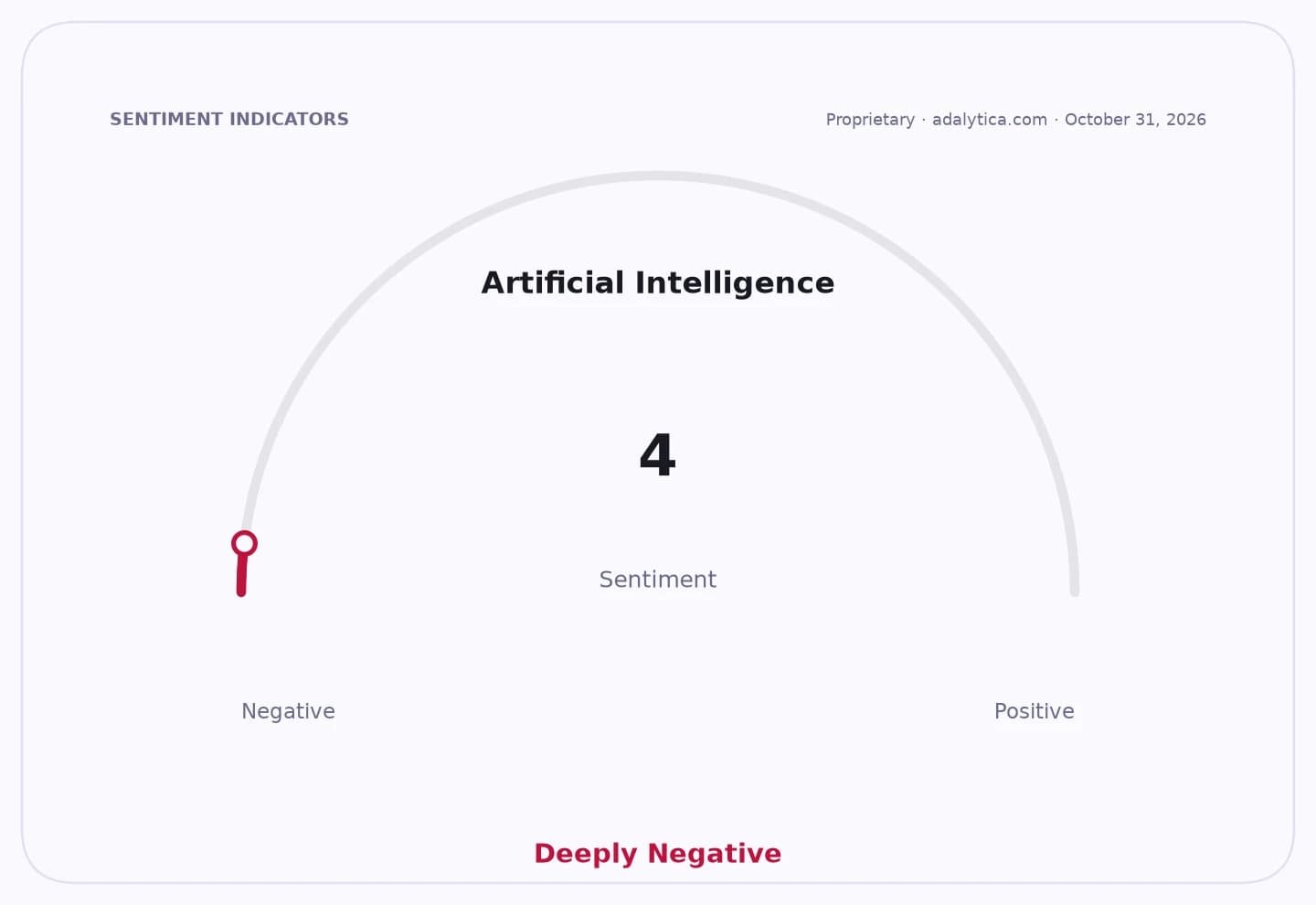
Sentiment Indicators
The novel, “Donde el agua trabaja,” won the first Premio Internacional de Novela Breve Almadía Ventosa-Arrufat in July. According to a report in Spanish daily El País, the Pangram 4.1 detector analyzed about 26,000 words and attributed 99% of the text to AI tools.
The scrutiny widened beyond the book itself. El País said the same detector flagged 97% of the author’s answers in a September interview and 80% of a 924-word autobiographical text posted on the Ventosa-Arrufat foundation website.
Peruvian writer David Silva Rojas, 45, was selected unanimously from 2,204 manuscripts submitted from 22 countries by a jury that included Cristina Rivera Garza, Selva Almada and Mónica Ojeda. The jury had praised the work’s short sentences and use of silence, and the story deals with labor exploitation and the lives of farm workers in Peru’s Ica region.
Almadía said it was surprised by the findings and has asked for time to speak with Silva Rojas and conduct its own review. The publisher halted Friday’s presentation in Madrid and canceled planned events in Barcelona, Seville and Cádiz after the report.
For investors and publishers, the case underscores rising reputational and compliance risk around AI disclosure in creative industries. As AI tools spread through content production, literary prizes and publishers may face growing pressure to tighten verification rules, while readers and sponsors push for clearer transparency standards.
The outcome now hinges on the publisher’s inquiry and whether the prize organizers decide the work breached the contest rules. Whatever they conclude, the case is likely to sharpen the debate over whether AI-assisted writing can be judged, disclosed and policed consistently across the book business.
| Entity | Gains | Losses |
|---|---|---|
| Almadía publisher | ▲Protects credibility | ▼Faces reputational risk |
| David Silva Rojas | ▲Prize recognition | ▼Publication setbacks |
| Literary prize organizers | ▲Chance to tighten rules | ▼Scrutiny over vetting |
| AI disclosure advocates | ▲Stronger transparency case | ▼— |