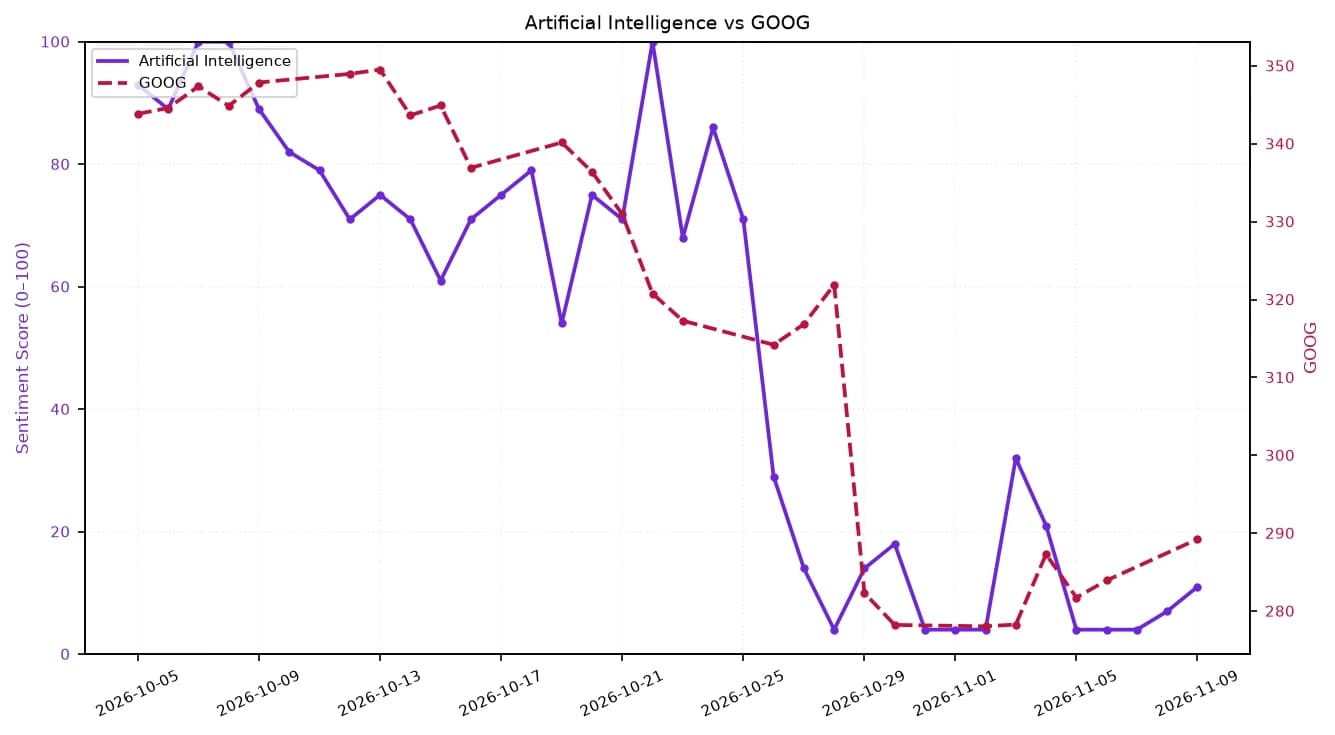
Alphabet’s sharp slide to below $290 has turned a long-running debate into a market problem: investors are increasingly worried that the rise of AI is disrupting Google Search at the same time Alphabet is spending heavily to defend its position. The stock fell to 289.23 on Monday, down sharply from 321.89 on Oct. 28 and far below its 50-day moving average of 328.70, a technical break that underscores how quickly confidence has shifted.
Alphabet Falls Below $290 on AI Search Fears
The key issue is not just price action. Search remains Alphabet’s profit engine, and the company’s latest filing again flagged that ad revenue depends on changes in paid clicks, cost-per-click and traffic across Search and other properties. That leaves Alphabet exposed to any structural change in how users find information, particularly if AI assistants and generative search tools divert queries away from the traditional ad-supported model.
Sentiment Indicators
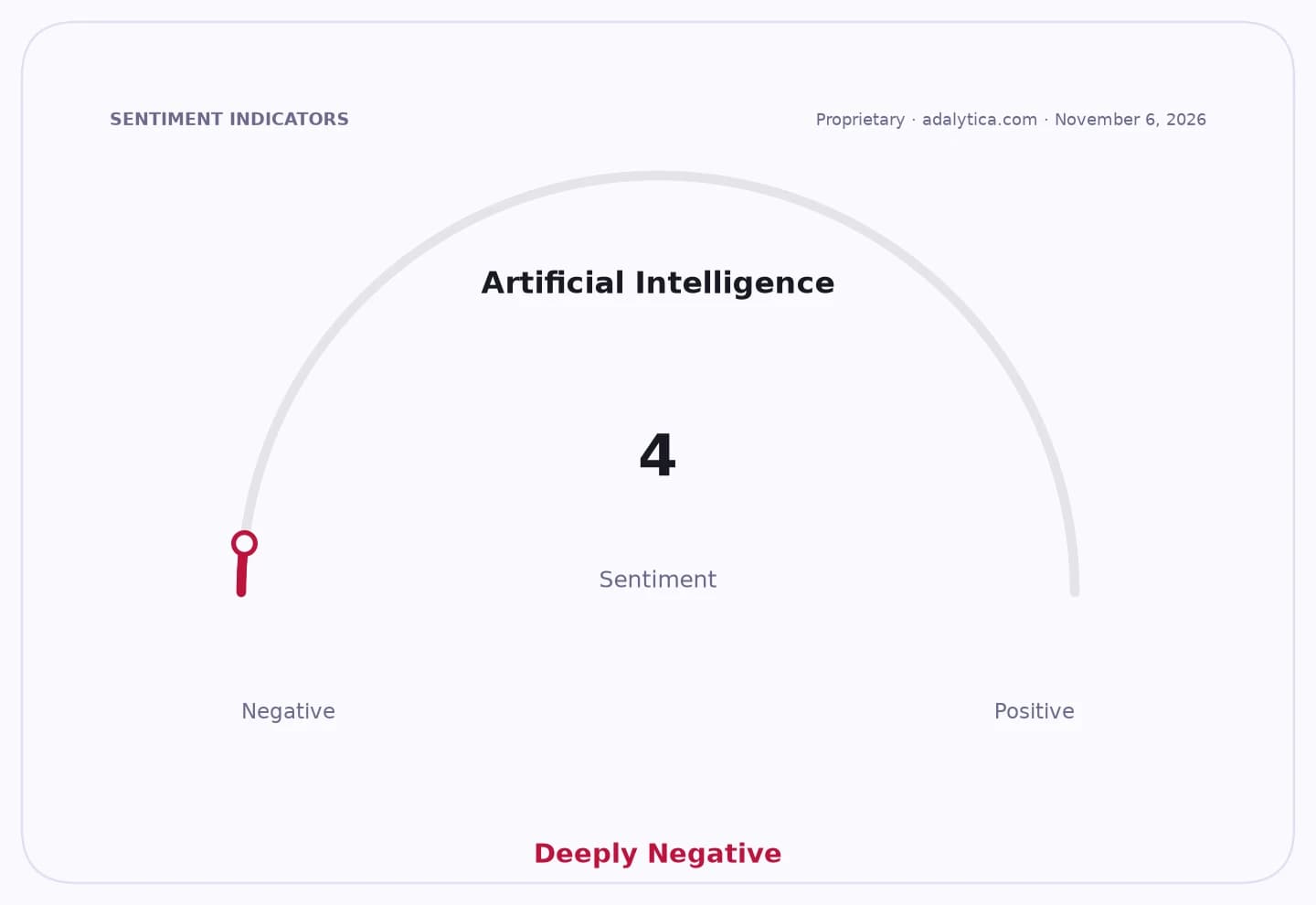
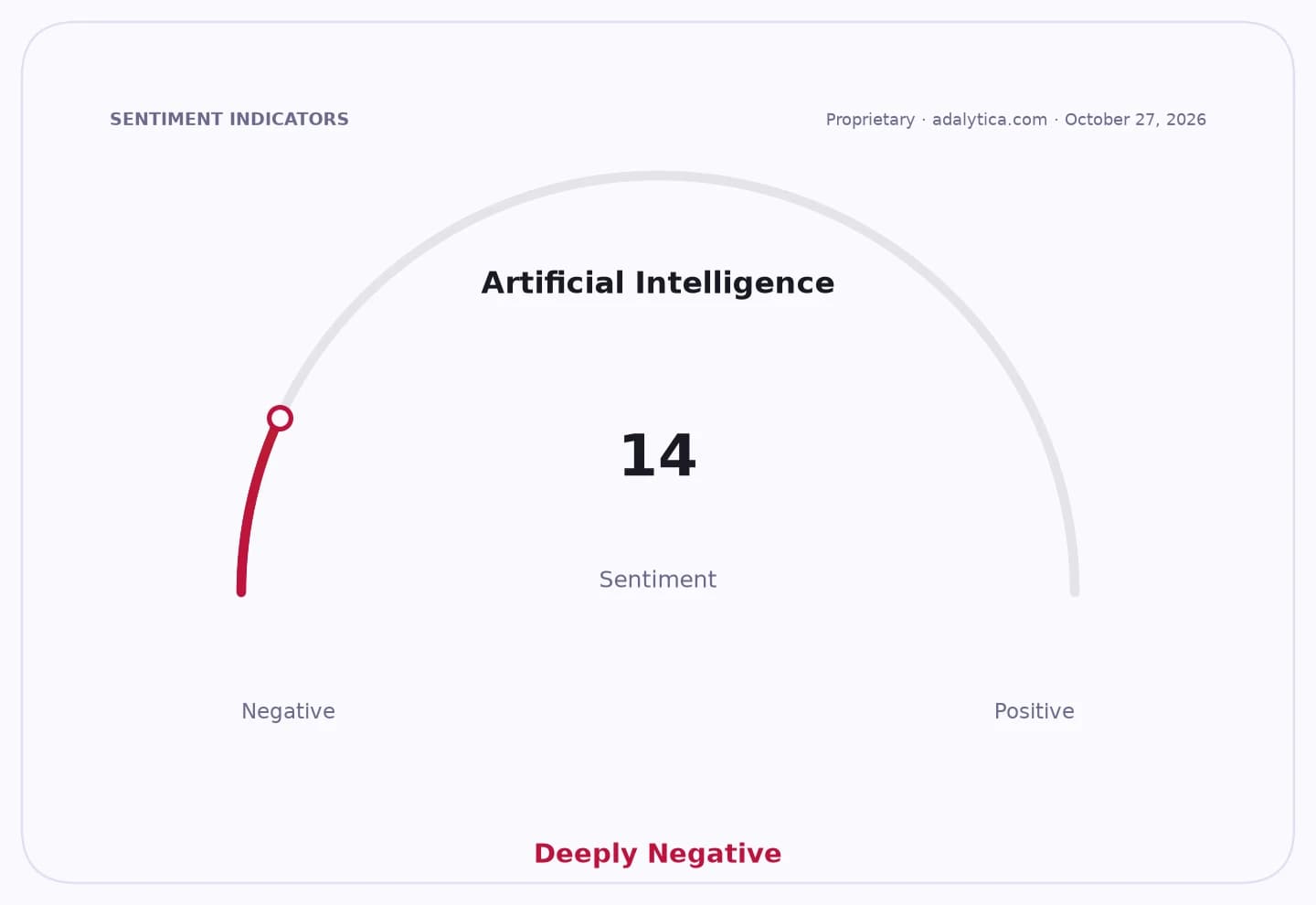
The market is treating that risk as more than a theoretical long-term threat. Alphabet’s relative weakness stands out against the broader market, even as the S&P 500 has remained near record territory. Adalytica’s AI sentiment gauge is in “Extreme Fear,” reflecting a sudden deterioration in investor mood around the theme. For Alphabet, that means the burden is now on management to prove that AI can both preserve search share and support monetization rather than cannibalize it.
The broader economic backdrop makes the selloff more meaningful. The 10-year Treasury yield has eased to around 4.85%, while inflation data remain sticky but not accelerating sharply, giving investors room to reward earnings visibility. That should help quality megacap names in theory, but Alphabet is losing the benefit of the doubt because its valuation rests on the durability of a business model that AI may be reshaping faster than expected.
There is still a bull case. Alphabet has scale, data, distribution and one of the strongest balance sheets in technology, and it can integrate AI into search rather than lose it outright. If its AI products improve user engagement while preserving ad load and pricing, the market may eventually see this as an expensive transition rather than a permanent impairment.
The bear case is that Alphabet is being forced to spend more to protect a franchise whose economics become less certain with each AI-driven change in user behavior. If search queries migrate to conversational interfaces, the company could face slower click growth, weaker monetization and lower margin leverage just as capital intensity rises across cloud and AI infrastructure.
For investors, the next catalyst is whether Alphabet can stabilize the stock around the 200-day moving average near 337 or whether the market keeps assigning a higher risk premium to search disruption. Until then, the message is clear: AI is no longer just Alphabet’s growth story; it is becoming its core valuation risk.
| Entity | Gains | Losses |
|---|---|---|
| AI search competitors | ▲More user attention | ▼Alphabet ad share |
| Alphabet | ▲Potential AI product adoption | ▼Search monetization certainty |
| Long-only investors in AI leaders | ▲Pullback entry points | ▼Near-term valuation support |
| Google advertisers | ▲More bargaining power | ▼Predictable search inventory |