Alphabet has crossed a line investors have not seen since its 2004 IPO: its cash spending on data centers and other capex has pushed free cash flow into negative territory for the first time in company history.
Alphabet free cash flow turns negative on AI capex
That matters because cash flow is the fuel behind everything long-term shareholders care about — buybacks, dividends, acquisitions and the ability to keep investing without leaning too hard on outside capital. Alphabet is still a profit machine by most traditional measures, but the jump in spending to support artificial intelligence is now outrunning the cash coming in, at least for the moment. For a stock long prized for its balance-sheet strength and enormous cash generation, that is a meaningful shift.
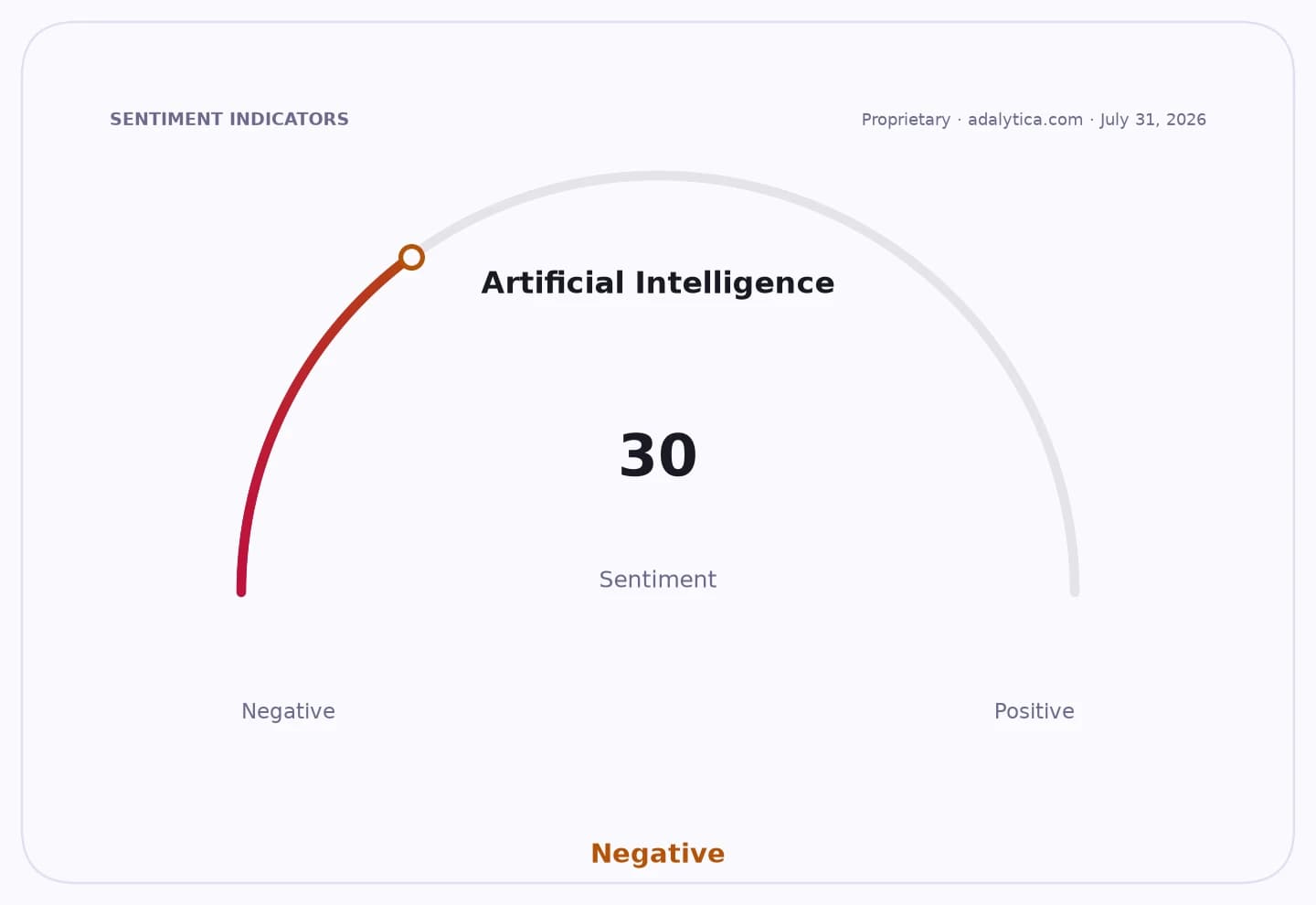
Sentiment IndicatorsⓘProprietary · adalytica.com · July 31, 2026
This is a snapshot — live sentiment, awareness and momentum for 130+ markets update continuously in the dashboard.Open AlphaPulse
The numbers help explain why the market is paying such close attention. Alphabet’s latest filings showed $242.5 billion in cash, cash equivalents and short-term marketable securities as of June 30, 2026, so this is not a liquidity crisis. But it is a warning that the economics of building out AI infrastructure are getting less comfortable. As the company races to expand computing power, the capital intensity of the business is climbing fast enough to dent free cash flow even while revenue and cloud demand remain solid.
That trade-off is showing up across the largest technology companies. Microsoft, Amazon and Meta are all pouring record sums into AI infrastructure, and their shares have become more sensitive to whether that spending translates quickly into durable profits. Investors are no longer just asking who has the best models or the biggest cloud. They are asking who can fund the race without permanently sacrificing returns on capital.
For Alphabet, the investment case still rests on a powerful core business: search, YouTube, cloud and a balance sheet that can absorb a lot of pain. The company also has the advantage of scale, which means it can spread those capex bills across a vast revenue base over time. If the spending wave turns into a stronger AI platform and better monetization, today’s cash squeeze could look like a classic growth-stage reinvestment cycle.
But investors should not ignore the risk that the return on those dollars arrives later than the market wants. Heavy capex can pressure free cash flow for several quarters, and if that persists, it can weigh on valuation even when earnings look healthy. That is especially true for a stock like Alphabet, where long-term holders have come to expect a fortress-like financial profile.
In the long run, the key question is not whether Alphabet can afford the spending. It clearly can. The question is whether the company can convert this historic AI buildout into faster revenue growth and higher cash generation down the road. For investors with a multi-year horizon, that makes Alphabet worth watching closely, not abandoning — but it also argues for patience and a realistic view of how expensive the next phase of AI leadership may be.
| Entity | Gains | Losses |
|---|---|---|
| Alphabet | ▲AI infrastructure scale | ▼Near-term free cash flow |
| Cloud and AI customers | ▲Better model access | ▼Higher long-term pricing pressure |
| Long-term shareholders | ▲Potential future growth | ▼Buyback and cash yield support |
| AI rivals | ▲Industry spending discipline | ▼Margin and cash flow pressure |