Alphabet shares rise as investors bet its new Ironwood AI chip can cut dependence on Nvidia and help Google defend margins in cloud computing.
Alphabet gains on Ironwood chip margin hopes
The move matters because AI infrastructure is becoming a battleground for cost, capacity and control. If Google can run more of its own workloads on custom Tensor Processing Units rather than bought-in accelerators, it can potentially lower data-center costs, ease supply constraints and improve pricing power in Google Cloud.
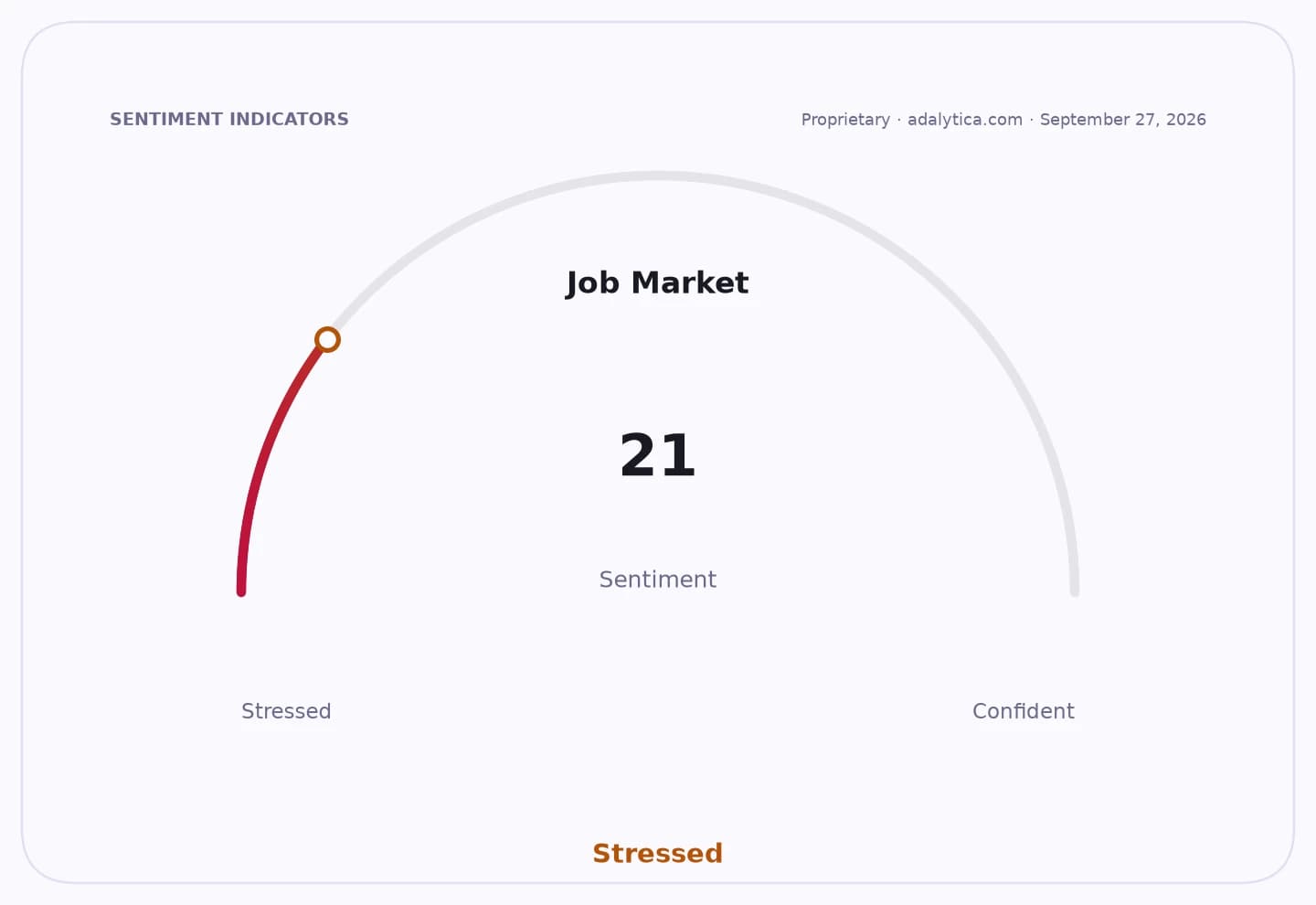
Sentiment IndicatorsⓘProprietary · adalytica.com · July 20, 2026
This is a snapshot — live sentiment, awareness and momentum for 130+ markets update continuously in the dashboard.Open AlphaPulse
That is the immediate investor appeal behind the stock reaction in Alphabet’s Class A and Class C shares, which were trading higher alongside a broader reassessment of Google’s ability to monetize AI without surrendering economics to outside chip suppliers. The latest price data shows both share classes holding well above their 200-day moving averages, although recent sessions have been choppy as investors digest how much of the AI upside is already in the stock.
The chip narrative also cuts into Nvidia’s perch in the AI buildout. Nvidia remains the default beneficiary of hyperscaler spending, but a larger role for Alphabet’s in-house silicon underscores a growing risk for the industry: the biggest cloud customers are increasingly trying to own more of the stack, from models to hardware, to preserve gross margin and reduce dependence on a single supplier.
For Google, the timing matters. Demand for AI compute is rising fast, cloud pricing has been under pressure from chip shortages, and the company is pushing to prove that its AI strategy can translate into durable earnings rather than just product headlines. Google’s custom-chip roadmap, including TPUs, gives it a way to answer that question with lower unit economics and more control over deployment.
The stock is still trading near the upper end of its recent range, with standard technical indicators showing momentum cooling after sharp gains earlier this year. That leaves the next catalyst in focus on execution: further disclosure on Ironwood rollout, cloud demand, and whether Alphabet can convert its hardware advantage into stronger AI revenue and operating leverage.
| Entity | Gains | Losses |
|---|---|---|
| Alphabet | ▲Lower AI compute costs | ▼Higher rollout execution risk |
| Nvidia | ▲Continued AI demand overall | ▼Share of hyperscaler spend |
| Google Cloud customers | ▲More capacity and supply control | ▼Less flexibility on external silicon |
| Competitor clouds | ▲Benchmark pressure on AI infrastructure | ▼Margin disadvantage if they lack custom chips |