Employers in Moldova are pressing parliament to rewrite housing rules for foreign workers, arguing that a shortage of affordable accommodation is becoming a binding constraint on hiring in an economy already struggling to find local labor.
Moldova Employers Seek Housing Rules for Foreign Workers
The issue is more than an administrative nuisance. If companies cannot house imported workers at scale, they cannot fill jobs in construction and other labor-intensive sectors, limiting output, delaying projects and keeping wage and rent pressures elevated in Chișinău. For employers, the bottleneck is increasingly about logistics, not recruitment.
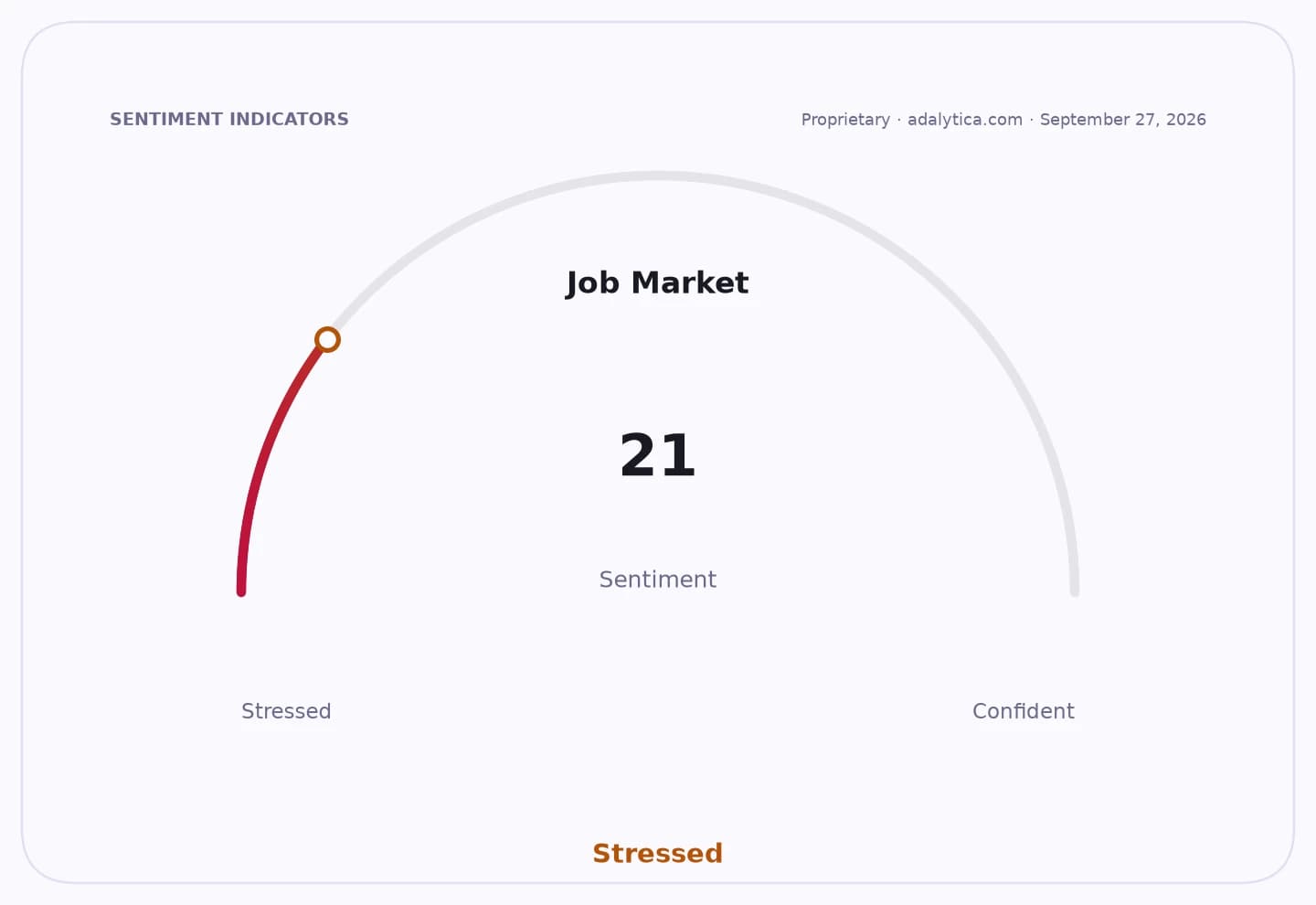
Sentiment IndicatorsⓘProprietary · adalytica.com · September 27, 2026
This is a snapshot — live sentiment, awareness and momentum for 130+ markets update continuously in the dashboard.Open AlphaPulse
Public hearings in parliament this week brought together lawmakers from the social protection and economics committees, the infrastructure ministry and the health ministry after companies said the current market offers too few suitable options. One employer said Moldova should formally allow workers to stay in dormitories, hostels and other collective facilities, including buildings classified as non-residential. A construction company representative said firms are often forced into the private rental market, where prices are high and some landlords are reluctant to rent to foreign nationals.
The debate underscores how labor shortages are beginning to collide with the country’s housing market. Companies importing workers from countries such as Nepal and Bangladesh say they are being pushed toward improvised solutions, including modular housing on or near worksites. But the present rules are not built for that. Veaceslav Șipitca, a state secretary at the infrastructure ministry, said current norms allow social and sanitary containers on construction sites, but only for daytime use, not overnight accommodation. Any broader solution would need zoning, permitting and urban-planning compliance.
That regulatory gap matters because Moldova is already leaning more heavily on foreign labor as local workers become harder to find. In sectors like construction, where margins are sensitive and schedules are fixed, housing can determine whether a project starts on time or stalls. If accommodation remains scarce, firms may have to pay more for private rentals, absorb the cost, or scale back recruitment. That raises operating costs and can slow investment, particularly in the capital, where rental markets are tight.
Health authorities have also moved to set minimum standards. Svetlana Nicolaescu, deputy secretary general at the health ministry, said the National Public Health Agency has drafted rules for collective housing of foreign workers covering minimum floor space per person, water, sewerage and ventilation. That suggests policymakers are not weighing whether to regulate the practice, but how quickly they can formalize it without creating new safety risks.
The stakes were highlighted by reports this summer that about 80 workers from Nepal and Bangladesh were living in poor conditions in railway wagons at a factory on the outskirts of Chișinău after previously being housed in a dormitory complex. That episode sharpened scrutiny of the sector and helped push the issue onto the parliamentary agenda.
For investors, the story is a read-through on Moldova’s broader growth constraints. A labor force shortage can cap industrial expansion and construction activity even when demand exists. For property owners and developers, it opens a small but potentially durable niche in worker housing, especially if lawmakers create a clear legal framework for modular units and collective accommodation. For employers, the upside would be greater flexibility and lower recruitment friction. The downside is that without reform, foreign labor may remain available in theory but difficult to deploy in practice.
The next test is whether parliament and ministries can convert the hearings into enforceable rules that balance housing access, worker safety and urban standards. If they do, firms could gain a faster route to staffing shortages. If not, the labor bottleneck is likely to show up in project delays, higher costs and a slower pace of business expansion.
| Entity | Gains | Losses |
|---|---|---|
| Moldovan employers | ▲Easier worker recruitment | ▼Higher housing costs |
| Foreign workers | ▲Safer accommodation rules | ▼Informal housing risk |
| Developers / landlords | ▲New demand for worker housing | ▼Regulatory uncertainty |
| Construction sector | ▲Fewer staffing bottlenecks | ▼Project delays if rules stay unchanged |