Amazon’s decision to earmark more than $1 billion for communities around its U.S. data center regions is a clear sign that the economics of the AI infrastructure boom now extend well beyond chips, power and cloud capacity. As the company races to expand AWS facilities across the country, it is also trying to defuse the local backlash that has become one of the biggest practical constraints on data center growth.
Amazon allocates $1 billion for data center communities
The new “Built Together” framework ties Amazon’s expansion to jobs, education and resource issues that matter to the municipalities hosting its sites. The company said it will help connect more than 300,000 students to free community college degree programs over five years, expand modular training centers with 16 additional facilities, and prepare up to 100,000 workers annually for jobs in their communities by the end of 2028. It also reiterated commitments on water use and backup generators, including a goal to be water positive across its data centers by 2030 and a shift to Tier 4 or equivalent generators at new sites.
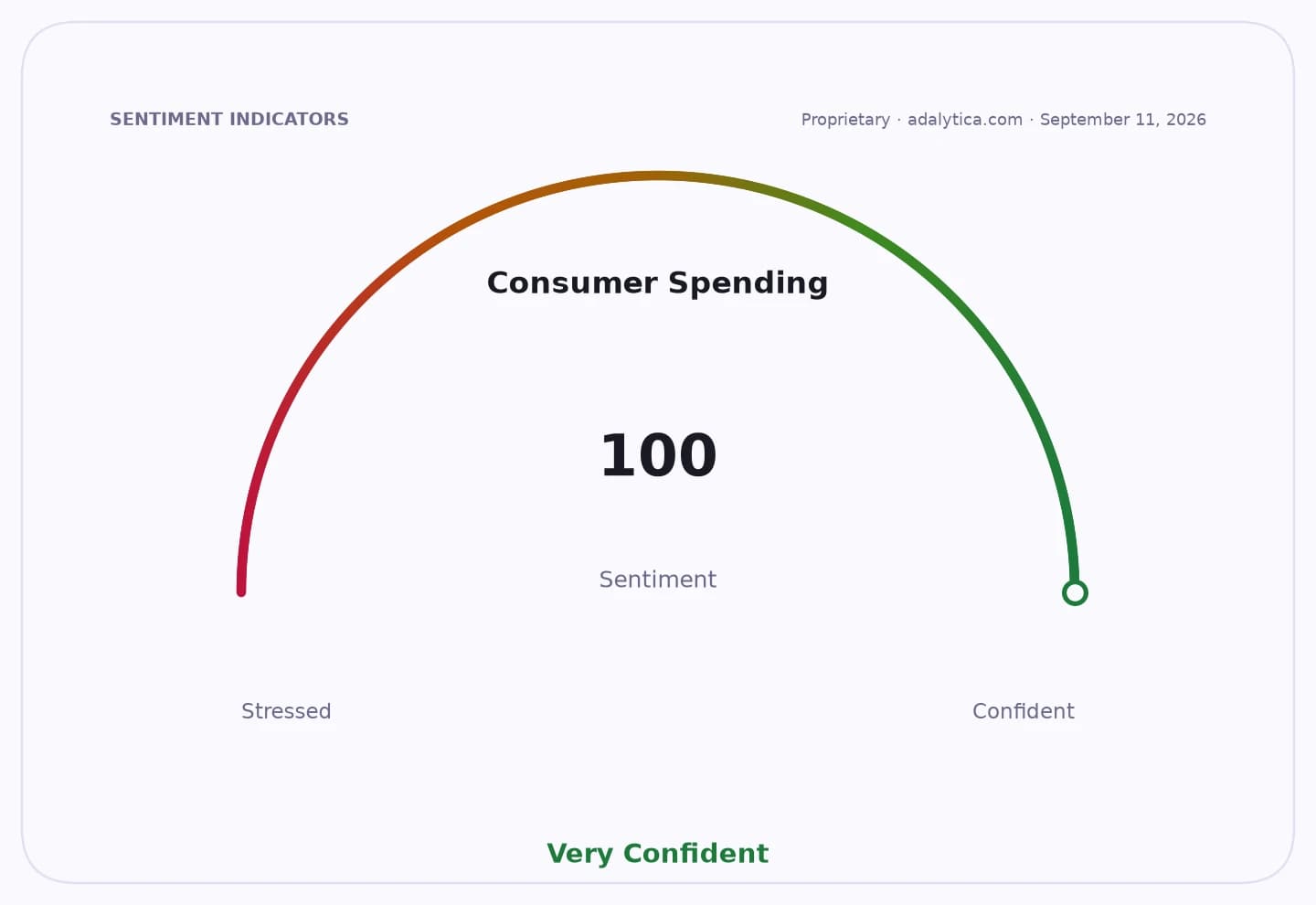
Sentiment IndicatorsⓘProprietary · adalytica.com · October 2, 2026
This is a snapshot — live sentiment, awareness and momentum for 130+ markets update continuously in the dashboard.Open AlphaPulse
For investors, the announcement matters because it shows how quickly the capex supercycle around artificial intelligence is forcing hyperscale cloud providers to absorb more of the social and infrastructure costs of expansion. Amazon has already said its capital expenditures were $96.3 billion in the first half of 2026, much of it tied to technology infrastructure to support AWS. A $1 billion community package over five years is small relative to that spending, but it is strategically important if it helps keep projects moving through permitting, labor, water and power bottlenecks.
The move also underscores a broader shift in the data center business model. What was once mainly a real estate-and-power story is increasingly a political one. Local governments are scrutinizing energy affordability, water preservation and land use, while operators are under pressure to show that data centers create durable employment rather than just strain public utilities. Amazon’s pledge to direct investment toward locally identified priorities is an attempt to make itself a partner rather than a disruptive outsider.
That could help AWS in a market where capacity remains at a premium and where scale matters. Equinix and Digital Realty, which also operate large data center footprints, have both flagged regulatory and resource constraints in their filings. For Amazon, the community spending may reduce friction in future buildouts and strengthen its position against rivals vying for the same power, land and municipal support.
The bull case is that the plan buys Amazon time and goodwill while it secures the infrastructure needed to support AI demand. The bear case is that it highlights how expensive and politically complicated the next phase of cloud growth has become, with returns dependent not only on customer demand but on the ability to navigate local resistance. For investors, the key question is whether Amazon can convert this rising social cost into a durable competitive advantage, or whether it becomes another layer of margin pressure on an already capital-intensive business.
| Entity | Gains | Losses |
|---|---|---|
| Amazon | ▲smoother permitting, local goodwill | ▼higher operating and community costs |
| AWS customers | ▲faster capacity expansion | ▼possible cost pass-through over time |
| Local communities | ▲training, education, water commitments | ▼ongoing utility and land-use strain |
| Rivals such as Equinix/Digital Realty | ▲stronger case for community engagement | ▼tougher scrutiny on future data center projects |