Amazon’s cloud unit is being pushed into South Africa’s long-running debate over black economic empowerment, and the outcome could affect how multinational tech companies structure local partnerships, compliance programs and market access.
Amazon AWS faces South Africa empowerment scrutiny
Labour union Solidarity said it will investigate reports that Amazon Web Services’ business development programme may impose race-based ownership barriers, focusing on a 100% black-owned eligibility rule for the company’s Equity Equivalent Investment Programme. AWS says the arrangement is not exclusionary at all, but a legal compliance mechanism required under South Africa’s B-BBEE framework for multinationals that cannot sell equity locally.
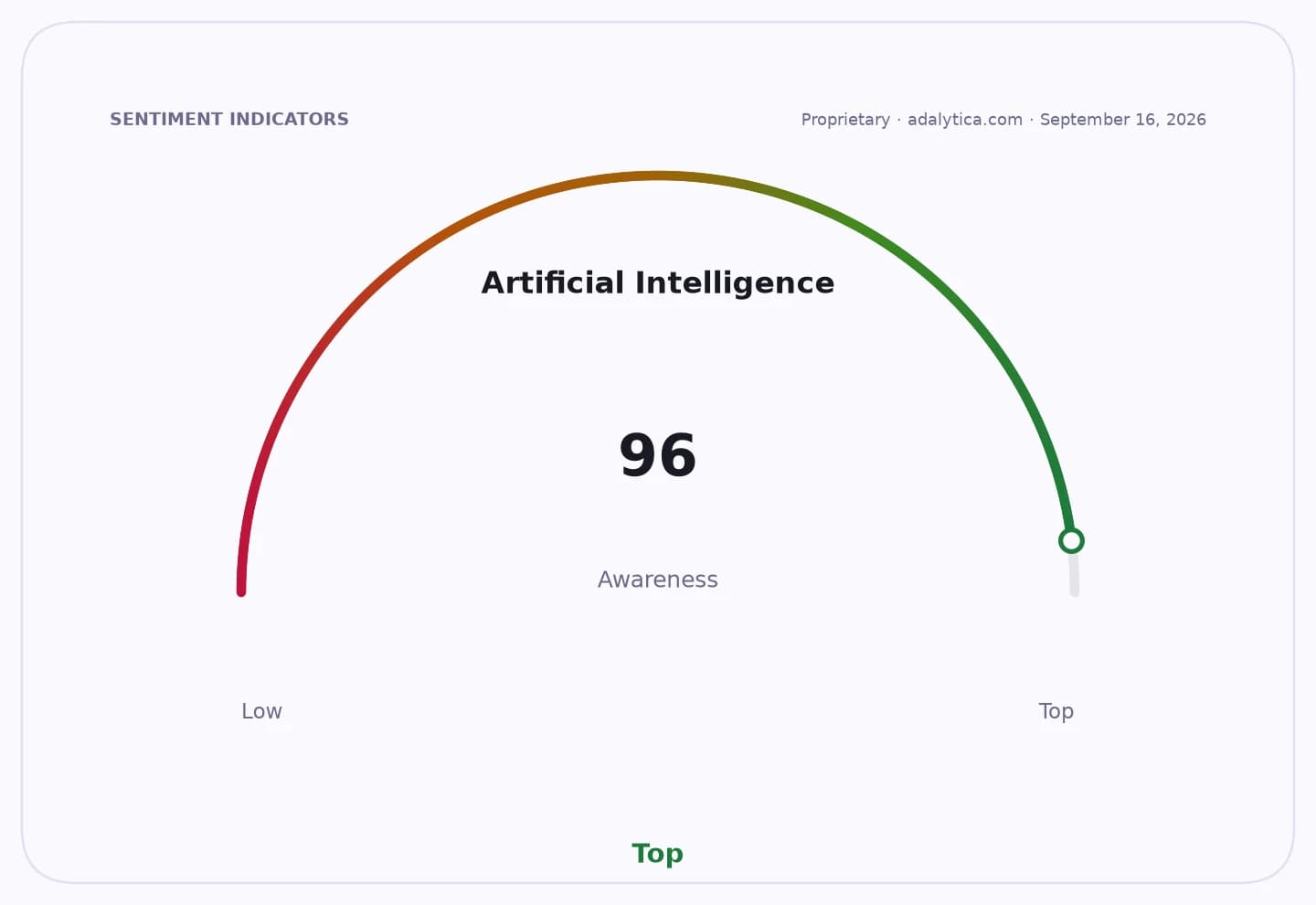
Sentiment IndicatorsⓘProprietary · adalytica.com · September 3, 2026
This is a snapshot — live sentiment, awareness and momentum for 130+ markets update continuously in the dashboard.Open AlphaPulse
That distinction matters economically because South Africa’s empowerment rules are not a side issue for foreign investors — they are a gatekeeper to operating at scale. AWS says the programme is designed to provide operational funding, market access, training, certification and technical support to qualifying businesses for 18 to 24 months, while also helping the company meet its legal obligations. In other words, this is not just corporate social responsibility. It is part of the commercial infrastructure that allows a global cloud provider to expand in a market where policy and procurement standards can shape who gets business, who gets financing and who gets a foothold in the digital economy.
For investors, the immediate question is less about one union complaint and more about regulatory risk. Amazon’s cloud growth story depends on winning enterprise clients, government-linked contracts and developer ecosystems across major markets. If a local empowerment programme becomes politically contentious, the company could face reputational friction, legal scrutiny or pressure to redesign how it channels support to South African businesses. That would not change AWS’s global moat overnight, but it could complicate an important emerging-market growth channel.
AWS said it has accelerated 47 black-owned small and medium-sized enterprises in South Africa since launching the programme in 2020, and that other initiatives such as AWS Activate and AI for Good are open to all. Solidarity, meanwhile, said it wants to test whether the programme amounts to “absolute racial exclusion” and warned it could take action if that is the case. The clash captures a broader tension multinational companies face in South Africa: how to comply with a legal empowerment regime without appearing to discriminate in ways that invite backlash from other constituencies.
For long-term investors, the bigger takeaway is that AWS remains an exceptionally strong business, but one whose growth outside the U.S. is shaped by local politics as much as by technology. The cloud market still offers years of compounding opportunity, especially as AI spending boosts demand for compute and storage, but companies like Amazon cannot assume that expansion abroad will be frictionless. This is worth watching, especially for investors who own Amazon for its durable cash flows and secular growth rather than for near-term noise.
| Entity | Gains | Losses |
|---|---|---|
| AWS / Amazon | ▲Local compliance cover | ▼Regulatory and reputational risk |
| Black-owned SMEs | ▲Training and market access | ▼— |
| Solidarity | ▲Political leverage | ▼If challenge fails |
| South African competitors | ▲Fairness argument | ▼Preferential-access concerns |