AI is moving from a novelty to a digital shopping concierge, and that shift matters because it is changing how consumers discover products, compare options and make purchases across everything from groceries to travel.
Amazon, Alphabet, Microsoft and AI shopping

A study cited in the French report found 82% of consumers use an AI “agent” at least weekly, while 72% said they had made at least one purchase influenced by AI over the prior three months. That is a meaningful signal for retailers and ad platforms: if consumers increasingly rely on ChatGPT, Gemini or similar tools to narrow choices, the value chain shifts away from brand advertising alone and toward the AI layer that recommends, ranks and summarizes products.
The commercial implications are broad. Retailers that are not surfaced by AI assistants risk becoming less visible at the point of decision, while those integrated into shopping workflows could gain share without necessarily spending more on traditional marketing. For merchants, the stakes are especially high in categories where price, convenience and trust drive the purchase, such as travel, household goods and recurring grocery baskets.
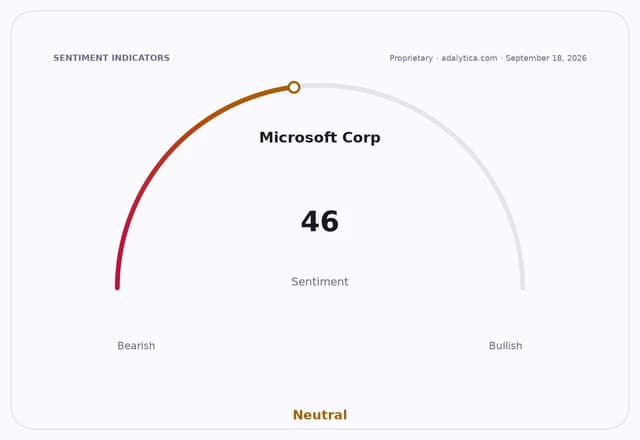
It also helps explain why Amazon, Alphabet and Microsoft remain central to the AI trade even as sentiment around the sector swings sharply. Amazon closed at $251.19 on Sept. 17, above its 200-day moving average of $240.20 but below its 50-day line of $255.71, while Google parent Alphabet ended at $347.33, roughly in line with its 50-day average and above its 200-day average of $336.91. Microsoft finished at $497.75, just under its 50-day average of $462.0 earlier in the period and well above its 200-day average of $430.03, reflecting how investors are still weighing AI monetization against heavy infrastructure spending.
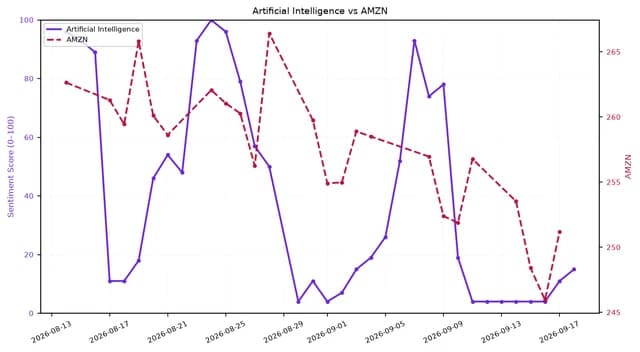
That tension is already visible in the market’s mood. Adalytica’s AI sentiment gauge showed “Extreme Fear” at 15, while awareness stayed in “Extreme Greed” territory at 93, underscoring a market that is highly attentive to AI but increasingly cautious about execution, safety and commercialization. Microsoft’s own filings warned that demand for cloud-based and AI products is difficult to forecast, and that misjudging infrastructure needs could leave assets underutilized.
For investors, the key question is no longer whether consumers will use AI in shopping, but who captures the economic rent from it. Amazon and Google have a natural advantage because they control major consumer interfaces and ad ecosystems. Microsoft benefits indirectly through Azure and its OpenAI tie-up, though it must still prove that AI usage translates into durable monetization rather than just higher capex.
The bull case is that AI assistants become a new front door for commerce, expanding transaction volume and improving conversion rates by reducing friction. The bear case is that assistants commoditize product choice, compressing margins and shifting power toward the platform that owns the recommendation engine. Either way, the shift points to a reordering of digital retail economics, with the next test coming from whether AI referrals turn into measurable sales lift for retailers and higher ad yield for the platforms that sit between consumers and merchants.
| Entity | Gains | Losses |
|---|---|---|
| AI platform owners | ▲More influence over purchasing | ▼Risk of regulatory scrutiny |
| Amazon/Google | ▲Higher commerce and ad leverage | ▼Need to fund heavy AI investment |
| Retailers without AI visibility | ▲Less dependence on search ads | ▼Loss of share at point of decision |
| Consumers | ▲Faster, easier decisions | ▼Greater dependence on opaque recommendations |