Amazon’s Prime Day 2026 promotion is set to be a major demand event, but for investors the bigger question is how much volume the company can buy with discounts before it starts to pressure retail margins.
Amazon Prime Day 2026 Nears $274.48 After Strong Rally
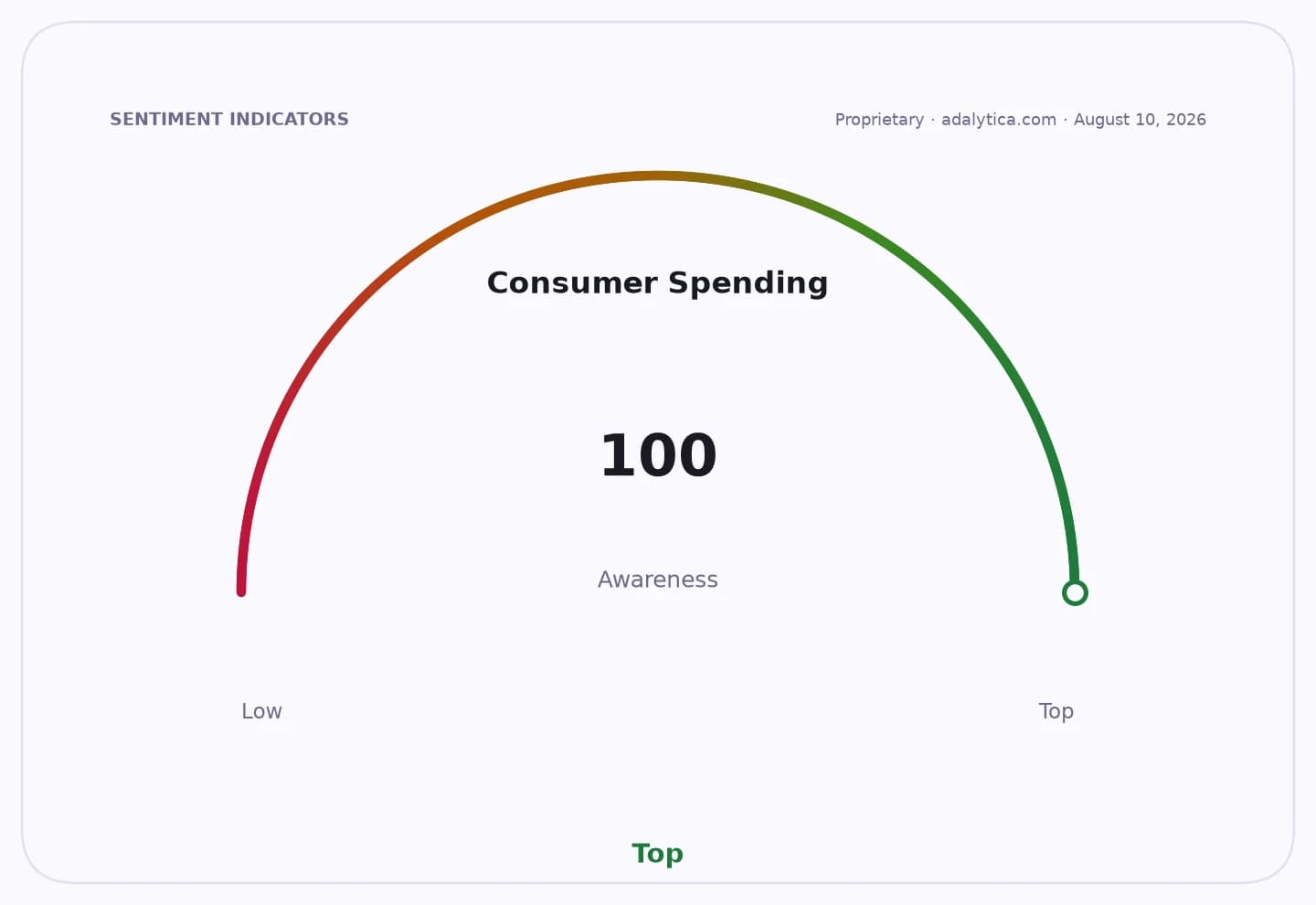
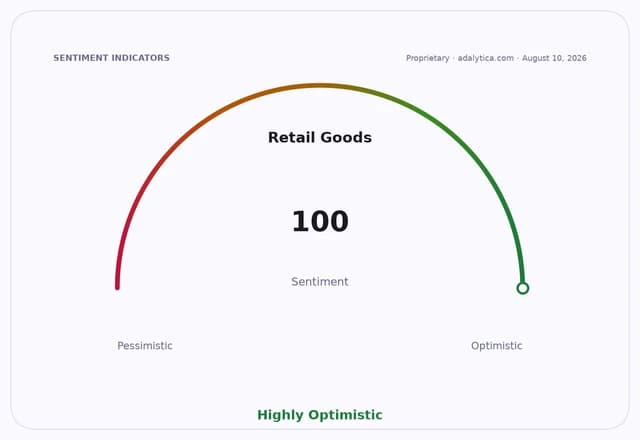
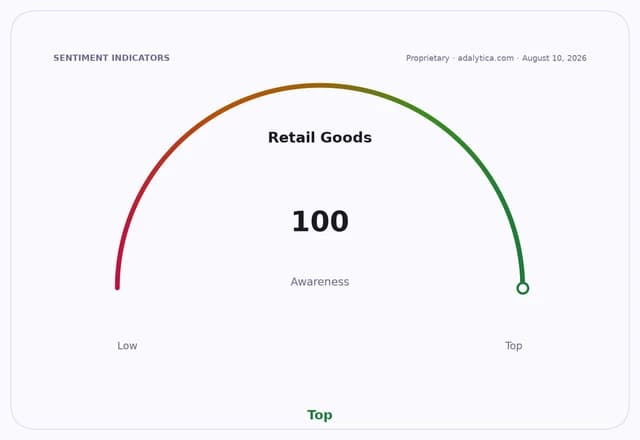
The latest promotion backdrop suggests consumers are still highly responsive to markdowns. Adalytica’s consumer spending gauge is flashing “Extreme Fear” at 4, while its retail goods spending sentiment is at “Extreme Greed,” a split that points to bargain-hunting rather than broad-based confidence. That combination matters because it implies households are still willing to spend, but only when the price is right — an environment that rewards the biggest platforms and squeezes weaker merchants.
Sentiment IndicatorsⓘProprietary · adalytica.com · August 10, 2026
This is a snapshot — live sentiment, awareness and momentum for 130+ markets update continuously in the dashboard.Open AlphaPulse
Amazon is entering the event from a technically strong position. The stock closed at $274.48 on Aug. 7, well above its 50-day and 200-day moving averages of $247.51 and $236.54, respectively, with RSI readings near 63 and a positive MACD trend. In market terms, that reflects investors positioning for Prime Day to reinforce Amazon’s dominance in e-commerce and advertising, while also keeping an eye on whether aggressive promotions eat into profitability.
That tension is central to the investment case. Prime Day typically lifts order volumes, boosts Prime membership engagement and drives traffic across Amazon’s marketplace, where third-party sellers pay fees and often fund their own discounts. It can also support higher ad spend as merchants compete for visibility. But deeper cuts can reduce unit economics in the short term, especially if Amazon leans heavily on subsidized pricing to defend share against Walmart and Target, which are also fighting for value-conscious consumers.
Walmart’s stock has stabilized around $111.85 after a sharp pullback earlier this summer, while Target has rebounded to $149.70, suggesting investors see the sector as still highly promotional but unevenly positioned. Walmart’s scale and grocery traffic give it a defensive edge if consumers trade down, while Target remains more exposed to discretionary spending swings. For Amazon, the bull case is that Prime Day converts bargain demand into ecosystem lock-in; the bear case is that the event becomes a reminder that e-commerce growth still requires price concessions.
The broader economic read-through is straightforward: deep discounts are not just a retail tactic, they are a signal of a consumer that is selective and under pressure. Amazon’s ability to generate sales without damaging margins will be watched closely as a proxy for online retail health, while competitors will be judged on whether they can match promotions without sacrificing too much profitability. If the event produces strong traffic and disciplined execution, it could support Amazon’s share price near recent highs. If discounting proves too costly, investors may refocus on margin sensitivity just as the company leans on Prime, ads and AWS to carry earnings growth.
| Entity | Gains | Losses |
|---|---|---|
| Amazon | ▲Higher traffic and seller fees | ▼Short-term retail margins |
| Prime shoppers | ▲Lower prices | ▼Less pricing power later |
| Walmart | ▲Trade-down traffic | ▼Share in discretionary categories |
| Target | ▲Promotion-driven demand | ▼Profitability on markdowns |