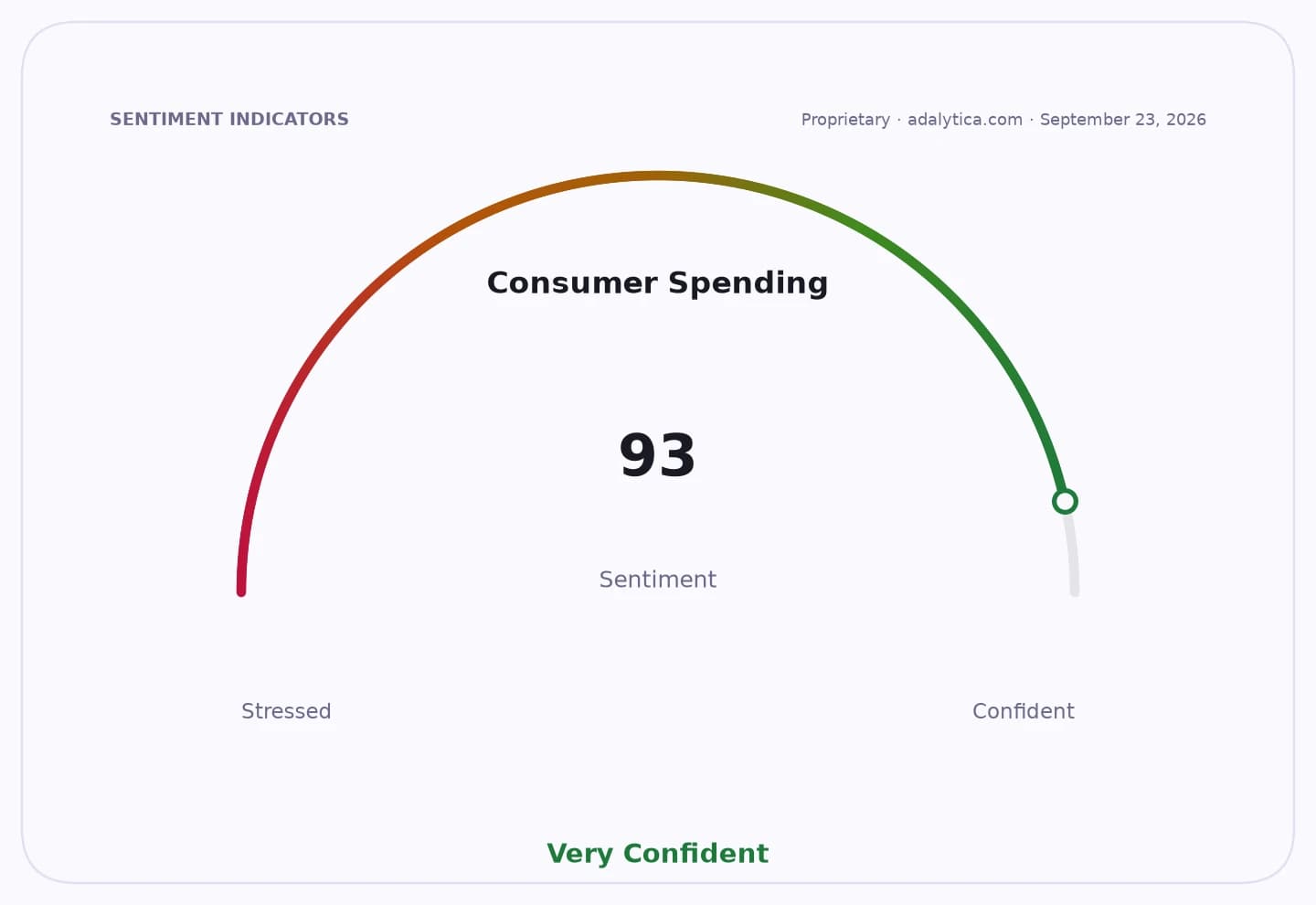
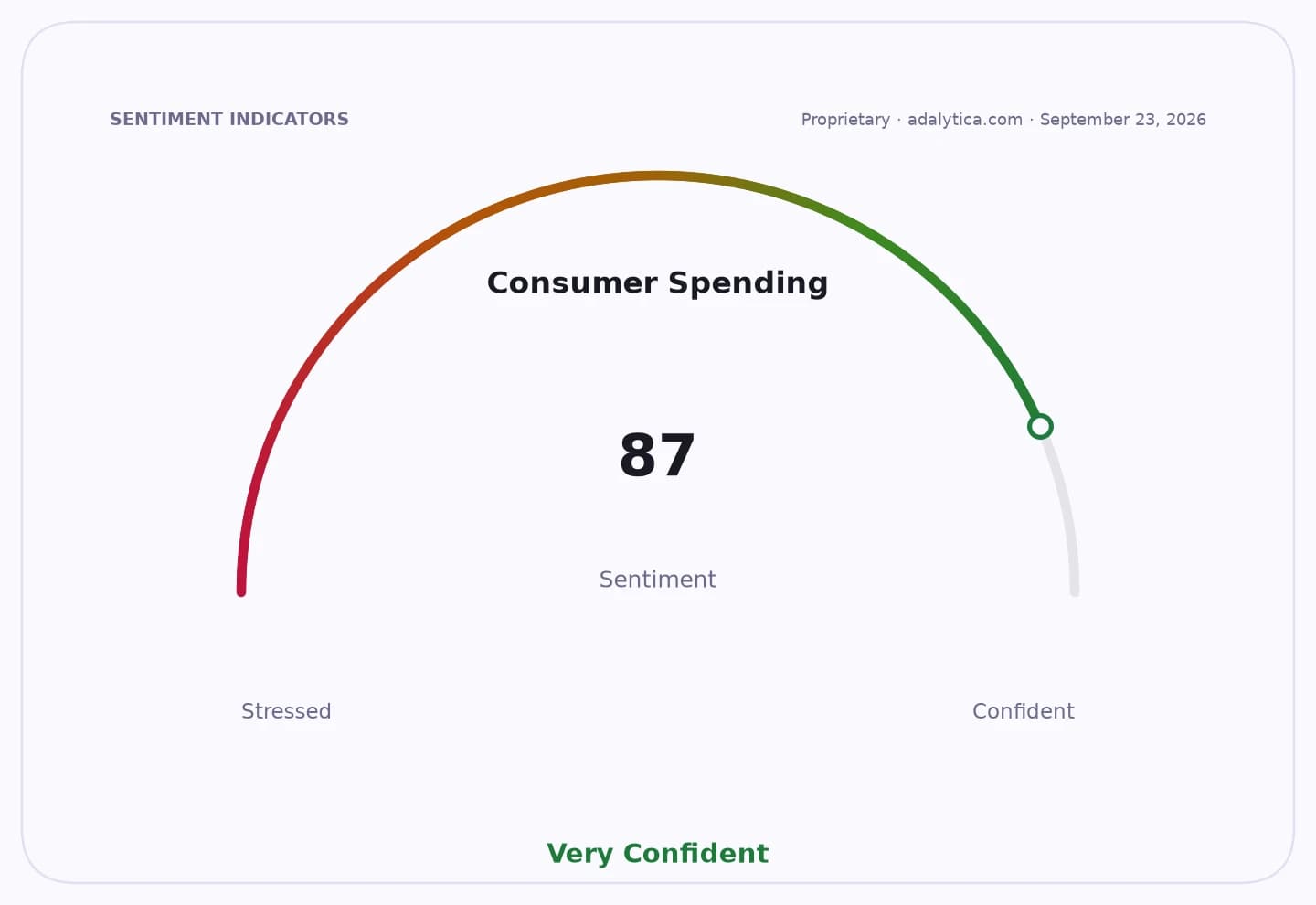
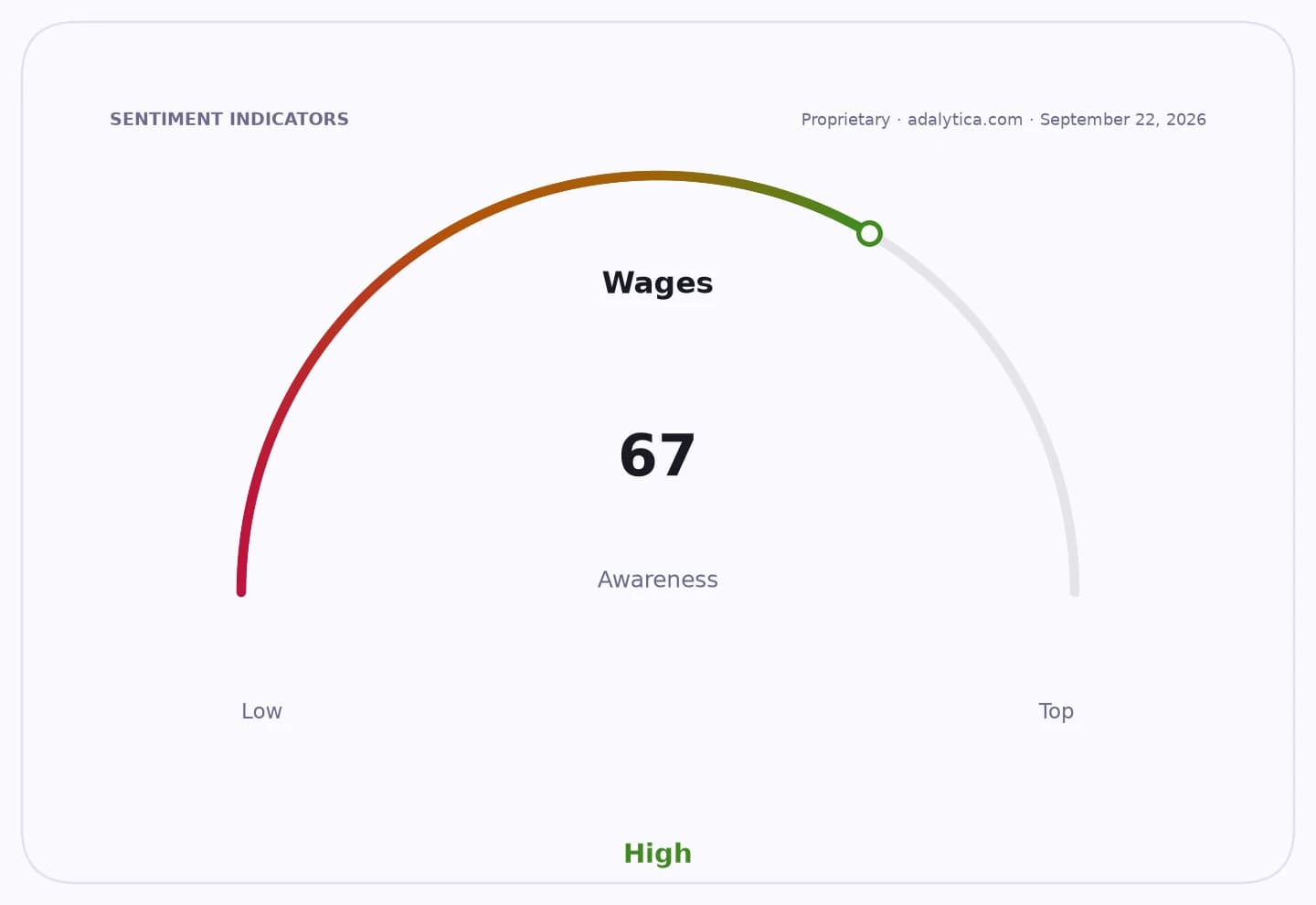
Amazon is lifting its minimum hourly starting wage to $20, a move that underscores how the e-commerce giant is using pay to keep warehouses staffed even as the labor market cools and wage pressure remains elevated.
Amazon Raises Starting Wage to $20 an Hour
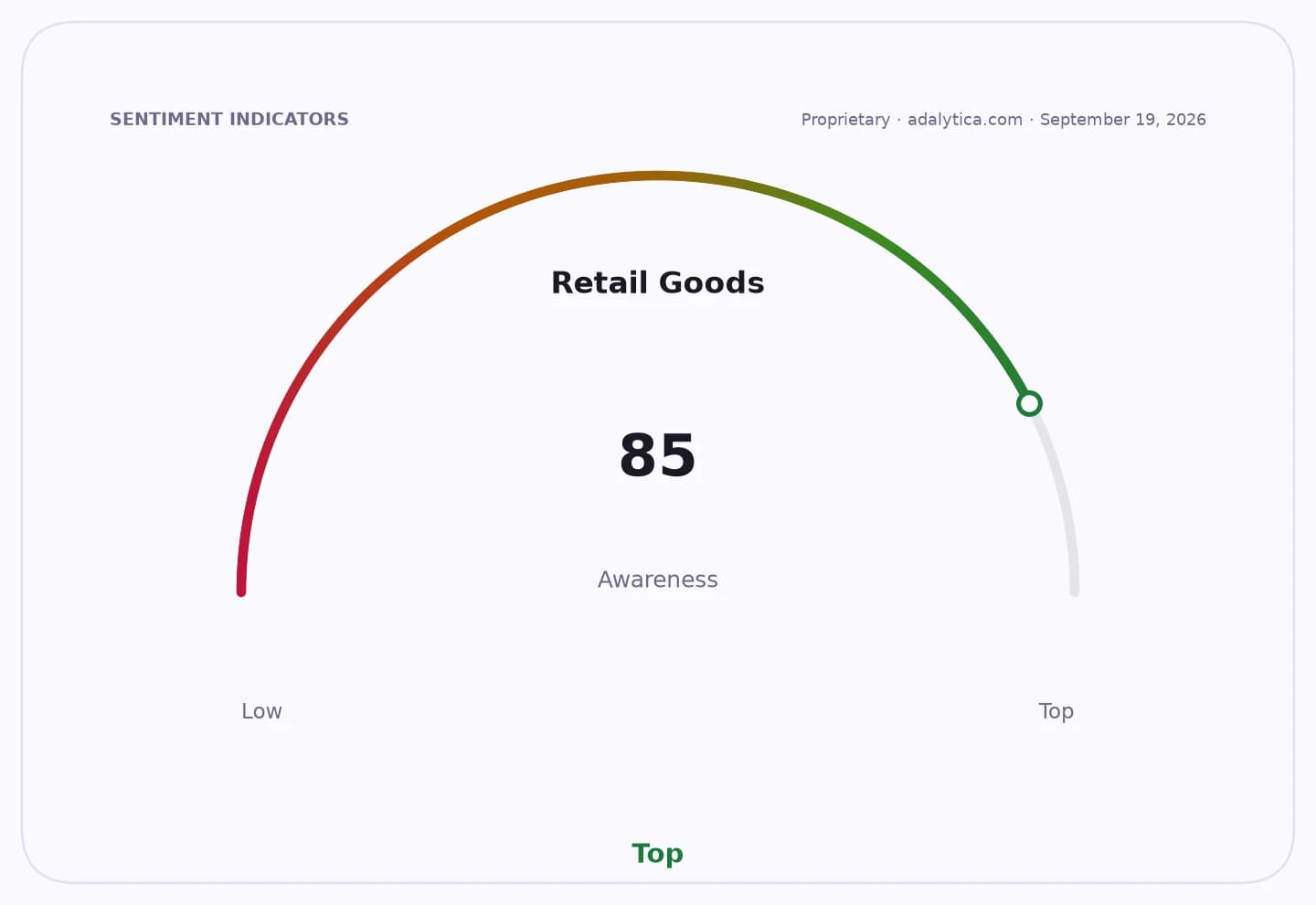
The increase matters because Amazon’s logistics network is one of the biggest private employers in the U.S., and any broad-based pay hike feeds directly into fulfillment costs, delivery expenses and margins. With the national unemployment rate at 4.1% in August and the Labor Department forecasting 4.02% for September, the broader labor market is no longer as tight as it was during the pandemic hiring boom, but employers are still competing for workers in warehousing, transportation and retail-linked operations.
Sentiment IndicatorsⓘProprietary · adalytica.com · September 19, 2026
This is a snapshot — live sentiment, awareness and momentum for 130+ markets update continuously in the dashboard.Open AlphaPulse
Amazon’s move also lands against a labor backdrop that remains expensive by historical standards. Average hourly earnings for production and nonsupervisory workers have climbed to $37.75 in August from $37.59 in June, reflecting persistent wage inflation across the payroll base. For Amazon, that means a higher wage floor can help reduce turnover and improve retention, but it also keeps pressure on operating costs at a time when investors are watching margin discipline closely.
The stock has been volatile in recent weeks, with shares closing at $253.71 on Sept. 18, near the 50-day moving average of $255.84 and above the 200-day average of $240.30. The technical setup suggests the market is still weighing growth prospects against cost risks rather than decisively rewarding the company for higher spending.
The wage increase also has read-throughs for Walmart and Target, which compete with Amazon for warehouse, store and fulfillment labor. Walmart shares ended at $106.73 on Sept. 18, below their 200-day moving average of $118.22, while Target closed at $158.19, still well above its 200-day average of $124.03 after a sharp summer rally. If Amazon sets a higher pay bar, rivals may need to defend staffing levels with wage and benefit adjustments of their own.
For investors, the key question is whether Amazon can absorb higher labor costs without slowing its recent operating momentum, including faster AWS growth and continued demand in retail logistics. The next catalyst will be any sign that the pay hike changes hiring, turnover or margin guidance heading into the holiday shipping season.
| Entity | Gains | Losses |
|---|---|---|
| Amazon workers | ▲Higher starting pay | ▼Less urgency for alternative employers |
| Amazon | ▲Better hiring and retention | ▼Higher fulfillment and delivery costs |
| Walmart | ▲Labor-market benchmark clarity | ▼Pressure to match pay levels |
| Target | ▲Competitive wage reference | ▼Margin pressure if wages rise further |