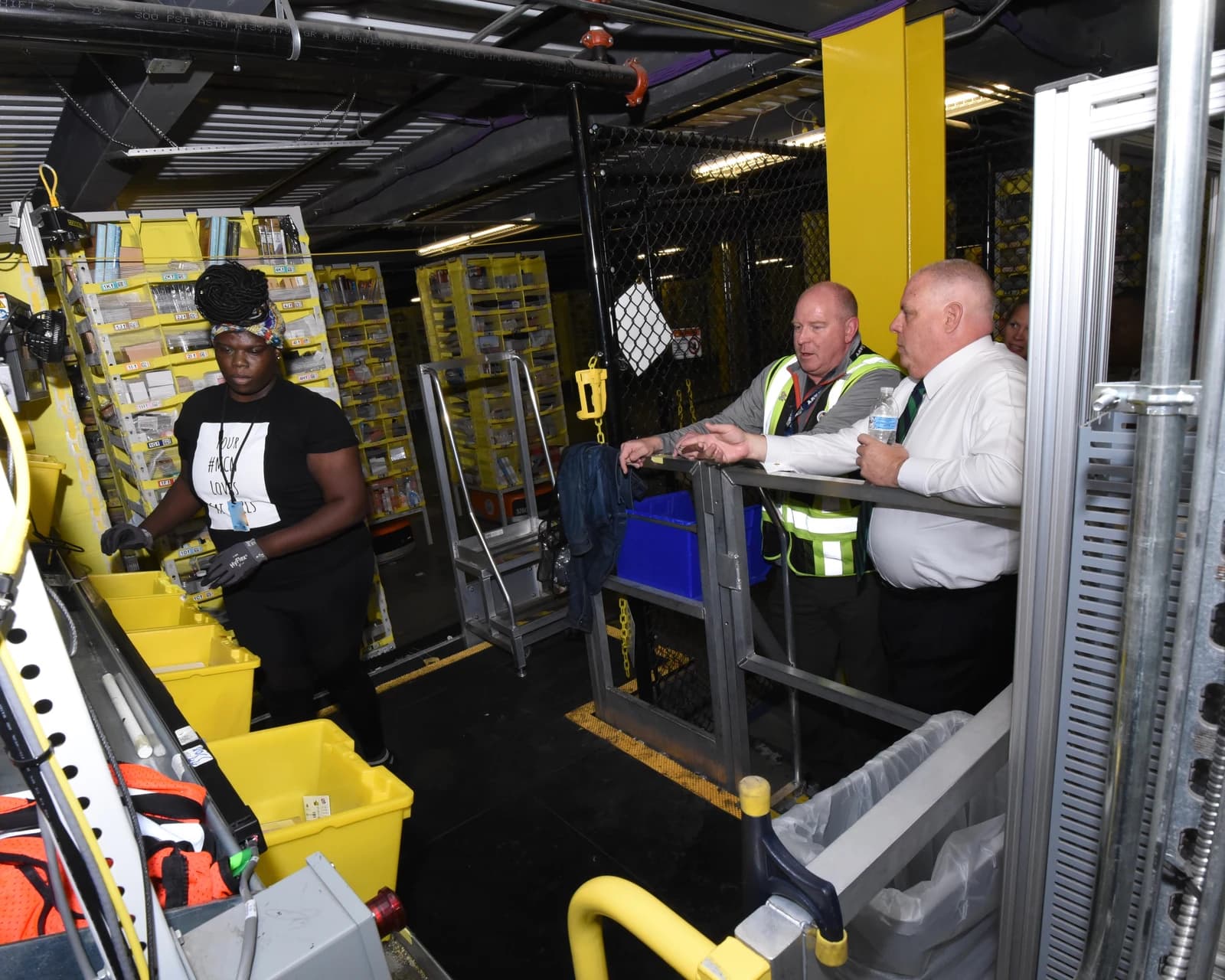
Amazon is lifting the minimum hourly wage for eligible full-time U.S. operations workers by $1 to $20, a move that reinforces its push to retain warehouse and fulfillment staff even as payroll costs climb across retail and logistics.
Amazon raises U.S. warehouse minimum pay to $20
The increase matters because labor remains one of Amazon’s biggest controllable expenses, and higher starting pay can help reduce turnover in a business built on tight delivery windows and heavy staffing. Amazon said the change will take average total compensation above $32 an hour when benefits are included, underscoring how aggressively it is using pay and perks to compete for workers.
The company is also adding a new benefit called Day 1 Financial, which gives qualified employees and their families lifetime access to low-cost banking services through First Tech Federal Credit Union. Amazon already markets healthcare for as little as $5 a week, a free Prime membership and prepaid education programs as part of its compensation package.
The move keeps Amazon ahead of many large U.S. retailers on base pay. Walmart’s minimum starting wage is $14 an hour and Target’s is $15, according to their websites, while Costco has said its entry-level minimum wage is $20. That comparison matters for investors because wages can influence retention, productivity and operating margin trends across the sector.
Amazon shares closed at $249.27 on Tuesday, while Walmart ended at $110.53 and Target at $156.26. On a technical basis, Amazon is still trading below its 50-day moving average of $256.29, while Walmart sits just above its 50-day average and Target remains well above both its 50-day and 200-day averages.
The larger investor takeaway is that Amazon continues to balance expansion in logistics and cloud infrastructure against the cost of keeping its workforce stable. With consumer demand still uneven and labor markets tight in key regions, any new wage floor adds to scrutiny on margins heading into the holiday season and the next earnings update.
| Entity | Gains | Losses |
|---|---|---|
| Amazon workers | ▲Higher base pay | ▼None |
| Amazon | ▲Better retention, hiring appeal | ▼Higher payroll costs |
| Walmart and Target | ▲Pressure to defend pay competitiveness | ▼Relative wage gap widens |
| Amazon investors | ▲Potentially lower turnover risk | ▼Margin pressure from labor costs |