Amazon’s latest sale is leaning on low-ticket, high-utility products, with a popular 25-euro car gadget serving as a reminder that the e-commerce giant still wins by owning everyday demand, not just headline electronics discounts.
Amazon sale lifts everyday essentials traffic
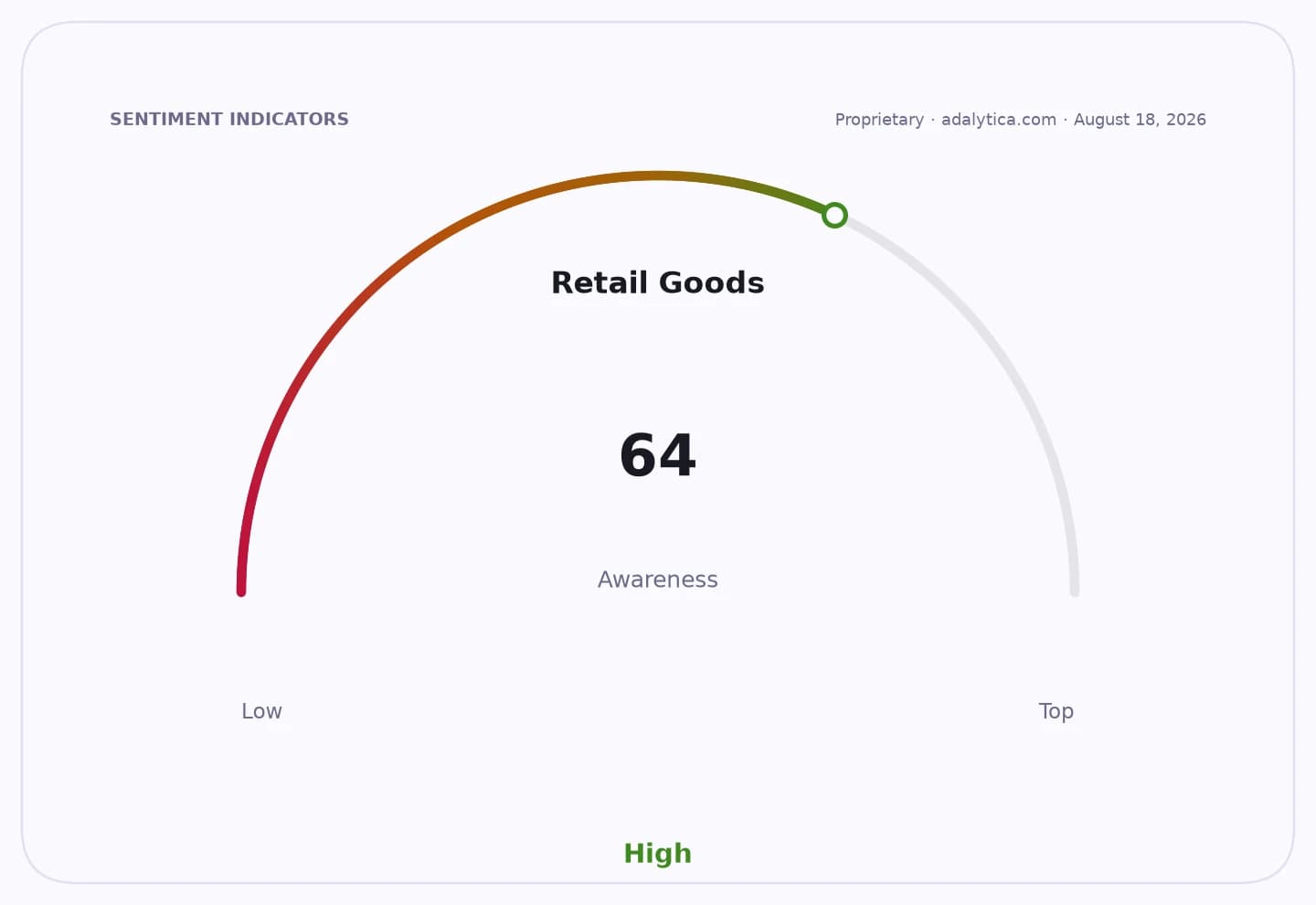
The economics matter because items that solve a universal problem — in this case, something “every driver needs” — tend to convert more reliably than discretionary goods. They also help Amazon defend traffic during promotion-heavy periods, when shoppers are more price-sensitive and more likely to compare across retailers. In an environment where consumer spending sentiment remains only neutral in Adalytica’s gauges, value-led campaigns can matter as much for volume as for margin mix.
Sentiment IndicatorsⓘProprietary · adalytica.com · August 18, 2026
This is a snapshot — live sentiment, awareness and momentum for 130+ markets update continuously in the dashboard.Open AlphaPulse
Amazon’s broader discounting push spans higher-ticket categories such as TVs, sound bars and microwave ovens, but the car accessory is the kind of product that can drive basket-building and repeat visits. That matters to investors because it reinforces the company’s core retail flywheel: low-friction essentials bring customers into the ecosystem, where they may add other goods, use Prime benefits and increase purchase frequency. The trade-off is that aggressive promotions can pressure gross margins in the near term, especially if Amazon is leaning on price to sustain share gains while households stay cautious.
The stock has been volatile but remains well above its 200-day moving average, suggesting the market still assigns value to Amazon’s scale and retail execution even after recent pullbacks. Technical indicators show the shares have cooled from overbought conditions earlier this year, with RSI readings easing from stretched levels, while momentum has remained positive overall. That combination suggests investors are still willing to buy the story, but are likely to reward evidence that promotions are driving efficient demand rather than merely subsidizing traffic.
The wider narrative is that Amazon is using its sale calendar to defend relevance in an increasingly price-conscious consumer landscape. The company’s strategy is not just to sell gadgets, but to position itself as the default destination for practical purchases that households cannot easily defer. If the campaign lifts order frequency without a sharp sacrifice in profitability, it supports the case for Amazon’s retail recovery; if discounting deepens, it strengthens the argument that revenue growth is still being bought with lower margins.
What investors will watch next is whether this kind of essentials-led promotion improves conversion across other categories and whether it shows up in quarterly retail margins. The market will care less about the gadget itself than about whether Amazon can keep pulling shoppers in with inexpensive, everyday items while preserving the profitability gains that have helped underpin the stock.
| Entity | Gains | Losses |
|---|---|---|
| Amazon | ▲Higher traffic and basket size | ▼Near-term margin pressure |
| Shoppers | ▲Cheaper essential gadget | ▼Less room for price discipline |
| Rivals | ▲— | ▼Share to Amazon |
| Suppliers | ▲Higher sale volumes | ▼Heavier promo dependence |