AI-linked chipmakers led the market’s latest move higher, with AMD, Nvidia and Intel drawing investor attention as traders continued to favor the companies most exposed to artificial-intelligence infrastructure spending. The advance matters because it shows the market is still rewarding earnings power and AI capacity even after a powerful run-up in the sector, while broader sentiment remains constructive for equities despite signs of froth in some corners of the market.
AMD, Nvidia and Intel rise on AI infrastructure demand
AMD was the standout among the three, closing at $518.58 on Aug. 4 after a volatile stretch that has left the stock up sharply from around $220 in late March. Its 50-day moving average has climbed to $514.33, and the shares are still trading well above the 200-day moving average of $314.56, a sign of how far investor expectations have moved. Intel also extended its recovery, ending at $100.86 after collapsing to $81.88 on July 29, while Nvidia finished at $211.94, just above its 50-day moving average of $205.65.
Sentiment IndicatorsⓘProprietary · adalytica.com · August 5, 2026
This is a snapshot — live sentiment, awareness and momentum for 130+ markets update continuously in the dashboard.Open AlphaPulse

The moves reflect a market still built around the AI capex cycle. AMD’s price action has been especially aggressive, but momentum indicators suggest that the stock has also been through a reset: its RSI had been deeply overbought in April and is now back near 48, while MACD has improved but remains negative. Nvidia’s RSI near 50 and a MACD close to flat point to a more balanced setup after a long consolidation. Intel’s technical profile has been more dramatic, with RSI rebounding from oversold levels after the late-July selloff, underscoring how quickly sentiment can swing in a name being repriced around a turnaround narrative.
For investors, the key question is whether the rally is being driven by fundamentals or by the market’s need to stay exposed to AI winners. The bull case remains that cloud customers, hyperscalers and enterprise buyers are still pouring money into compute, which supports top-line growth for the chip suppliers with the right product mix. The bear case is that valuations have already discounted a large part of that demand, leaving the sector vulnerable if spending pauses, product cycles slip or margin pressure rises as competition intensifies.
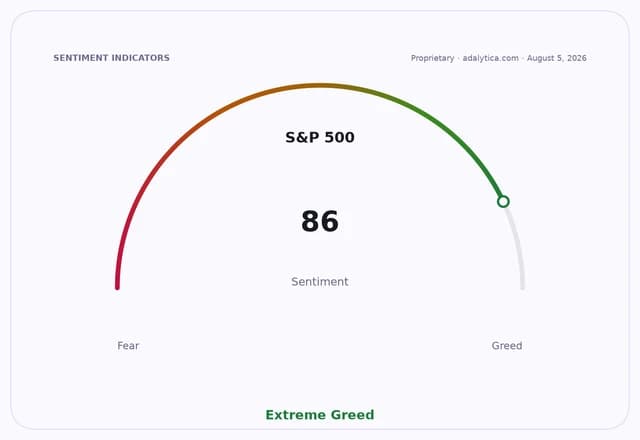
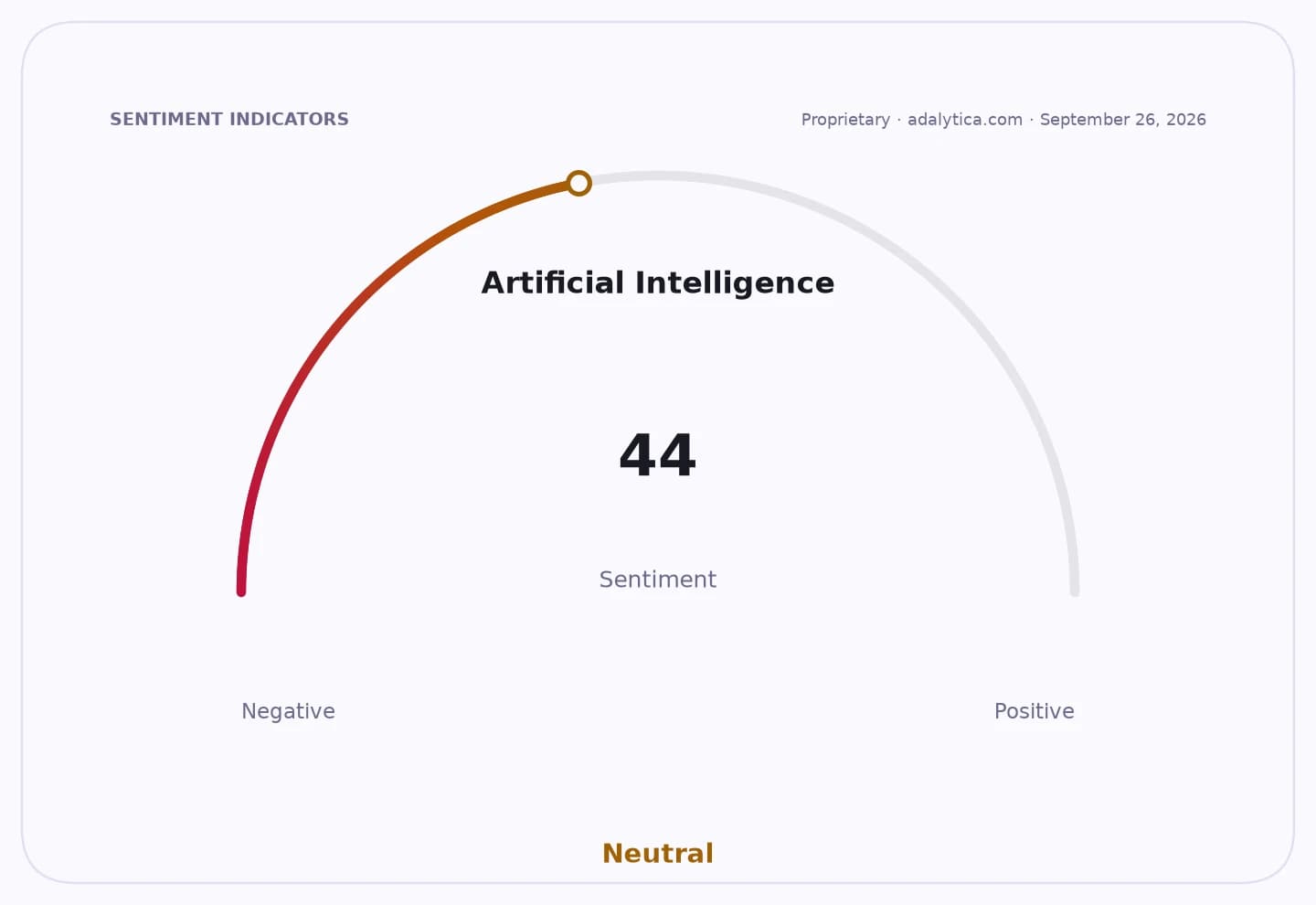
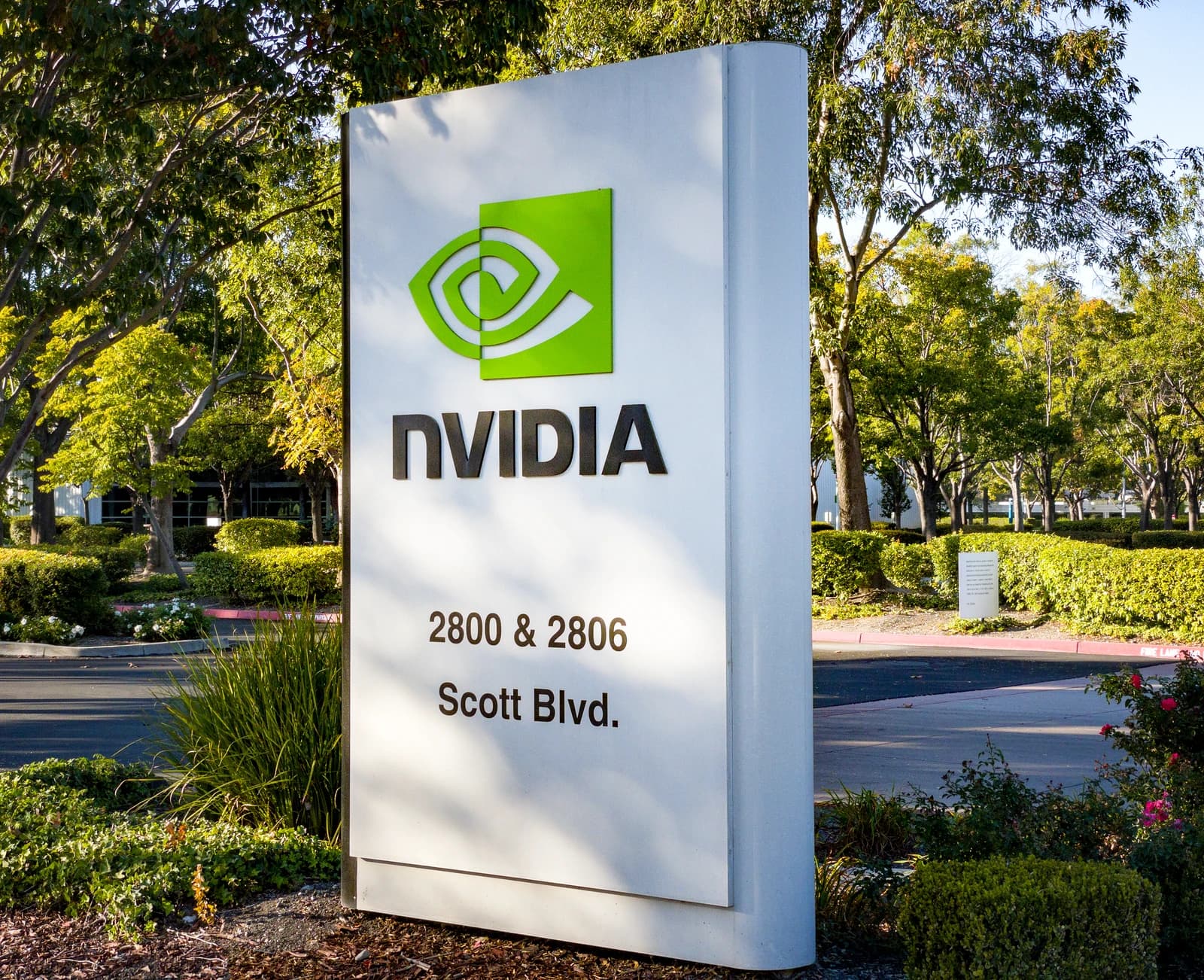
That tension is also visible in broader market indicators. Adalytica’s S&P 500 trade signals show “Extreme Greed,” while its AI sentiment reading is only at “Extreme Fear,” a split that suggests investors are still buying the market but are more cautious about the durability of the AI trade itself. Booking’s steadier share price near $194.27 after a solid summer recovery shows that capital is still rotating into profitable growth outside semiconductors, but the day’s real message comes from the chips: AI remains the market’s dominant earnings story, even as investors become more selective about who gets paid for it next.
The next catalyst will be whether forthcoming results and guidance can justify the recent share-price gains. If demand from data centers and AI customers holds, the leaders can keep commanding premium multiples. If not, the market’s rotation could quickly turn from concentration in the AI trade to consolidation within it.
| Entity | Gains | Losses |
|---|---|---|
| AMD | ▲AI demand momentum | ▼Late entrants chasing valuation |
| Nvidia | ▲Compute spending durability | ▼Bulls if capex slows |
| Intel | ▲Turnaround narrative, rebound traders | ▼Short sellers if recovery holds |
| Booking | ▲Rotation into profitable growth | ▼Relative attention in AI-heavy tape |