Andhra Pradesh Chief Minister N. Chandrababu Naidu has reopened a sensitive debate over India’s cash economy by calling for the withdrawal of 500- and 2,000-rupee notes, arguing that only 100- and 200-rupee denominations should remain in circulation to curb corruption, black money and fake currency.
Andhra Pradesh CM Naidu calls for smaller rupee notes
The proposal matters because it goes to the heart of how India moves money, especially in an economy where cash still plays a major role in household spending, small business transactions and political financing. Cutting off larger notes would make it harder to store and transport unaccounted wealth, but it would also raise frictions for consumers and businesses that still rely on physical currency, and could add operational strain to the banking system if implemented abruptly.
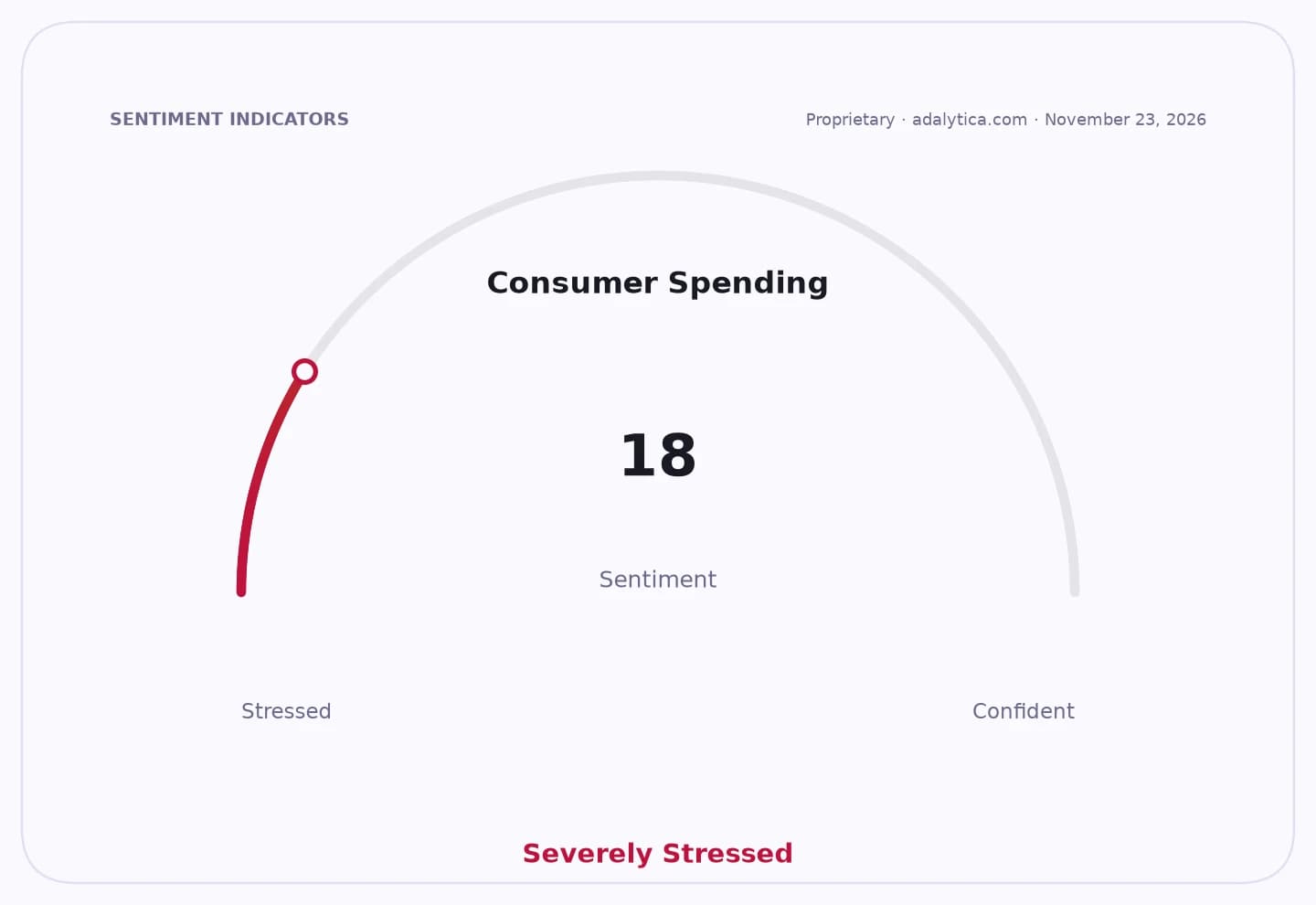
Sentiment Indicators
Naidu framed the idea as part of a broader push toward digital payments and technology-led governance, saying he has already raised the issue with Prime Minister Narendra Modi and provided information for a related report. His comments came just after the 10th anniversary of India’s 2016 demonetization, when the government withdrew 500- and 1,000-rupee notes in a bid to target black money, counterfeit cash and corruption.
The economic logic behind a smaller-note regime is straightforward: fewer high-value bills raise the transaction cost of hoarding unaccounted cash and can push more payments into traceable digital channels. That would support formalization, tax compliance and potentially a cleaner flow of capital through the banking system. But the counterargument is equally familiar: India’s 2016 shock showed how disruptive cash reform can be for informal workers, small merchants and rural households that are least equipped to absorb a sudden shift.
For investors, the story is less about an immediate policy change than about whether India’s cash-reform agenda is edging back into the national conversation. Any renewed move toward tighter cash controls would be relevant for banks, payment companies and consumer-facing businesses, while also carrying implications for election spending and political fundraising. It would likely be welcomed by advocates of digital finance and formalization, but resisted by constituencies that see high-value cash as essential liquidity.
There is also a broader macro backdrop. India has been trying to deepen digital adoption while managing a large informal economy and persistent concerns over corruption and tax evasion. A smaller denomination structure would fit that agenda, but the political and administrative cost would be high, particularly if the policy were seen as another top-down shock rather than a gradual transition.
For now, Naidu’s remarks are more a policy signal than a blueprint. But they revive one of India’s most contentious economic questions: how far the state should go in using currency design to reshape behavior, and whether the gains from formalization outweigh the disruption to everyday commerce.
| Entity | Gains | Losses |
|---|---|---|
| Digital payment firms | ▲Higher transaction volumes | ▼Slower adoption risk if policy stalls |
| Banks and formal finance | ▲More traceable flows | ▼Operational pressure from cash conversion |
| Informal cash economy | ▲More scrutiny | ▼Higher cash-handling friction |
| Small merchants and households | ▲Better long-term transparency | ▼Higher short-term payment inconvenience |