Apple is moving to turn its artificial-intelligence strategy into a new services and devices cycle, a shift that could matter more for margins and recurring revenue than for headline features. The company is preparing enhanced iCloud+ tiers aimed at heavier AI use, alongside a Siri-powered smart home hub, an updated Apple TV and a refreshed HomePod mini, developments that have fueled renewed enthusiasm around the stock and prompted commentator Jim Cramer to tout Apple’s AI progress.
Apple AI plans for iCloud+ tiers, Siri home hub
The significance is economic rather than cosmetic. Apple has already shown it can monetize its installed base through subscriptions, storage and hardware upgrades; AI gives it another reason to push customers toward paid tiers and more tightly integrated devices. That matters because services carry far higher margins than hardware, and any increase in iCloud attachment or premium home-device sales could help offset the cost pressure that comes with building AI into the product line.
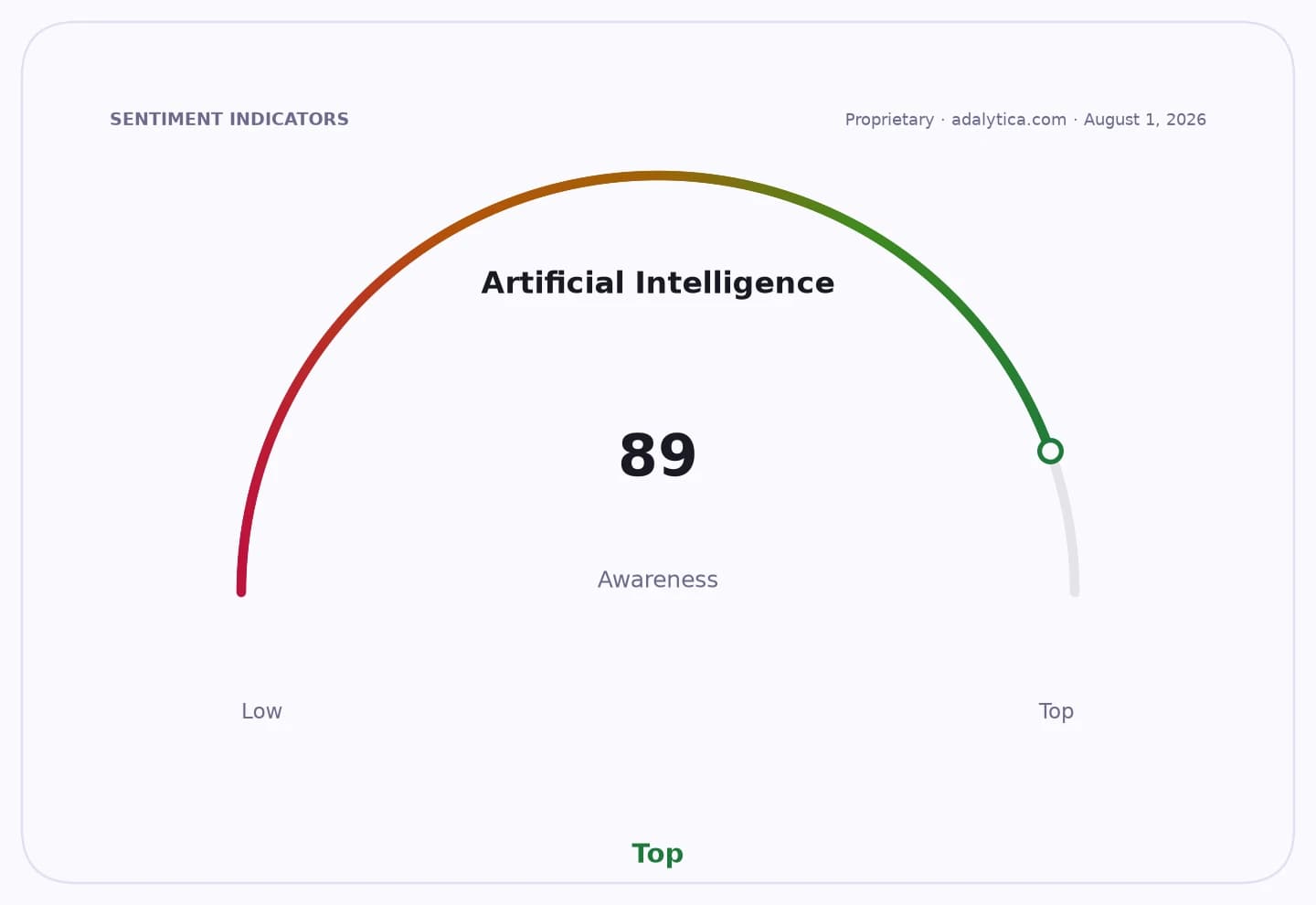
Sentiment IndicatorsⓘProprietary · adalytica.com · August 1, 2026
This is a snapshot — live sentiment, awareness and momentum for 130+ markets update continuously in the dashboard.Open AlphaPulse
The move also arrives as Apple has briefly reclaimed the title of the world’s most valuable company, topping $5 trillion in market value, underscoring how much investor appetite still hinges on whether it can translate AI into revenue rather than just buzz. Unlike rivals racing to sell pure-play AI software, Apple’s pitch is more incremental: privacy-focused AI embedded in products people already use. That may be slower to arrive, but it could prove stickier if it deepens customer dependence on the ecosystem.
From a market perspective, the trade is straightforward. Bulls see a company with unmatched distribution, a huge cash-generating base and a path to higher average revenue per user if AI features justify richer storage and service bundles. Bears counter that Apple’s AI rollout still looks less ambitious than some peers’ and that investors may be pricing in benefits before the company proves them in earnings. Apple’s own filings continue to flag AI-related competitive, legal and cost risks, as well as supply-chain constraints that could complicate execution.
The broader implication is that Apple is trying to use AI the same way it used previous product shifts: not as a standalone business, but as a lever to keep users inside its ecosystem and lift monetization across devices, software and services. If the new iCloud+ plans and smart-home products land well, they could become an early test of whether Apple can convert the AI cycle into durable financial upside. If not, the stock’s premium valuation leaves little room for disappointment.
| Entity | Gains | Losses |
|---|---|---|
| Apple | ▲Higher services revenue | ▼Execution risk on AI rollout |
| Apple shareholders | ▲Upside from ecosystem monetization | ▼Valuation risk if AI disappoints |
| Competitors | ▲— | ▼Pressure on smart-home and cloud rivals |
| Consumers | ▲More AI features and storage options | ▼Higher subscription costs |