Apucarana’s retail sector has locked in a 6% pay increase for 2026/27 after unions representing employers and workers signed collective bargaining agreements covering stores, the Shopping Centro Norte and supermarkets across the region.
Apucarana Retail Sector Agrees to 6% Wage Increase

The deal matters because it gives companies a clearer wage bill for the next labor cycle while also setting the floor for household income in a trade-heavy local economy. In a sector where payroll costs are one of the biggest operating expenses, the agreement reduces the risk of a prolonged labor dispute and allows retailers to plan pricing, staffing and inventory decisions with more certainty.
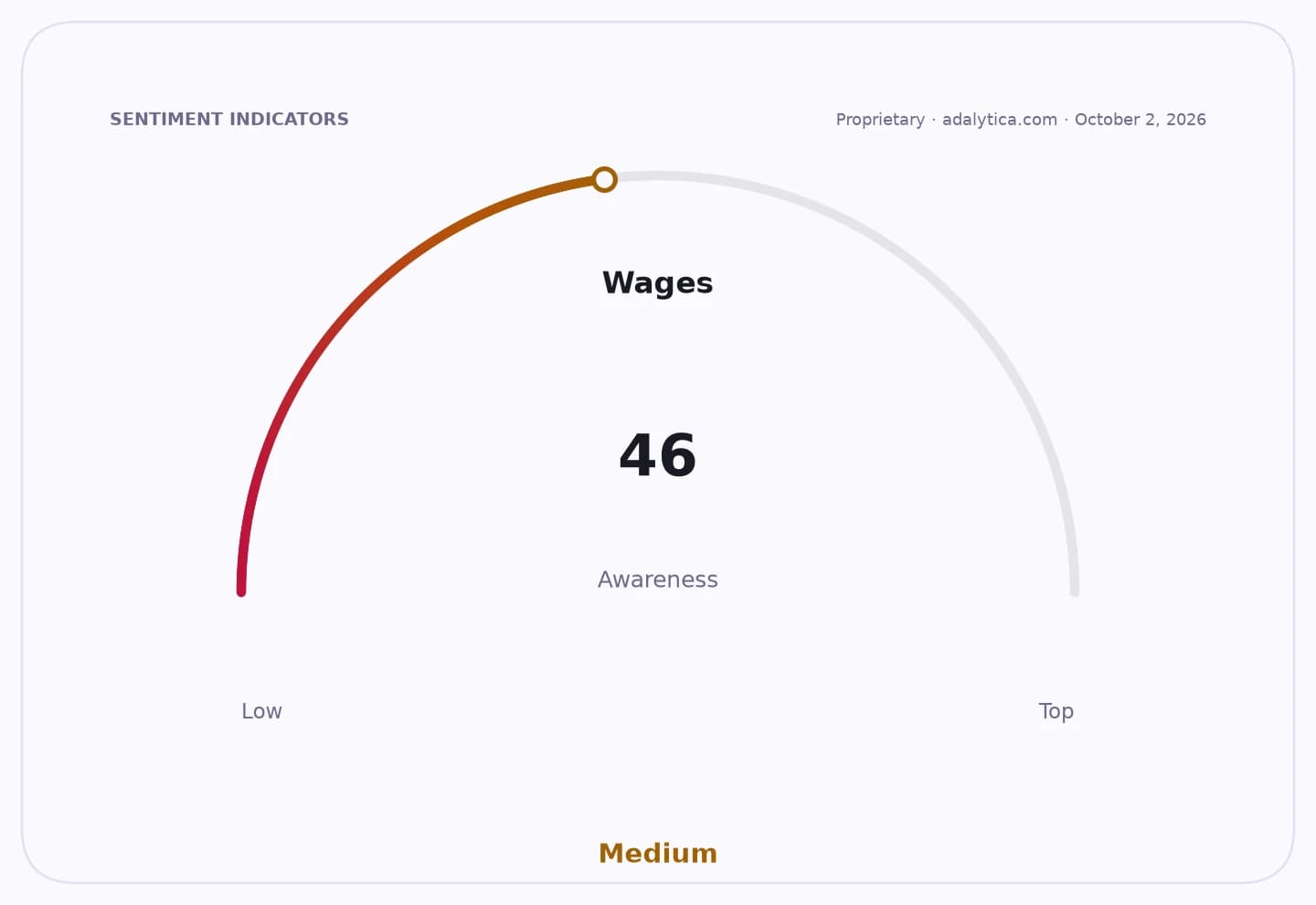
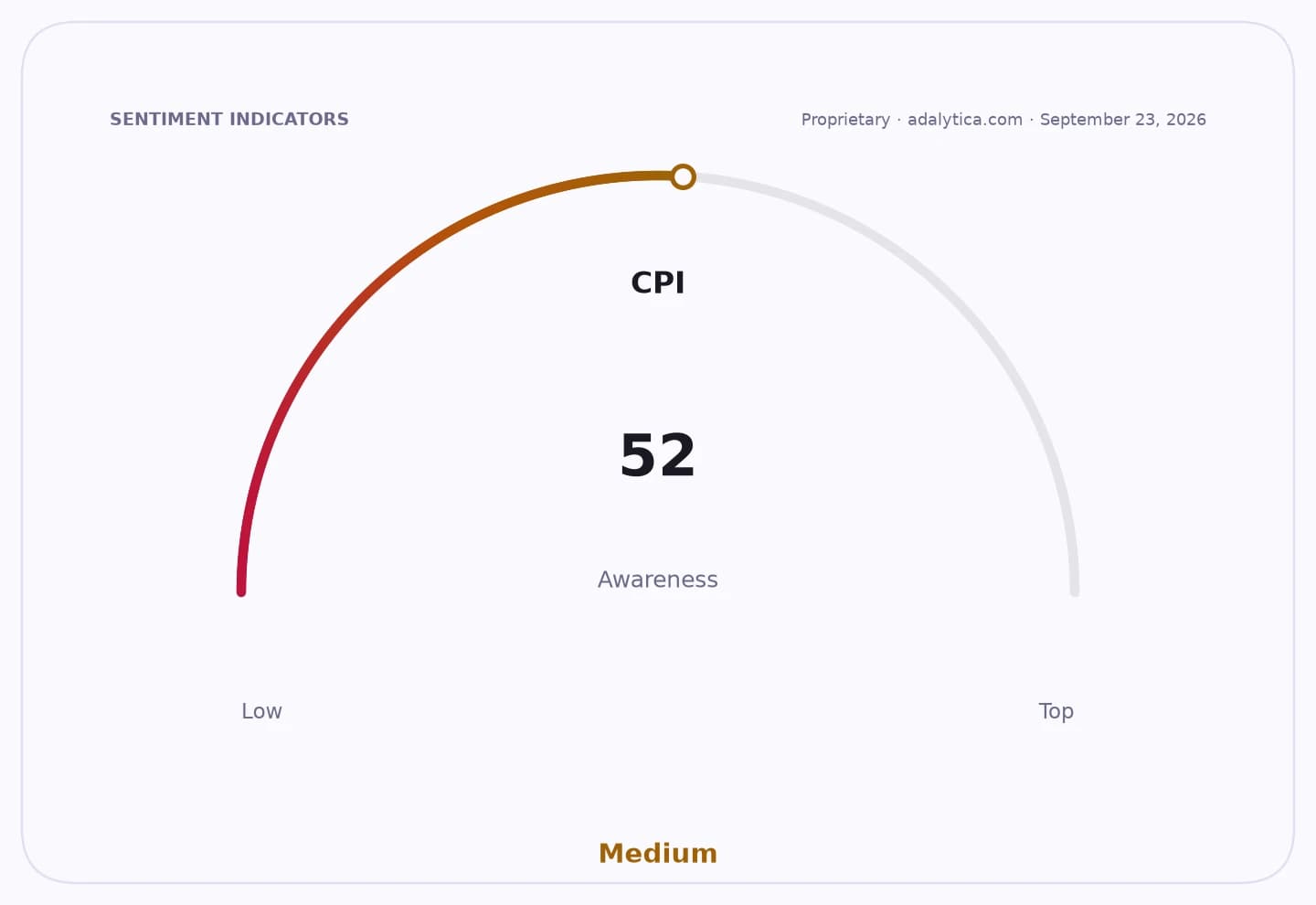
Sentiment IndicatorsⓘProprietary · adalytica.com · October 1, 2026
This is a snapshot — live sentiment, awareness and momentum for 130+ markets update continuously in the dashboard.Open AlphaPulse
The agreements were signed by the retail employers’ union Sivana, led by Aída Santos Assunção, and the workers’ union Siecap, represented by Anivaldo Rodrigues da Silva. The wage adjustment will take effect on July 1, 2026 for the retail trade and shopping center workers, and on June 1, 2026 for supermarkets, which have a different base date.
For employers, the 6% increase is a manageable but meaningful cost item at a time when consumer demand is still sensitive to inflation and interest rates. For workers, it preserves purchasing power and supports spending in Apucarana and nearby municipalities, where retail, supermarkets and shopping jobs are closely tied to local consumption.
The accords also set differentiated minimum salaries by role and working hours. In retail, monthly floors for employees with more than 30 days of service range from R$1,686.60 for entry-level support jobs such as couriers and packers to R$2,171.63 for clerks, sales staff and commissioned workers. At Shopping Centro Norte, floors vary from R$1,581.10 to R$1,777.00 for 36-hour schedules, and from R$1,686.60 to R$2,171.63 for 44-hour schedules.
In supermarkets, the new floors start at R$1,699 for support roles and rise to R$2,577.95 for butchers and checkout supervisors, with other roles set at R$2,144 for stockers, R$2,193.15 for cashiers and R$2,406.50 for bakers, confectioners and cooks. The agreements also require back pay for the months before the wage tables are updated, with retail and mall workers to receive July through September differences in October payroll and supermarket workers to receive June through September differences in that same pay run.
The broader significance is that the settlement reflects a relatively orderly wage negotiation in a fragmented but important local labor market spanning Apucarana, Bom Sucesso, Califórnia, Cambira, Kaloré, Mandaguari, Marilândia do Sul and Marumbi. For investors and business owners, the main takeaway is not the size of the increase alone, but the signal that wage-setting remains constructive enough to avoid disruption while still adding pressure to margins in a consumer sector already balancing weak discretionary demand against higher labor costs.
Looking ahead, the main variables are whether sales volumes can absorb the higher payroll burden and whether other regional labor talks follow a similar pattern. If consumer spending holds up, retailers can pass through part of the cost; if not, the agreement may squeeze profitability and force tighter hiring or pricing discipline.
| Entity | Gains | Losses |
|---|---|---|
| Workers | ▲Higher wages | ▼None materially |
| Retailers and supermarkets | ▲Labor certainty | ▼Higher payroll costs |
| Sivana and Siecap | ▲Stable bargaining outcome | ▼Less room for stronger gains |
| Consumers | ▲More household income | ▼Possible price pass-through |