Peru’s decision to lift the monthly minimum wage to S/1,230 from Oct. 1 is a small policy move with outsized market implications, adding labor pressure just as consumers are already stretched and employers across retail and food service are trying to protect margins.
Peru raises minimum wage to S/1,230 from Oct. 1
The government says about 200,000 workers will benefit, but the bigger economic question is who absorbs the cost. For a labor market still navigating uneven growth, the increase is likely to filter fastest into sectors with thin margins and heavy staffing needs, especially supermarkets, discount retail, restaurants and small businesses. That makes the change less about headline pay and more about a fresh squeeze on operating expense lines.
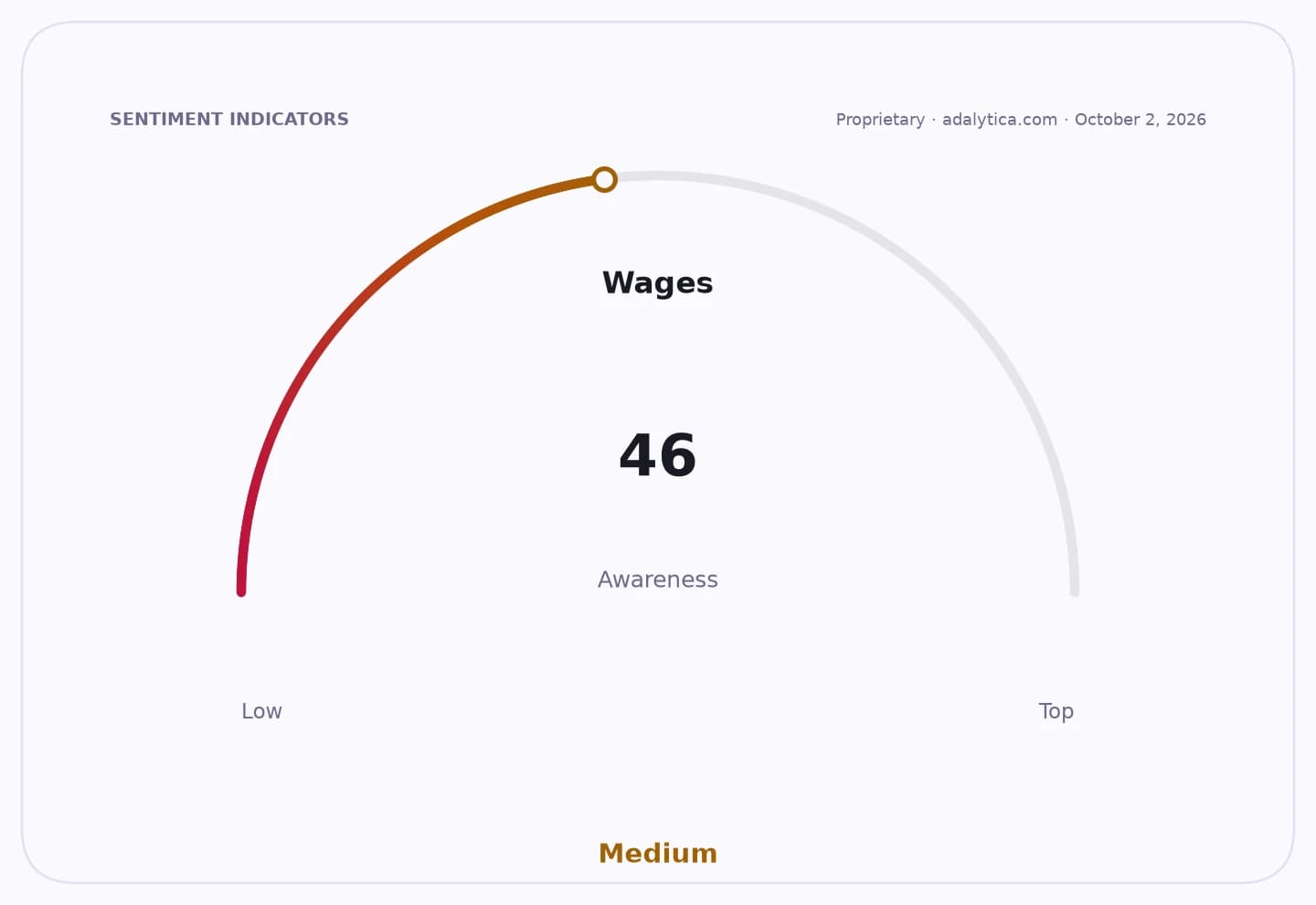
Sentiment IndicatorsⓘProprietary · adalytica.com · October 2, 2026
This is a snapshot — live sentiment, awareness and momentum for 130+ markets update continuously in the dashboard.Open AlphaPulse
Investors should focus on the second-order effects. Higher wages can help household spending at the low end, but they also raise the risk that employers respond with slower hiring, fewer hours or more off-the-books work. That “black payroll” concern matters because it can blunt the policy’s intended boost to formal incomes while widening the gap between compliant companies and those that cut corners.
The stock market backdrop underscores the tension. Walmart and Target have already seen sharp share-price swings as investors weigh consumer resilience, margin pressure and the durability of discretionary spending. In food service, McDonald’s has been under pressure too, with wage and labor costs a persistent margin issue in its filings. Even when a minimum-wage hike is country-specific, the playbook is familiar: labor-intensive businesses absorb the first hit, while pricing power and scale determine who can pass it on.
That is why this matters beyond Peru. In a world where inflation has eased but wage costs remain sticky, policy makers are still trying to balance living standards against formal employment. For investors, the winners tend to be the companies with the strongest pricing power, the best automation runway and the least dependence on low-wage labor. The losers are the MSMEs and high-touch consumer operators that cannot easily reprice.
The market should treat this as an early warning rather than a one-off headline. If wage policy keeps moving faster than productivity, the pressure will eventually show up in margins, staffing and informal employment — and that is where the real investment signal lies.
| Entity | Gains | Losses |
|---|---|---|
| Low-wage workers | ▲Higher monthly pay | ▼Risk of fewer hours |
| Formal large retailers | ▲Potential demand support | ▼Higher payroll costs |
| MSMEs | ▲— | ▼Margin squeeze, hiring pressure |
| Consumers/households | ▲Slight income boost | ▼Possible price pass-through |