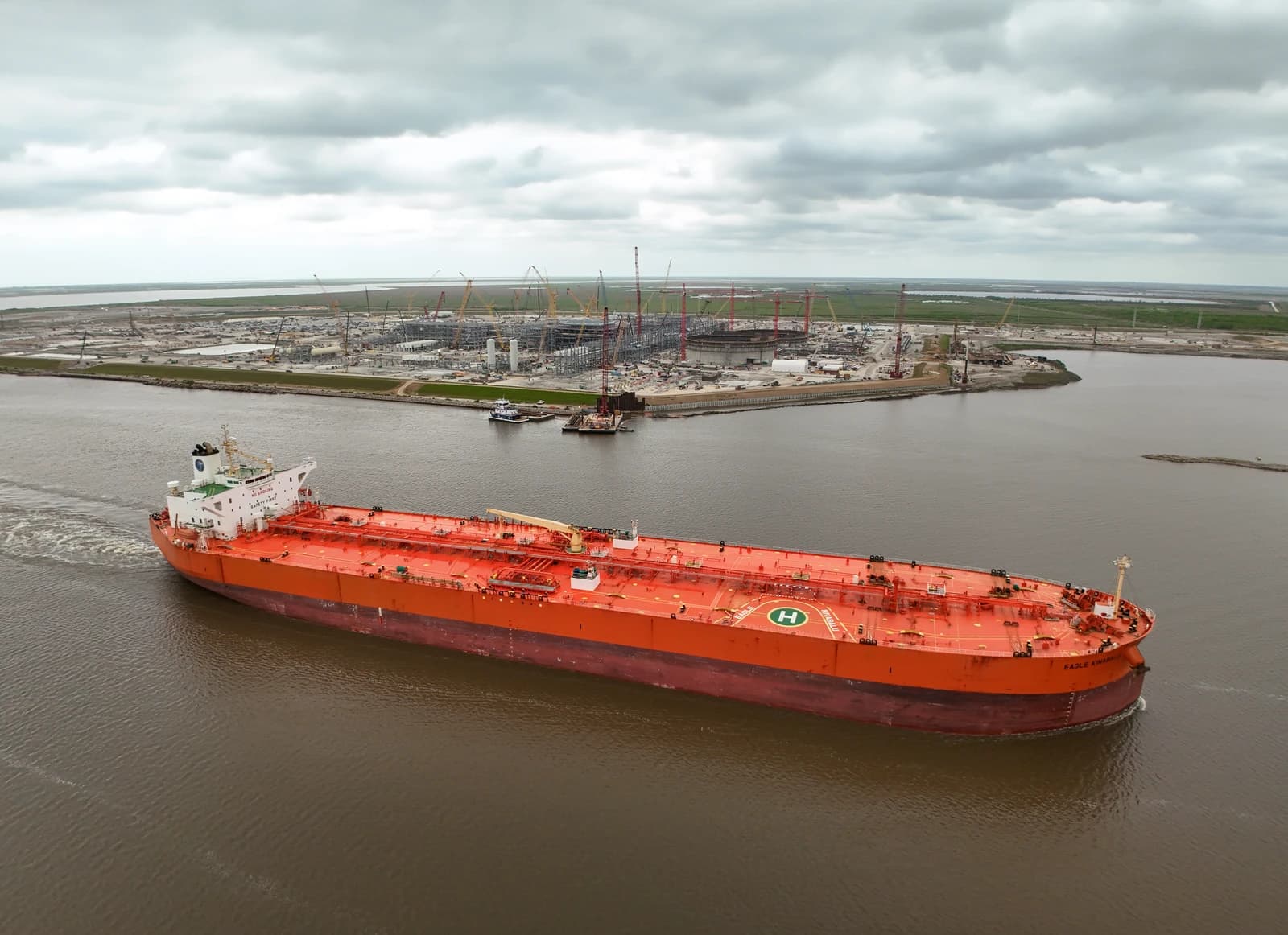
Argentina has cleared a $50.8 billion incentive framework for a giant liquefied natural gas export project, removing one of the biggest policy hurdles to turning Vaca Muerta gas into a long-term source of foreign currency.
Argentina approves $50.8B LNG incentive plan

The approval matters because Argentina is trying to convert its shale gas bounty into hard-currency exports at a time when the economy badly needs dollar inflows, investment and a steadier external account. For President Javier Milei’s government, the scheme is not just an energy policy but a balance-of-payments strategy: if the project advances, it could help narrow the country’s chronic trade and reserve constraints by locking in large-scale LNG sales abroad.
YPF, the state-controlled oil major and the central corporate vehicle behind the plan, has already flagged its Argentina LNG unit in recent filings, underscoring that the project is moving from concept toward execution. The scheme would support industrialization and commercialization of LNG through a dedicated subsidiary, with local partners expected to include midstream and pipeline operators that would benefit from a larger gas transport network. TGS, one of the country’s key gas shippers, has separately told investors that Argentine energy policy is being reshaped around a new production model, including transport reconfiguration to support future output growth.
The economics are straightforward: Argentina has abundant unconventional gas, but it needs liquefaction, pipelines, storage and export infrastructure to monetize it at scale. That makes the incentive regime crucial, because LNG projects are capital-intensive, long-dated and highly sensitive to fiscal terms, regulatory stability and access to financing. The green light reduces policy risk, but it does not eliminate execution risk in a country with a history of capital controls, tariff intervention and volatile macro policy.
For investors, the decision is a positive for YPF and select domestic energy infrastructure names, but it also raises the stakes. A successful LNG buildout would strengthen the earnings profile of producers and transporters tied to Vaca Muerta and potentially re-rate Argentine energy assets on export optionality. The bear case is that political noise, financing constraints and infrastructure bottlenecks delay the project or dilute returns, leaving shareholders exposed to the gap between ambition and delivery.
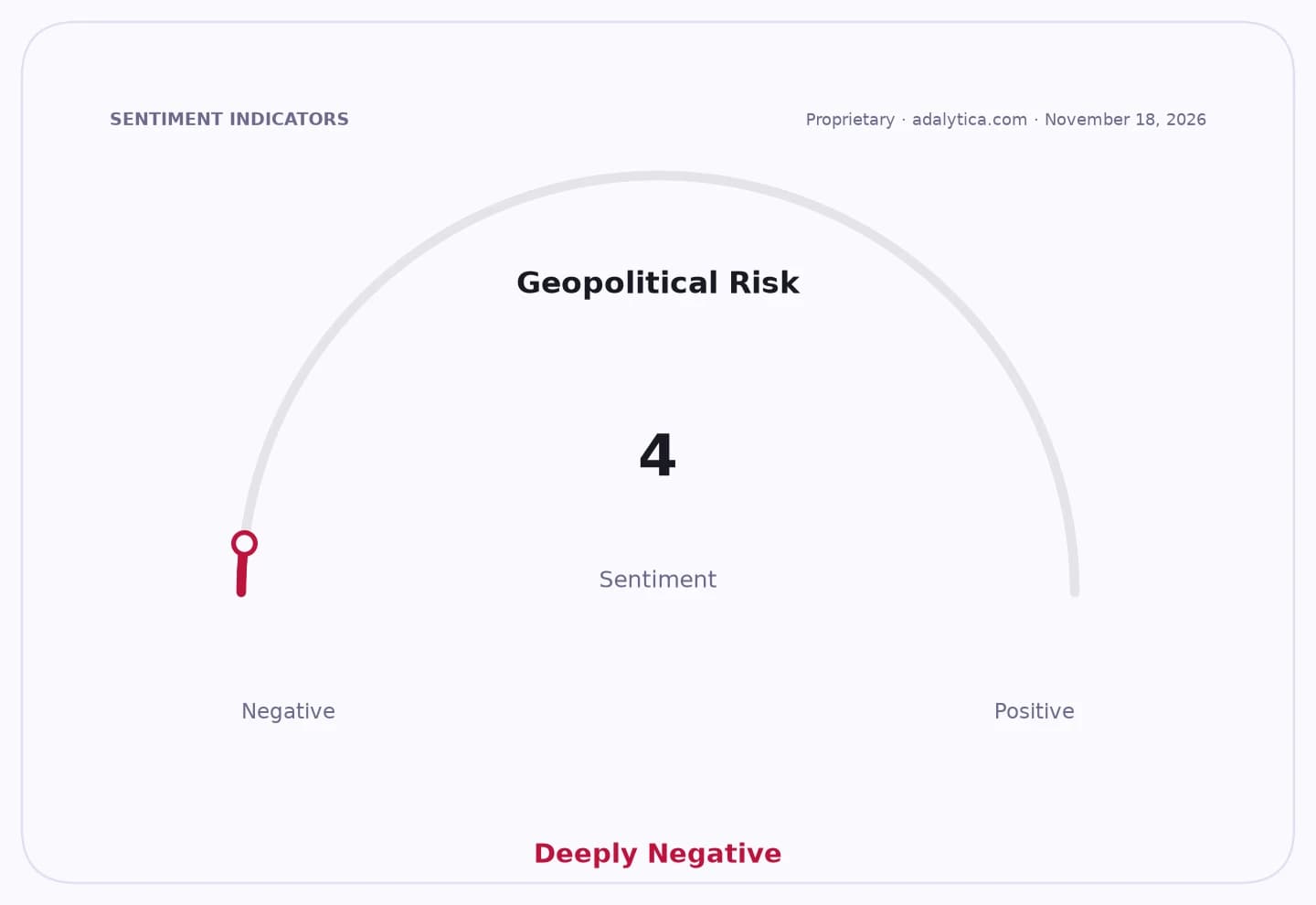
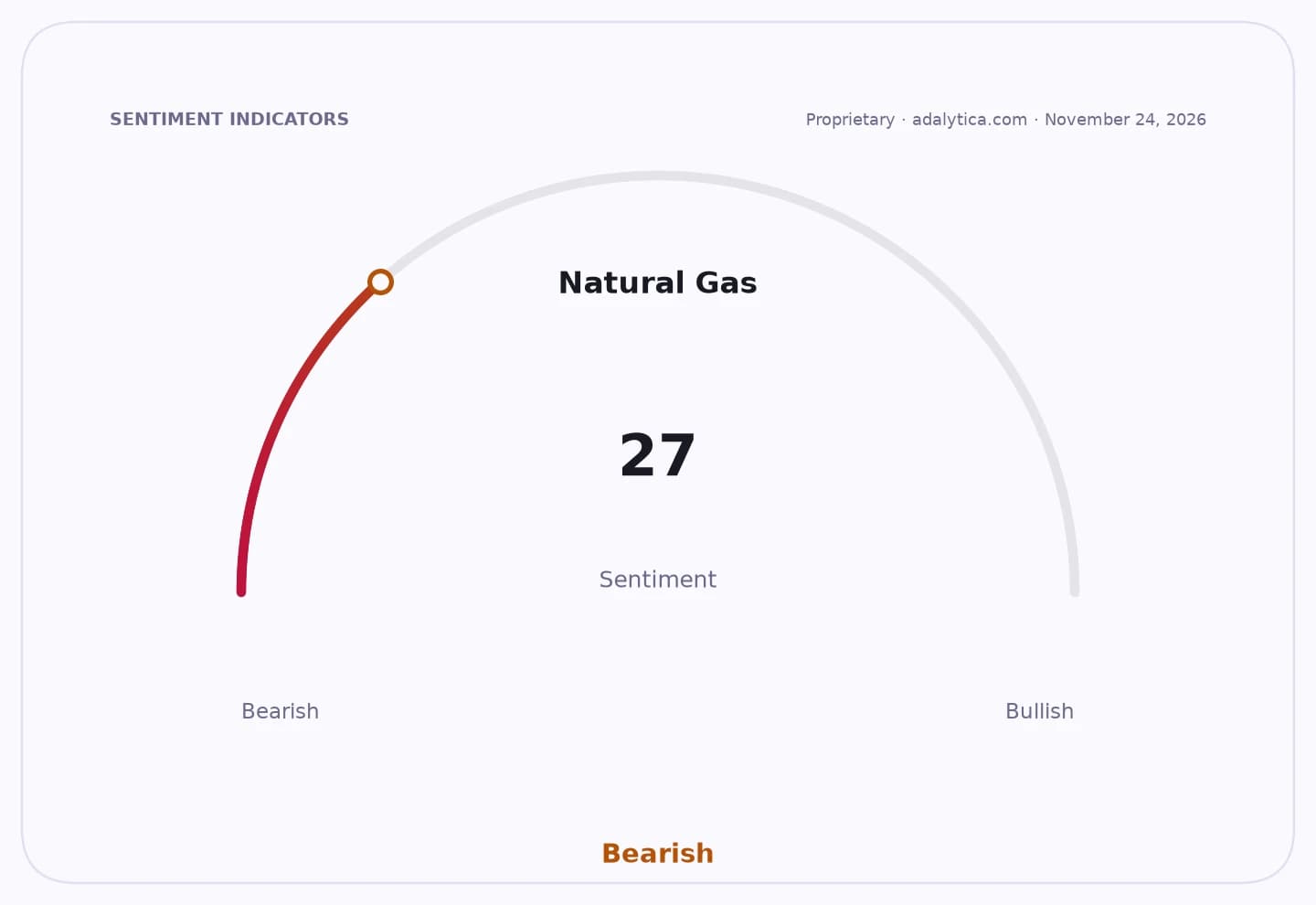
The broader market backdrop is also relevant. Global stability sentiment tracked by Adalytica has fallen sharply into “Extreme Fear,” highlighting the kind of risk-off environment that can complicate funding for emerging-market megaprojects. Against that backdrop, Argentina’s LNG plan is a high-conviction bet that domestic gas can be turned into a strategic export industry — but the market will want to see concrete investment commitments, final contracts and progress on transport capacity before assigning full value to the opportunity.
| Entity | Gains | Losses |
|---|---|---|
| YPF | ▲Export growth optionality | ▼Execution and financing risk |
| Argentina government | ▲Hard-currency inflows | ▼Fiscal and policy credibility risk |
| TGS and pipeline operators | ▲Transport demand | ▼Delay in project buildout |
| LNG buyers/importers | ▲Potential new supply | ▼Higher project-linked pricing volatility |