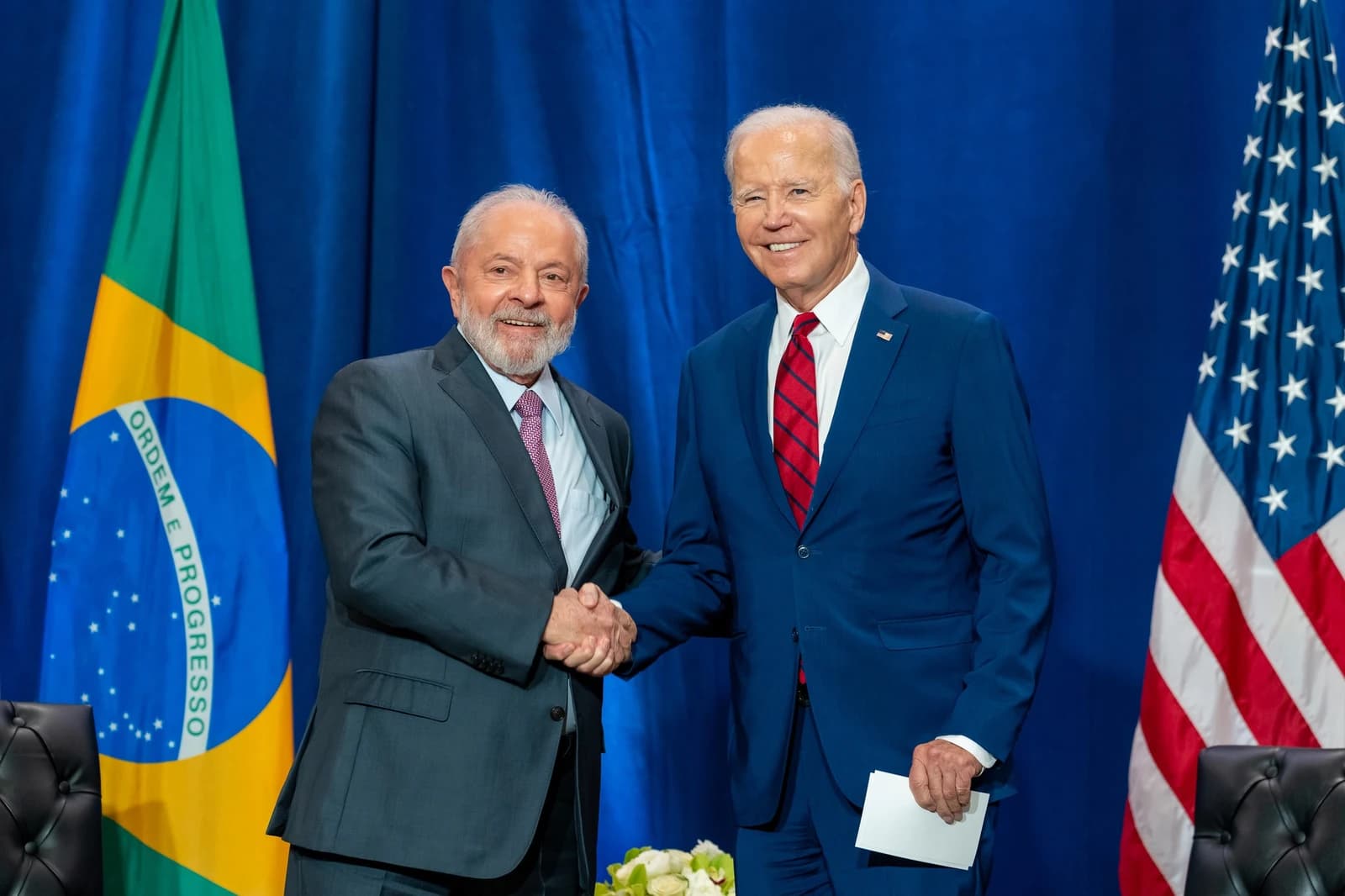
Brazil’s push to recast itself as a developed economy is now being framed around the country’s biggest investable themes: clean energy, critical minerals, data centers and infrastructure. That matters because President Luiz Inacio Lula da Silva is not just talking up growth — he is sketching a policy mix aimed at attracting long-term capital, lifting productivity and keeping the energy transition at the center of Brazil’s next investment cycle.
Brazil targets data centers, clean energy, minerals

Lula said at a meeting of the National Council for Energy Policy that he wants to lift Brazil out of the developing-country category within four years, arguing the nation has an unusual opening to accelerate social and economic growth. His pitch rests on assets investors already know well: abundant renewable power, critical minerals and rare earths, plus the scale to host new industrial projects tied to artificial intelligence and digital infrastructure.
Sentiment Indicators
For investors, the message is as important as the ambition. Brazil is trying to position itself not just as a commodity exporter, but as a place where those resources can be refined, processed and monetized at higher value. That is the difference between a cyclical bet on raw materials and a longer-term thesis built on industrial upgrading, energy buildout and infrastructure spending.
Lula’s comments also signal that the government wants to be selective about the foreign capital it welcomes. He said data-center developers would need to bring their own power rather than tap electricity meant for households, a stance that fits with Brazil’s broader effort to expand clean generation while avoiding pressure on the grid. In practice, that could favor investors willing to pair compute demand with renewables, storage or dedicated generation — a theme likely to shape the next wave of digital infrastructure deals in Latin America.
The president also leaned into fiscal caution without abandoning public investment. He said Brazil will keep to responsible budget management while preserving social commitments, and that borrowing can make sense when the money is used for assets that raise the country’s productive capacity, such as railways, roads, bridges and airports. That is a familiar emerging-market balancing act, but in Brazil’s case it may prove decisive: growth will need both private capital and a state willing to underwrite infrastructure that unlocks it.
The market backdrop helps explain why this story matters now. Brazil’s economy has shown resilience, unemployment is low by recent history and investors remain focused on the real, interest rates and the country’s ability to sustain growth without derailing fiscal discipline. The Lula government is betting that energy abundance and a friendlier investment climate can widen Brazil’s appeal even as political volatility and legislative constraints remain real obstacles.
Still, the bigger takeaway for long-term investors is that Brazil is trying to turn a resource-rich economy into a platform for compounding. If Lula can keep the fiscal framework credible while channeling capital into energy, logistics and digital infrastructure, Brazil could offer something more durable than a commodity trade. It would be a story of productivity, not just prices — and that is exactly the sort of shift that can reward patient investors over the next decade.
| Entity | Gains | Losses |
|---|---|---|
| Brazil | ▲More investment, higher value-added growth | ▼Policy failure, slow productivity gains |
| Clean energy and grid builders | ▲New demand from industry and data centers | ▼Investors in power-hungry projects without self-supply |
| Infrastructure firms | ▲More public and private project spending | ▼Firms exposed to delayed fiscal execution |
| Raw-material exporters | ▲Higher strategic relevance | ▼Lower-margin, unprocessed exports |