Argentina’s country risk has jumped back above 600 basis points as a brutal selloff in US Treasuries forces up global borrowing costs and strips away one of the main supports for emerging-market debt.
Argentina Country Risk Tops 600 bps as Treasury Selloff Hits
That matters because the move is not just about Argentina’s local politics or weak data. It is being amplified by a global repricing of sovereign risk, with the 30-year US Treasury yield climbing to 5.9%, its highest since 2004, while the 5-year US rate has risen to 5.02%. For Argentina, that means a higher hurdle just to keep investors in place, and a much steeper one for any return toward the 400-point area the market had hoped for.
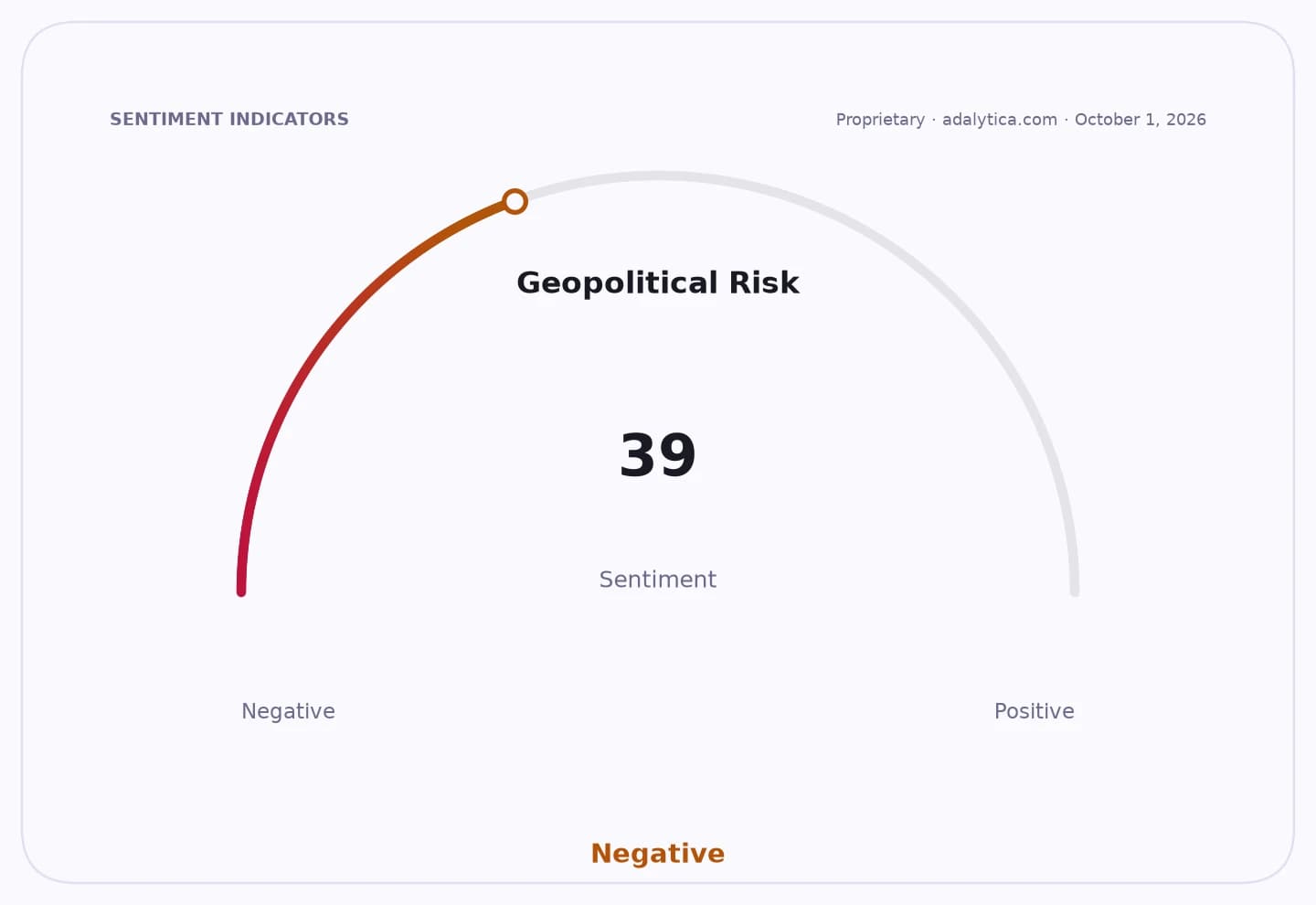
Sentiment IndicatorsⓘProprietary · adalytica.com · October 1, 2026
This is a snapshot — live sentiment, awareness and momentum for 130+ markets update continuously in the dashboard.Open AlphaPulse
The country risk index, compiled by JPMorgan, rose to 602 basis points in the latest session and has gained 22% this month. Argentine debt issued under New York law fell again on Friday, extending a five-day drop of as much as 4%. The market is now pricing a tougher refinancing environment just as the government heads into an election year and faces another IMF commitment.
The key story is that US bond volatility is now spilling directly into local credit. When Treasury yields rise, investors demand more compensation across the curve, especially from borrowers with weaker balance sheets and political uncertainty. That “substitution effect,” as local analysts describe it, means Argentina has to pay up just to avoid losing investors to safer US paper. The higher global rate also increases the fiscal burden of rolling debt, tightening the squeeze on a government already short of reserves.
This is why the move matters far beyond Buenos Aires. Emerging-market sovereigns do not price in a vacuum, and Argentina is among the most exposed to shifts in the global risk-free rate. The pressure from Washington is colliding with domestic weakness: softer activity data, higher poverty readings and a slowdown in central bank reserve accumulation. The BCRA has sharply reduced its pace of dollar purchases, with buys slipping to 2.4% of MULC turnover so far in September from 18.6% in July.
The global backdrop is getting no friendlier. Fed-funds futures now imply more than a 64% chance of a 25-basis-point hike at the Oct. 28 meeting, and persistent inflation fears are keeping the pressure on duration. Added to that are geopolitical tensions in the Middle East, higher funding needs for US war spending and a wave of sovereign selling in Japan and Europe that further reduces global liquidity. Even the surge in AI-related corporate issuance is competing with government debt for investor capital, pushing rates higher across the system.
That is feeding into prices. The iShares 20+ Year Treasury Bond ETF, a common gauge of long-duration US rates, has slid below its 50-day and 200-day moving averages, with its RSI in oversold territory, underscoring the force of the selloff. In Adalytica’s US Treasury Bonds Trade Signals snapshot, awareness is still at “Extreme Greed” even as the latest change points to a sharp short-term deterioration, a sign that positioning may still be unwinding rather than stabilizing.
For investors, the message is straightforward: the easy money in sovereign debt is gone, and the market is repricing duration, liquidity and country risk all at once. Argentina is not the only casualty, but it is one of the clearest expressions of how a US Treasury shock can crush frontier and emerging-market assets even when local fundamentals have not changed dramatically.
The next catalyst is likely to come from the Fed and from any further spike in long-end Treasury yields. Until US rates stop climbing, Argentina’s debt is likely to remain under pressure, and a quick return to the 400-point country-risk level looks increasingly out of reach. For investors, that argues for caution on high-beta sovereign credit and patience on any dip-buying in Argentine bonds until global rates show a real top.
| Entity | Gains | Losses |
|---|---|---|
| US Treasury buyers | ▲Higher yields | ▼Mark-to-market losses |
| Argentine bondholders | ▲None | ▼Lower prices, wider spreads |
| Argentine government | ▲None | ▼Higher refinancing costs |
| Cash and short-duration assets | ▲Relative safety | ▼None |