Argentina’s formal wages finally outpaced consumer prices in July, but the gain was too small to erase the broader erosion in purchasing power that has accumulated over the past year and since late 2023.
Argentina formal wages beat inflation in July
Registered salaries rose 2.5% in the month, ahead of July inflation of 2.1%, according to the national statistics agency Indec. That marks a second straight month in which formal pay beat price growth, a welcome sign for households and a possible easing of some pressure on consumption. But on the more important annual and year-to-date measures, wages are still losing ground: registered pay was up 18.3% in the first seven months of the year and 30.1% year on year, versus inflation of 19.3% and 33.8%, respectively.
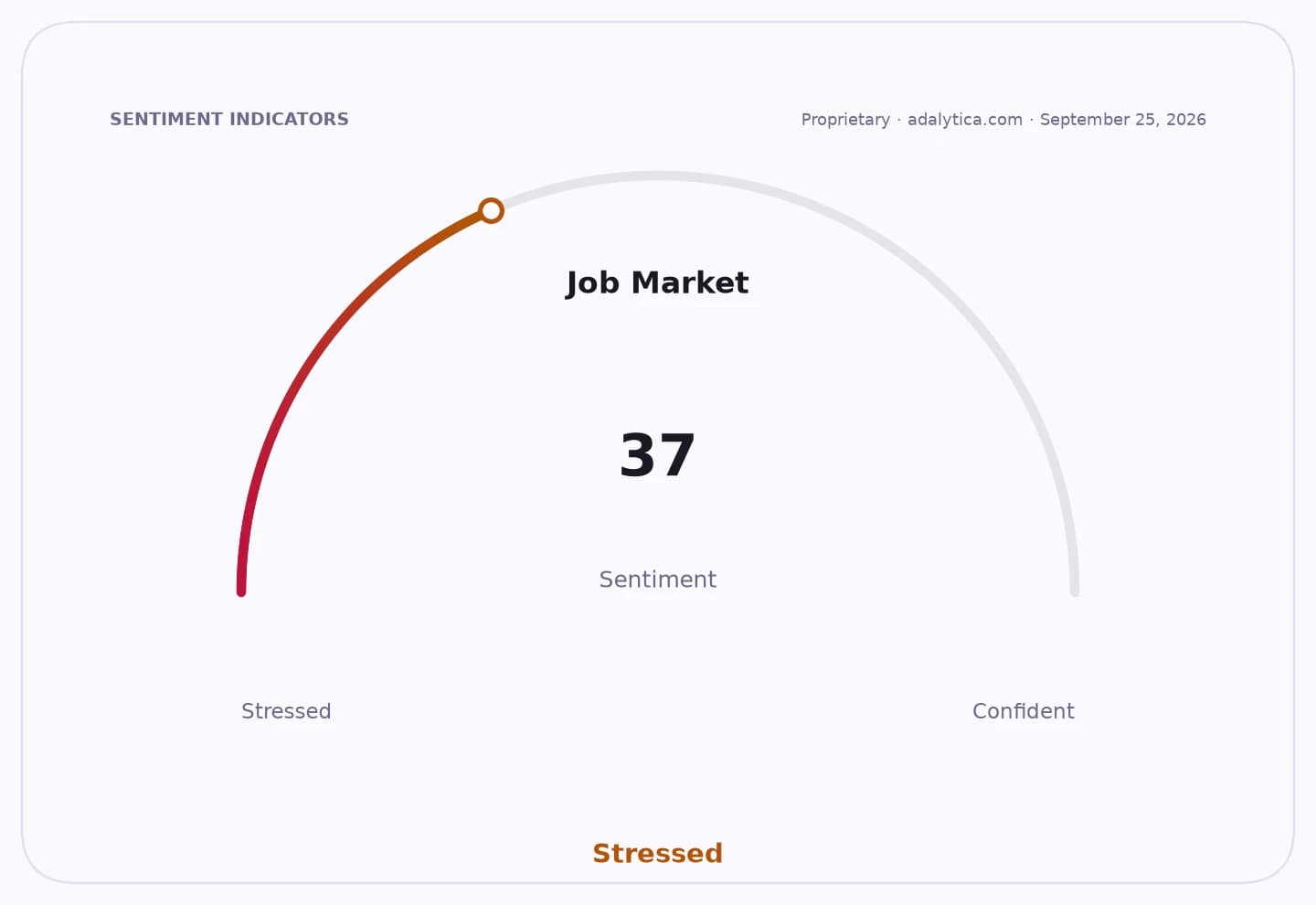
Sentiment IndicatorsⓘProprietary · adalytica.com · September 27, 2026
This is a snapshot — live sentiment, awareness and momentum for 130+ markets update continuously in the dashboard.Open AlphaPulse
The data matter because Argentina’s inflation fight has been driven not only by fiscal and monetary tightening but also by the government’s effort to contain a wage-price spiral. If salaries begin to catch up too quickly, firms face margin pressure and may pass costs on to consumers; if wages remain behind inflation, household spending weakens and recession risks deepen. July’s reading suggests the labor market is still in a fragile adjustment phase rather than a clear recovery.
The formal wage picture remains uneven. Public-sector salaries rose 3% in July, above the 2.3% increase in private formal pay, and have also done better over the year. Public wages were up 21.1% year to date and 31% annually, compared with 17% and 29.7% for private formal workers. That split is politically sensitive: the state has been granting larger increases to preserve purchasing power and reduce union pressure, while private employers are still trying to absorb a weaker economy and higher labor costs.
A broader wage index that includes informal workers rose 2.8% in July, 21.8% year to date and 36.2% from a year earlier, outpacing inflation in all three comparisons. But that series is distorted by the fact that informal wage data are published with a five-month lag, making it a useful but delayed gauge of labor-market stress. Informal pay climbed 3.9% in the month, 34.4% year to date and 59.9% year on year, underscoring how volatile and uneven income growth remains outside the formal sector.
For investors, the latest wage figures reinforce the idea that Argentina’s disinflation process is still incomplete. A modest improvement in real formal wages could support retail sales and domestic demand at the margin, but the continued gap versus inflation means households are not yet recovering the spending power lost during the 2023 devaluation and price surge. That argues for caution on consumer-exposed companies, while offering some relief to policymakers hoping inflation can decelerate without a sharp wage reacceleration.
Jorge Colina, director at Instituto para el Desarrollo Social Argentino, said private formal wages are still tracking slightly below inflation and have not recovered to their November 2023 level, when monthly price increases were already running in double digits. That is the key takeaway for markets: July shows progress, but not enough to change the broader story of damaged real incomes, uneven wage bargaining and an economy still searching for a stable nominal anchor.
| Entity | Gains | Losses |
|---|---|---|
| Formal workers | ▲Slight real wage rebound | ▼Real incomes still lag inflation |
| Public-sector employees | ▲Faster wage increases | ▼Budget pressure on the state |
| Private employers | ▲Slower wage growth | ▼Continued labor-cost strain |
| Consumers/retail demand | ▲Some purchasing-power relief | ▼Spending power remains weak |