A growing share of Argentine households are using loans from relatives, friends and non-bank lenders just to cover everyday expenses, a sign that debt is no longer financing consumption but plugging holes in the monthly budget.
Argentina households borrow for everyday expenses

That shift matters economically because it turns borrowing from a tool of expansion into one of survival. The University Catholic Argentina’s social debt observatory found 27.4% of urban households had to borrow to meet routine spending, with the burden falling hardest on poorer families and those who say their income is insufficient. Among poor households, 44.4% borrowed for basic expenses, almost double the 22.4% rate for non-poor households.
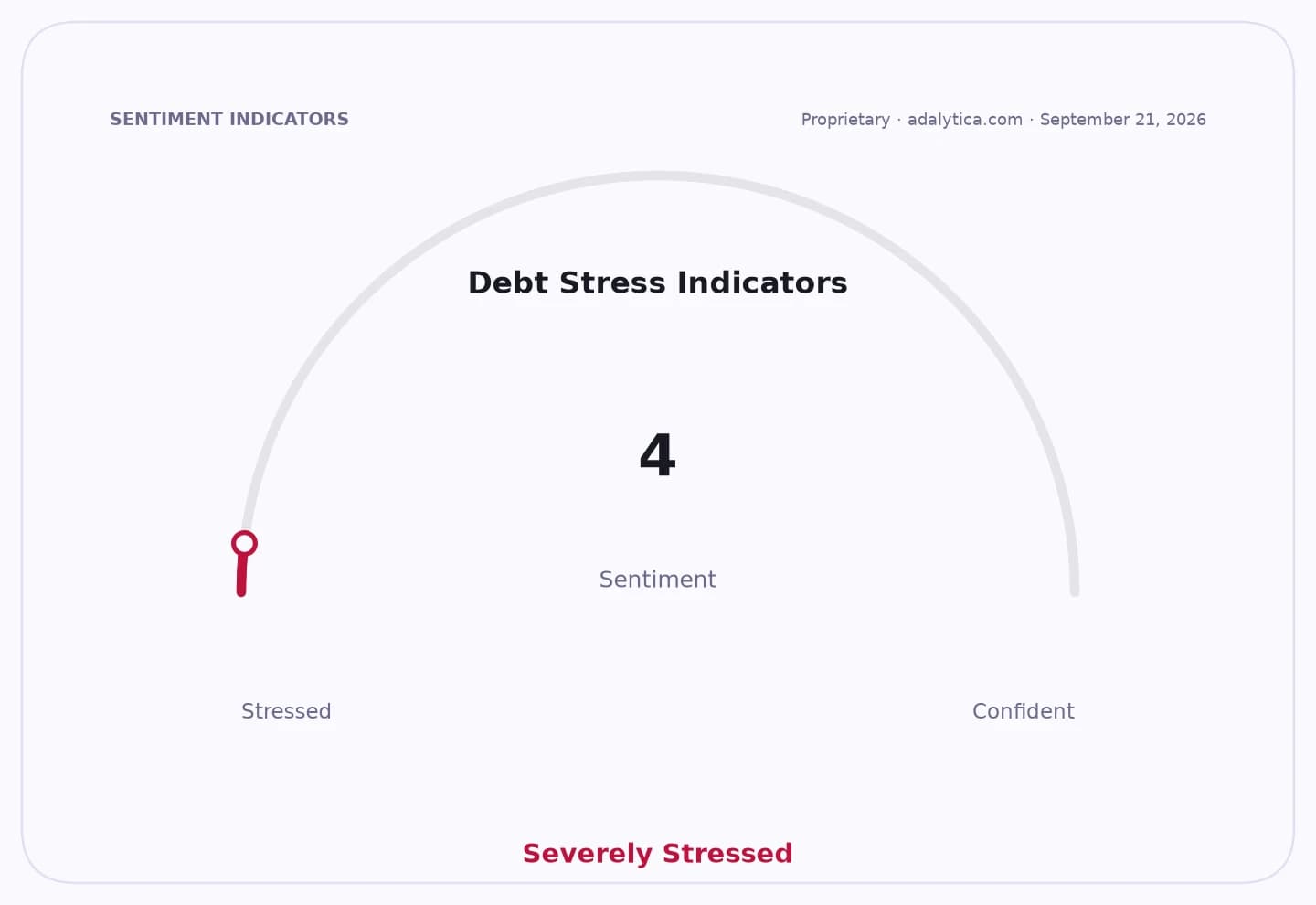
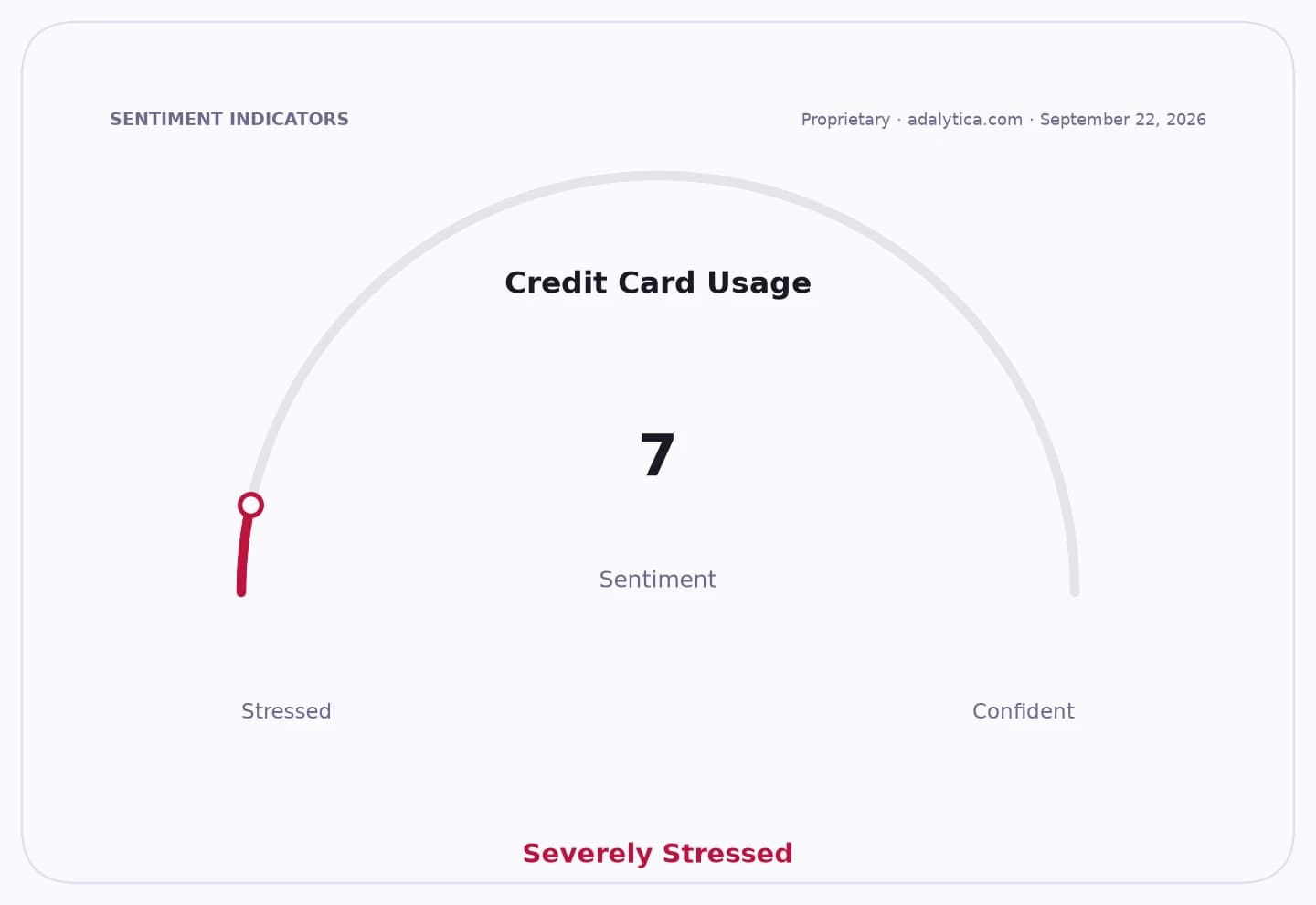
Sentiment IndicatorsⓘProprietary · adalytica.com · September 9, 2026
This is a snapshot — live sentiment, awareness and momentum for 130+ markets update continuously in the dashboard.Open AlphaPulse
The strain is even clearer where households themselves report “economic stress.” In that group, 49.2% resorted to borrowing, versus 13.3% among those without that pressure. The gap widens further at the bottom of the income ladder: 47.5% of the very-low socioeconomic stratum borrowed for everyday costs, compared with 11.8% in the upper-middle segment.
For investors, the implications run beyond a social crisis. When households rely on debt to pay for food, transport and other necessities, repayment capacity weakens quickly if wages lag inflation, utility bills rise or refinancing gets more expensive. That raises the risk of late payments and delinquencies in consumer credit, especially for banks and finance companies exposed to lower-income borrowers. It also suggests that any improvement in headline consumption may be fragile and heavily debt-funded.
The findings cut against President Javier Milei’s dismissal of household debt as a private matter. They also point to a broader macro problem: borrowing is increasingly being used to smooth falling real incomes rather than support durable purchases. That usually happens when growth is weak, labor market conditions are patchy and households lack savings buffers.
The report does not give loan sizes, interest rates or default rates, but it still captures the key dynamic. Debt is concentrating where incomes are weakest and shocks are hardest to absorb. That makes the system more vulnerable to a further squeeze from slower wage growth, higher financing costs or renewed inflation pressure, and leaves policymakers with a narrower path to stabilize household balance sheets without supporting incomes and employment.
| Entity | Gains | Losses |
|---|---|---|
| Lower-income households | ▲Short-term access to cash | ▼Rising repayment stress |
| Banks and finance companies | ▲Higher loan demand | ▼Greater credit-risk exposure |
| Government | ▲Less immediate fiscal burden | ▼More social and political pressure |
| Consumers with stronger incomes | ▲Better relative resilience | ▼Less benefit from broad demand growth |