ASML is back at the center of the semiconductor trade, and the real story is not just another earnings beat — it is whether the company’s expanding gravity in Europe can turn the northern Dutch town of Leek into a strategic node in the global AI supply chain.
ASML Expansion Deepens AI Supply Chain Moat
That matters because ASML is no longer merely a Dutch champion; it is one of the few indispensable bottlenecks in advanced chip production. When ASML raises its 2026 outlook to €43 billion-€45 billion in sales and a 54% to 56% gross margin, it signals that the AI buildout is still working its way through the capital-spending cycle, and that the highest-value semiconductor equipment remains in tight supply. For investors, that is a reminder that the big money is not only in the chip designers making headlines, but in the industrial platforms that decide who gets to manufacture the next generation of chips at all.
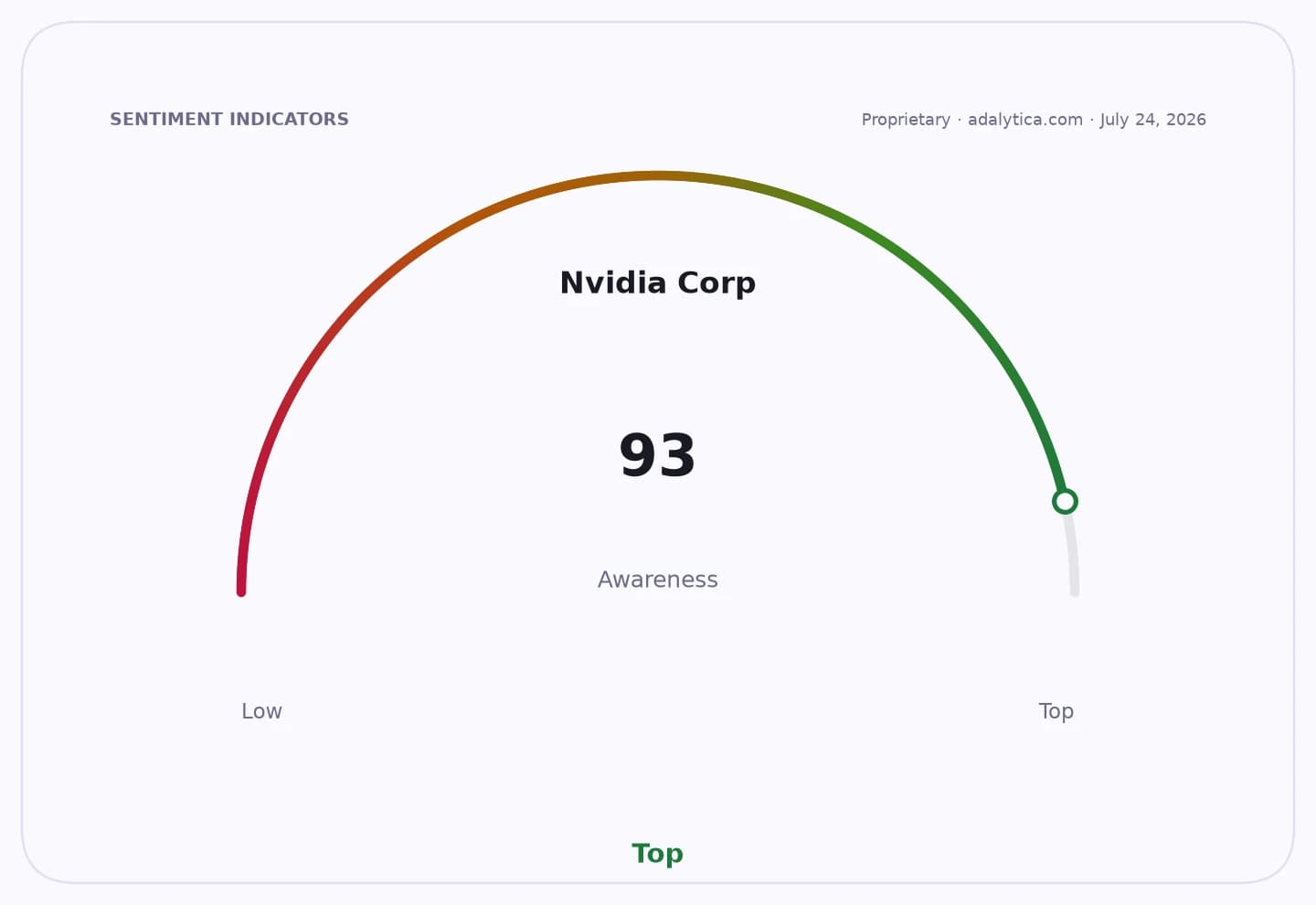
Sentiment IndicatorsⓘProprietary · adalytica.com · July 24, 2026
This is a snapshot — live sentiment, awareness and momentum for 130+ markets update continuously in the dashboard.Open AlphaPulse
The market has already rewarded that scarcity. ASML shares have climbed sharply over the past year, even as short-term technical readings show the stock cooling from overextended levels. The share price remains well above its 50-day and 200-day moving averages, but recent RSI and MACD readings point to consolidation rather than collapse. That is exactly the kind of pause investors should want after a run that has turned ASML into a core AI infrastructure holding rather than a cyclical equipment name.
The deeper investment case is that the semiconductor cycle is becoming more geographic, more strategic and more concentrated at the high end. TSMC’s record profits tied to AI demand show that customers are still spending aggressively on leading-edge capacity. That spending does not stop at the foundry gate. It flows into lithography, metrology, materials and the industrial ecosystem around them — the kind of “picks-and-shovels” exposure that tends to compound quietly while the market obsesses over the chipmakers themselves.
That is why the Leek angle matters. If ASML continues to scale its European footprint, the beneficiaries extend far beyond the company’s own earnings. Local infrastructure, skilled labor, logistics, precision manufacturing and supplier networks all get pulled into the orbit of a firm whose equipment is effectively a toll road on global compute. The market often underprices these second-order effects until they are already visible in land values, hiring, capex and municipal ambition.
It also changes the competitive map. European semiconductor names have been under pressure as the industry splits between winners with exposure to AI-led advanced manufacturing and laggards tied to slower end markets. But ASML sits in the sweet spot: geopolitical necessity, pricing power and secular demand. That combination is rare, and it is why the company can keep compounding even as broader semiconductor sentiment swings from greed to fear.
For investors, the takeaway is straightforward: the best way to play the AI supercycle is not only through GPUs and foundries, but through the indispensable European enablers of the stack. ASML remains the cleanest expression of that thesis, and any expansion that deepens its industrial footprint — potentially in places like Leek — only strengthens the long-term investment case. I believe the market still underestimates how much value is created when the world’s most critical chip toolmaker expands its geographic moat.
| Entity | Gains | Losses |
|---|---|---|
| ASML | ▲Pricing power and strategic moat | ▼None in the near term |
| Leek / local economy | ▲Jobs, capex, supplier spillovers | ▼Existing low-growth baseline |
| AI chip makers | ▲More advanced capacity | ▼Higher equipment dependency |
| European rivals | ▲Industrial spillover hopes | ▼Relative competitiveness gap |