Australia’s exchange operator is moving to capture a fast-growing corner of fixed income finance just as higher rates and tighter liquidity push more borrowing into secured markets.
ASX Bonds Launches Repo Trading Benchmark

Bonds ASX, the Australian Securities Exchange’s debt platform, is introducing a new benchmark for bond repo trading, a step that should make it easier for banks, funds and dealers to price and compare secured funding in a market that has been expanding as cash becomes more valuable and balance-sheet pressure intensifies.
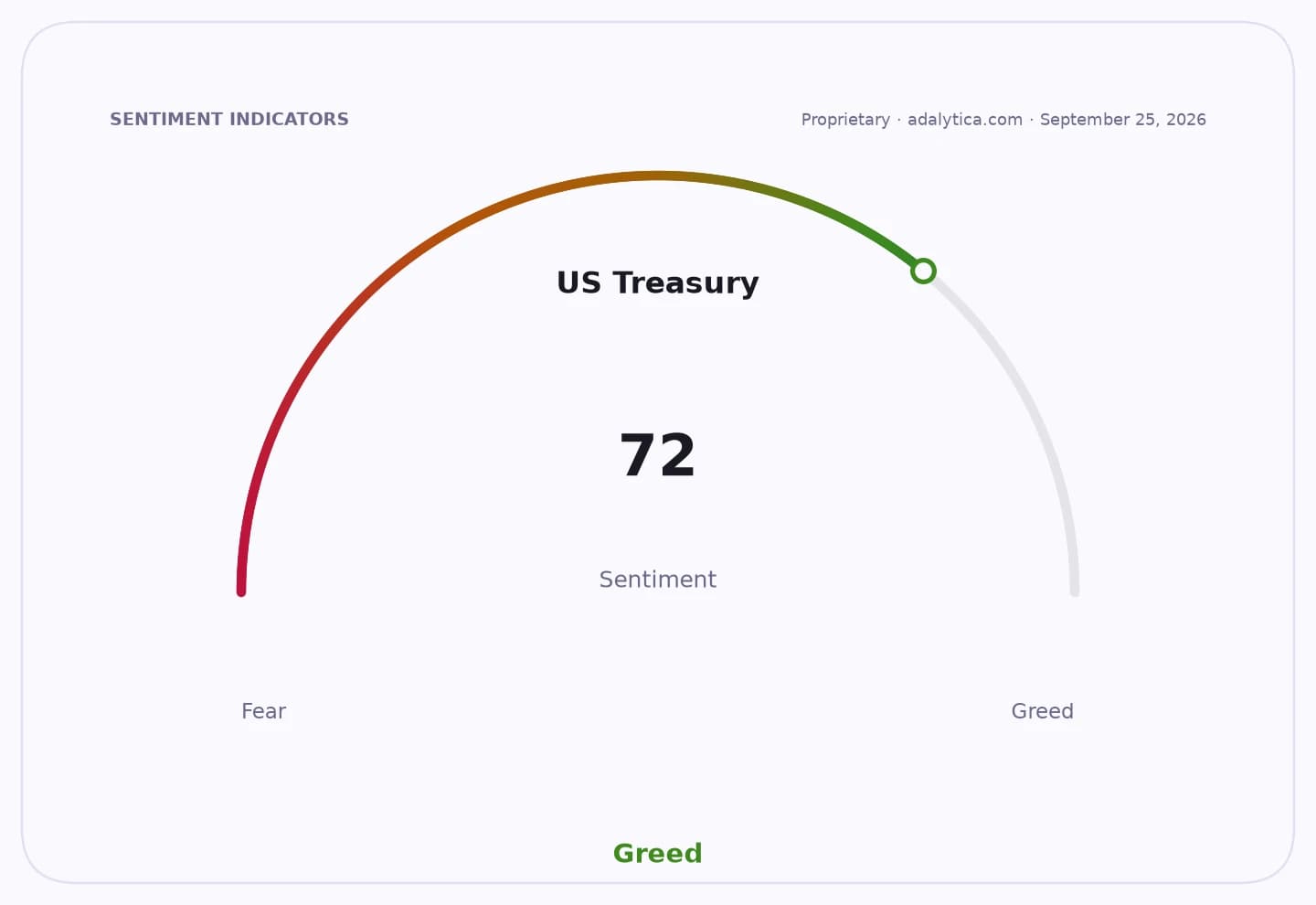
Sentiment IndicatorsⓘProprietary · adalytica.com · September 23, 2026
This is a snapshot — live sentiment, awareness and momentum for 130+ markets update continuously in the dashboard.Open AlphaPulse
The timing matters. Repo markets tend to gain prominence when rates are elevated, volatility rises and unsecured borrowing becomes more expensive or less reliable. That is increasingly the environment in Australia and globally, where bond yields remain high and central banks are still keeping policy restrictive. In India, for example, the weighted average call rate has moved above the RBI’s repo rate, underscoring the way liquidity can tighten even before policy rates move again. Similar strains are visible in developed markets, where traders are watching whether funding markets will remain orderly if growth slows.
For investors, the new benchmark is more than a plumbing upgrade. A deeper, more transparent repo market can improve the efficiency of bond finance, lower transaction frictions and support liquidity in government and corporate debt. That matters for asset managers, hedge funds and dealers that rely on repo to finance inventories, arbitrage price differences and manage collateral. It also gives market participants a cleaner reference point for secured borrowing costs, which can feed into pricing across the bond market.
The development also highlights a broader shift in market structure. As rates climbed, secured financing has become a more important part of the financing stack for banks and trading desks. That has been evident in financial firms’ latest filings, with JPMorgan and Goldman Sachs both pointing to higher secured funding needs and greater sensitivity to market movements and collateral requirements. A benchmark tied to repo activity could help standardise what has often been a fragmented and transaction-specific market.
The exchange itself stands to benefit if the benchmark attracts trading volume, reinforces Bonds ASX’s role in fixed-income infrastructure and deepens the market’s dependence on its pricing data. Competitors in over-the-counter funding may lose some pricing influence if the ASX benchmark becomes a reference point for the market.
For investors, the key question is whether the repo market continues to broaden without exposing new pockets of leverage. A well-functioning secured funding market is usually a sign of healthy intermediation. But if liquidity tightens abruptly, repo can turn from a stabiliser into a transmission channel for stress. The new benchmark is an attempt to make that market more legible before the next funding shock tests it.
| Entity | Gains | Losses |
|---|---|---|
| Bonds ASX | ▲More benchmark relevance | ▼OTC pricing power |
| Banks and dealers | ▲Better secured funding access | ▼Higher collateral costs |
| Asset managers and funds | ▲Cleaner repo pricing | ▼Funding frictions |
| Borrowers reliant on unsecured debt | ▲None | ▼Refinancing flexibility |