AT&T is proving it can raise prices without losing its grip on subscribers, and that matters because the U.S. wireless market is moving from a battle for volume to a battle for revenue per user.
AT&T Pricing Power Could Support Margins
That is the real story behind the latest round of quiet pricing changes: the company is leaning on customer inertia, bundled offers and essential connectivity to push through higher bills even as households grow more price-sensitive. In a market where growth has become harder to win on new connections alone, even modest pricing power can have an outsized effect on cash flow, free cash generation and valuation.
The economic significance is straightforward. Wireless has become a utility-like service for consumers and a recurring revenue engine for carriers. When a player like AT&T can lift prices, it helps offset rising network costs, spectrum spending and competitive promotions. It also signals that the industry’s much-feared price war is not uniform. Instead, the economics are splitting between premium, sticky customers and value hunters who still shop aggressively. That split is exactly where margin expansion can emerge.
AT&T’s latest 10-Q underscored the pressure and the opportunity. Operations and support expenses rose in the second quarter, while other service revenues declined, in part because of continuing losses in consumer VoIP customers. That is the kind of backdrop that forces management teams to squeeze more out of each account. A company does not raise prices when demand is robust everywhere; it does it when it needs to defend profitability and believes the customer base can absorb it.
The market is already rewarding the better-positioned carriers. Verizon has been climbing after a deep pullback, while T-Mobile remains the growth machine of the group, with its latest filing pointing to higher fee revenue and more customers per account, helped by new tax- and fee-exclusive plans and continued 5G broadband adoption. AT&T sits in the middle of that squeeze, but that is not necessarily a bad thing for investors. Mid-pack operators often have the most room to rerate if they can demonstrate they are not trapped in a perpetual discount cycle.
What the market may be underestimating is how much pricing power matters in a slower-growth telecom world. A one- or two-dollar monthly increase across millions of lines can translate into meaningful incremental revenue with limited capital intensity. That is especially powerful if churn stays contained, because the gain flows through at a high margin. In other words, the best telecom trade is no longer just subscriber growth; it is disciplined monetization.
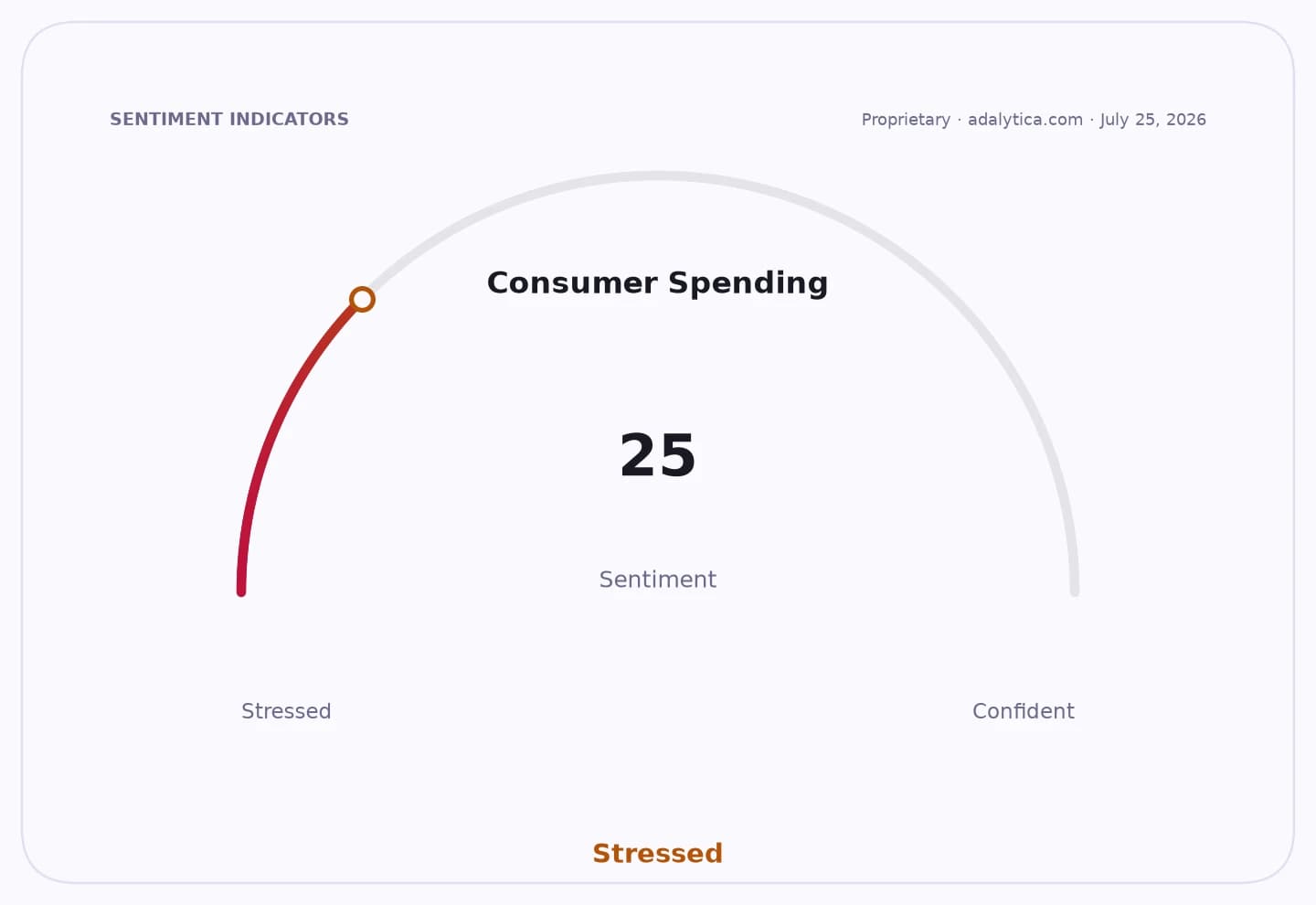
Consumer sentiment data from Adalytica.com reinforces the backdrop. Consumer spending sentiment has fallen into fear, while retail goods spending sentiment remains only neutral. That is exactly the kind of environment in which carriers can test pricing carefully: households cut back on discretionary spending before they abandon mobile service. Wireless bills may get scrutinized, but they are among the last expenses consumers are willing to drop.
For investors, the implication is clear. AT&T’s pricing move is a sign that the sector’s earnings power may be sturdier than the market assumes. If management can keep pushing average revenue per user while limiting defections, the stock can continue to rebuild on the back of margin stability rather than explosive subscriber growth. The best opportunity here is not chasing the fastest-growing carrier; it is owning the company that can turn a mature network into a quietly compounding cash machine.
This is the setup to watch over the next several quarters: if AT&T’s price increases stick, competitors will be forced to choose between matching the hikes or accepting slower revenue growth. Either way, the industry’s center of gravity shifts toward monetization, and that is where the upside lives.
| Entity | Gains | Losses |
|---|---|---|
| AT&T | ▲Higher ARPU, better cash flow | ▼Churn risk if hikes overreach |
| Verizon | ▲Industry pricing discipline | ▼Needs to match or lag revenue growth |
| T-Mobile | ▲Strong growth narrative | ▼Less room to win on price |
| Price-sensitive consumers | ▲None | ▼Higher monthly wireless bills |