Australia’s rapid rollout of its Ghost Shark autonomous submarines is turning undersea warfare into a faster, cheaper and more exportable business, and that has implications far beyond Canberra’s navy.
Australia Ghost Shark production boosts defense autonomy
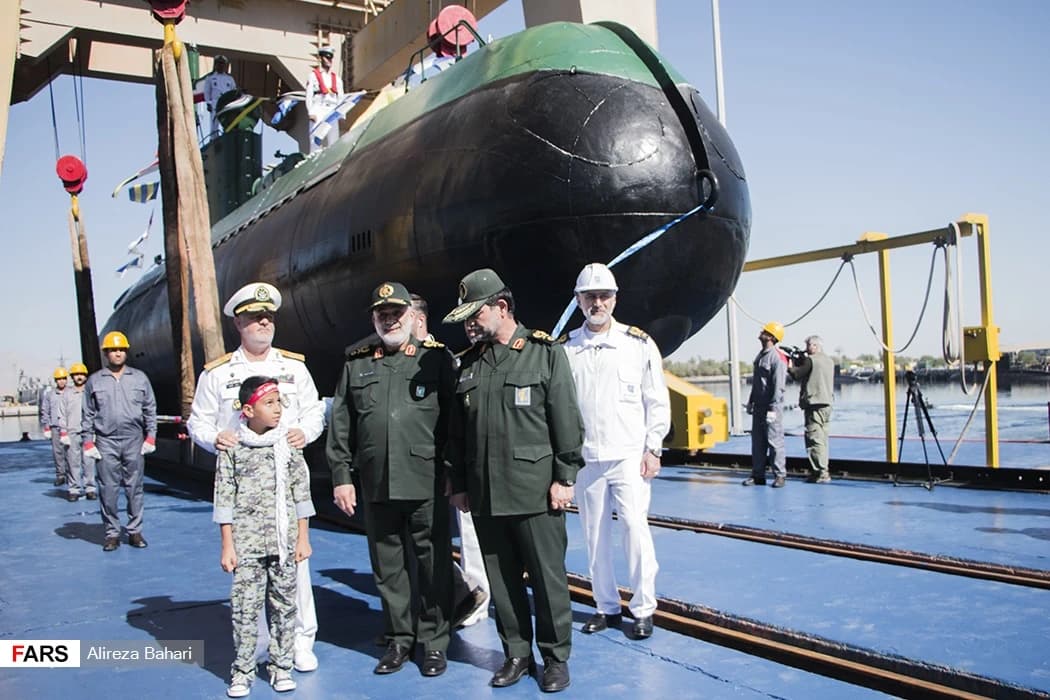
The key development is not just that the Ghost Shark program has reached large-scale production in three years, but that Australia has moved from secret development to a manufacturing line capable of delivering complex uncrewed submarines at speed. In a defense sector where major platforms can take a decade or more to field, that pace matters economically because it signals a shift toward modular, software-driven weapons systems that can be built, upgraded and exported much faster than traditional submarines.
Sentiment IndicatorsⓘProprietary · adalytica.com · October 23, 2026
This is a snapshot — live sentiment, awareness and momentum for 130+ markets update continuously in the dashboard.Open AlphaPulse
For investors, the story is bigger than one weapon. It reinforces a secular thesis that autonomous maritime systems are becoming a core defense category, not a niche experiment. That should favor companies with exposure to underwater robotics, naval payloads, sensor systems, communications, and the industrial capacity to mass-produce defense hardware. It also raises the strategic value of suppliers that can help allies field capability quickly without waiting for a full generation of crewed submarines.
Canberra said the Ghost Shark program has moved from initial development to large-scale production in just three years, with the first production submarine already delivered to the navy. The fleet will be able to carry 12 sea mines, launch swarms of armed aerial drones, and drop equipment for special forces, extending Australia’s reach across thousands of kilometers of ocean without putting sailors at risk. The government also disclosed a $5.8 billion, 10-year investment in autonomous underwater warfare, including a $1.7 billion contract with Anduril to manufacture the submarines at a Sydney factory.
That combination of speed, scale and lower unit cost is what makes the program important. Australia is not just buying a weapon; it is building a sovereign production base around a class of systems that can complement, rather than wait on, its $368 billion nuclear submarine plan under AUKUS. In other words, the near-term military edge is increasingly coming from uncrewed platforms that can be fielded quickly, while the expensive crewed submarines remain years away.
The market implication is straightforward: defense spending is tilting toward autonomy, and the winners are likely to be the picks-and-shovels behind it. Anduril stands to benefit from the export optionality as it pursues allied customers in the U.S. and Britain, while established submarine and shipbuilding primes such as Huntington Ingalls and General Dynamics still matter as long-cycle anchors of the broader undersea buildout. But the higher-growth opportunity may sit with the companies that can supply software, sensors, payloads and production tooling for uncrewed fleets rather than only large, crewed submarines.
The broader strategic backdrop is a world where naval powers are racing to expand undersea reach and protect seabed infrastructure, while trying to do more with fewer people. Australia’s program shows how quickly that shift can happen once governments commit capital and industrial policy to it. If Ghost Shark can keep scaling, it becomes both a combat capability and a template for allied procurement: buy faster, build locally, and field autonomous systems before the next submarine class is even complete.
For investors, the message is to position early around autonomy, undersea surveillance and defense manufacturing capacity. This is not just a story about one fleet in Australia — it is a proof point that the autonomous submarine market is moving from concept to production, and the companies tied to that transition may still be mispriced relative to the size of the coming defense capex cycle.
| Entity | Gains | Losses |
|---|---|---|
| Anduril | ▲Production contract growth | ▼Execution risk |
| Australian Navy | ▲Faster undersea reach | ▼Reliance on uncrewed systems |
| Crewed submarine programs | ▲Long-term complementarity | ▼Some urgency premium |
| Defense autonomy suppliers | ▲Bigger capex cycle | ▼Traditional platform-only vendors |