Starlink’s role in Ukraine’s war effort is now a market story as much as a geopolitical one, because the fight has exposed how quickly a private communications network can become an indispensable piece of national defense.
Starlink Ukraine Disruption Boosts Defense Connectivity
The lesson for investors is straightforward: the next big wave of military spending is not just going into missiles, drones and aircraft, but into the connectivity layer that holds modern warfare together. That makes satellite broadband, space infrastructure, secure communications and unmanned systems the real picks-and-shovels trade of the new defense cycle.
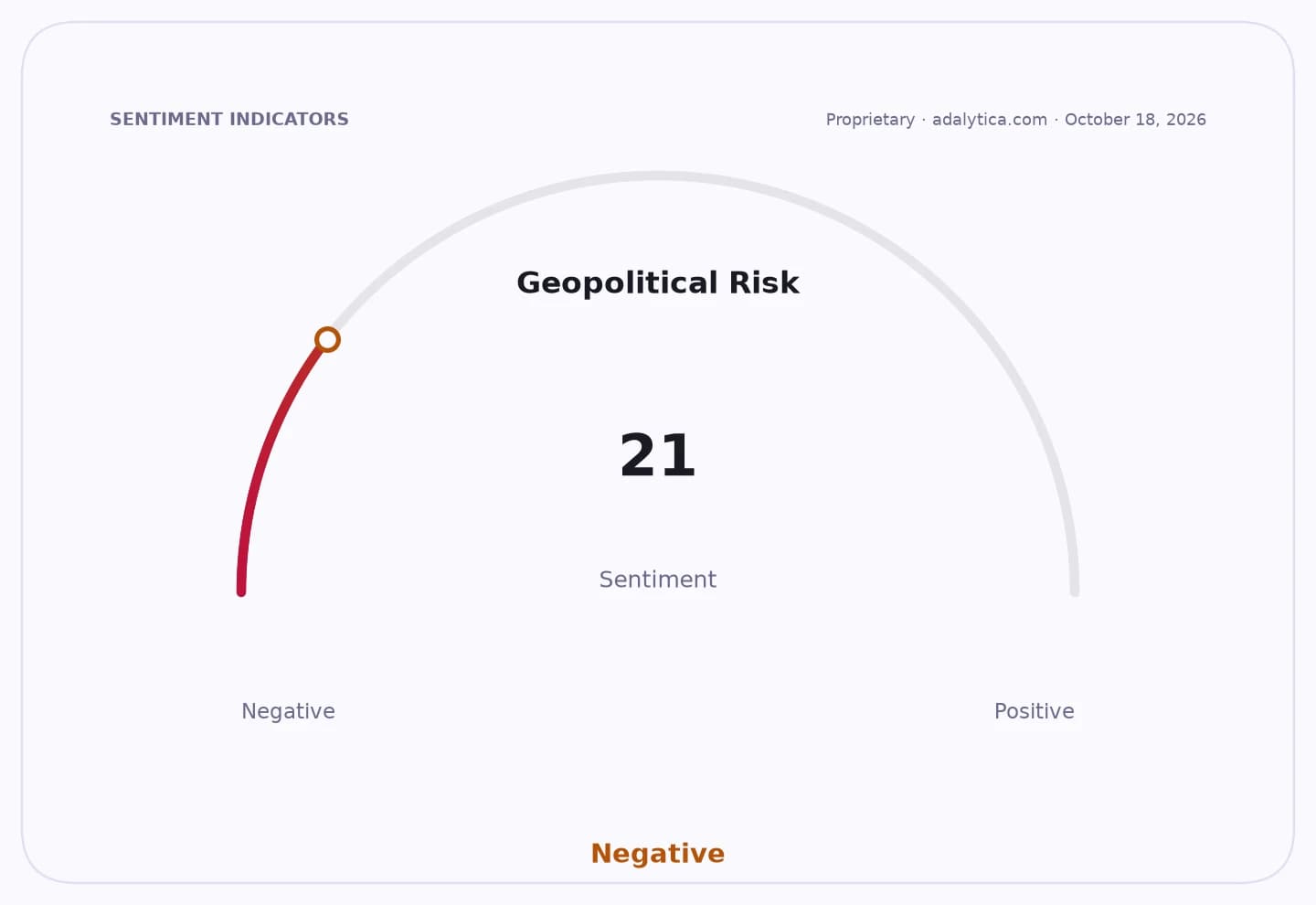
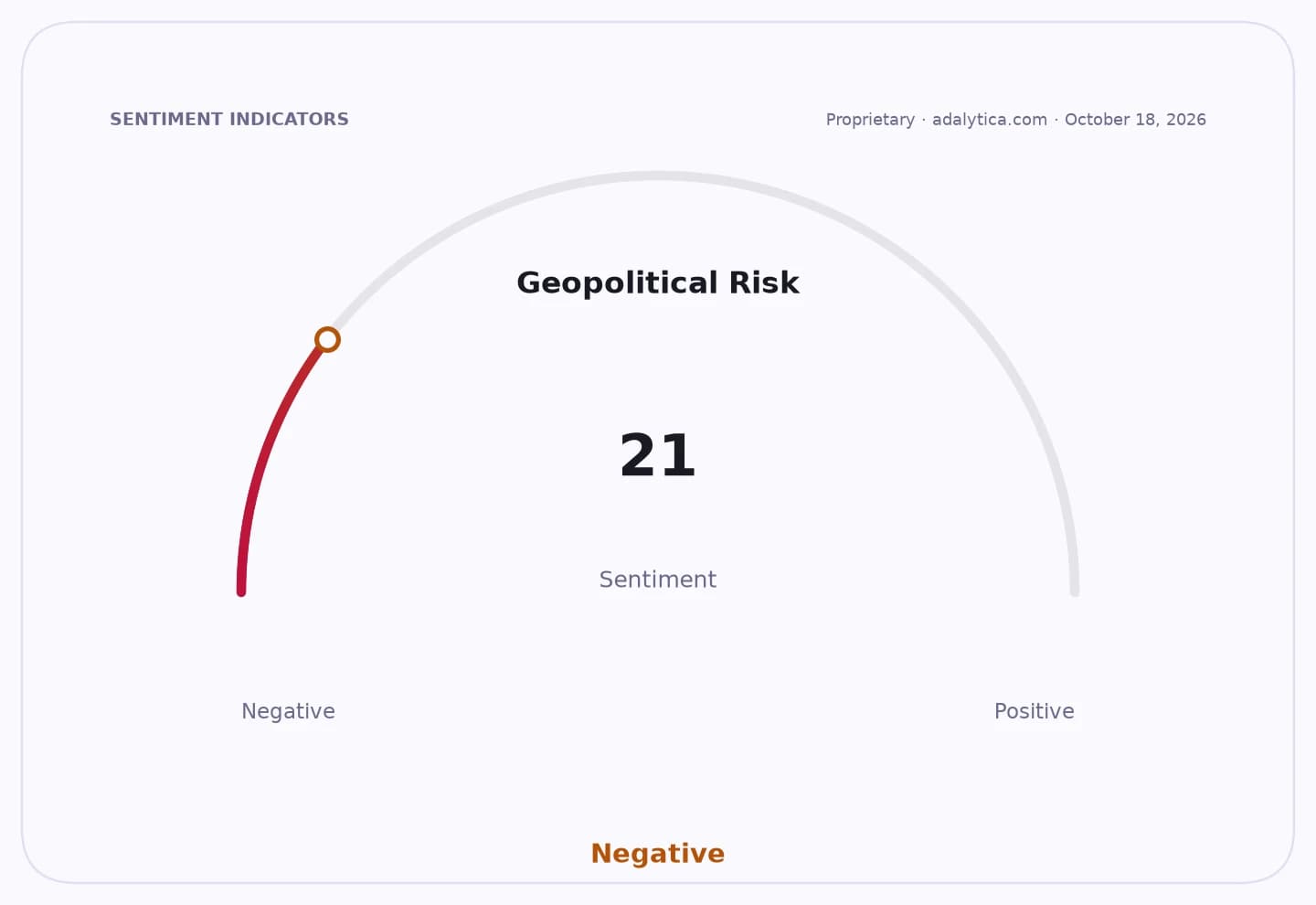
Sentiment IndicatorsⓘProprietary · adalytica.com · October 20, 2026
This is a snapshot — live sentiment, awareness and momentum for 130+ markets update continuously in the dashboard.Open AlphaPulse
The strategic risk was laid bare after Reuters reported that restrictions on Starlink-related military services disrupted Ukrainian drone operations, forced some missions to be cancelled and made it harder to move battlefield information between units and headquarters. The controversy underscores a dangerous dependency: when a foreign commercial provider can alter a country’s battlefield communications from afar, digital sovereignty becomes inseparable from military sovereignty.
That matters far beyond Ukraine. Southeast Asian states facing maritime security pressures across the South China Sea, the Strait of Malacca and the Sulu and Celebes seas need resilient communications for maritime domain awareness, emergency response and remote surveillance. The implication is that governments will increasingly demand multi-layered networks combining terrestrial systems, submarine cables and satellite links rather than relying on a single provider.
For investors, that creates a second-order opportunity in the companies enabling resilient, distributed defense architectures. Space and satellite names stand to benefit as governments seek redundancy and sovereignty in their networks, while defense technology firms tied to drones, secure command-and-control and battlefield software gain a longer runway as connectivity becomes a procurement priority. Traditional primes may win on scale, but smaller, more agile contractors with exposure to space-enabled communications and autonomous systems could see the fastest growth.
The market is already hinting at where capital is rotating. Tesla has been volatile, but the broader theme here is not EVs — it is the Musk ecosystem’s influence over critical infrastructure and the resulting policy scrutiny. Boeing, still dealing with its own operational setbacks, is less directly exposed to this theme, while Kratos Defense & Security, a smaller name tied to unmanned systems and space-related defense work, fits the asymmetric side of the trade if militaries keep funding drone warfare and secure networking.
This is not a one-quarter trade. It is a multi-year capex cycle driven by war, deterrence and the commercialization of space. As AI, automation and drones demand continuous connectivity, the companies that own the pipes, terminals, ground systems and secure network layers should see rising strategic value. The market underestimates how quickly “digital sovereignty” can become a budget line item.
The actionable takeaway: position early in the defense-and-space enablers, not just the headline weapons makers. The winners will be the firms that turn connectivity into combat power, and the countries that build redundancy before the next crisis forces their hand.
| Entity | Gains | Losses |
|---|---|---|
| Kratos Defense & Security | ▲More demand for drone and space systems | ▼Smaller budgets delay contracts |
| Satellite broadband providers | ▲Rising government procurement | ▼Overreliance scrutiny |
| Traditional defense primes | ▲Larger command-and-control budgets | ▼Share of spending shifts to niche players |
| Countries dependent on single providers | ▲Faster near-term capability | ▼Strategic autonomy and resilience |