Demand across aerospace and defense is still holding up ahead of results, and that matters because the sector’s earnings power is being underwritten by a war-driven need for missiles, drones, air defenses and sustainment work even as sentiment has turned less favorable.
Aerospace and defense demand stays firm

Morgan Stanley’s read-through is the key point: the market may be cooling on the group, but the fundamental demand backdrop has not cracked. That sets up a classic disconnect between perception and cash flow. For investors, the gap is important because aerospace and defense tends to re-rate when backlog, production cadence and replacement demand keep rising faster than sentiment can fall.
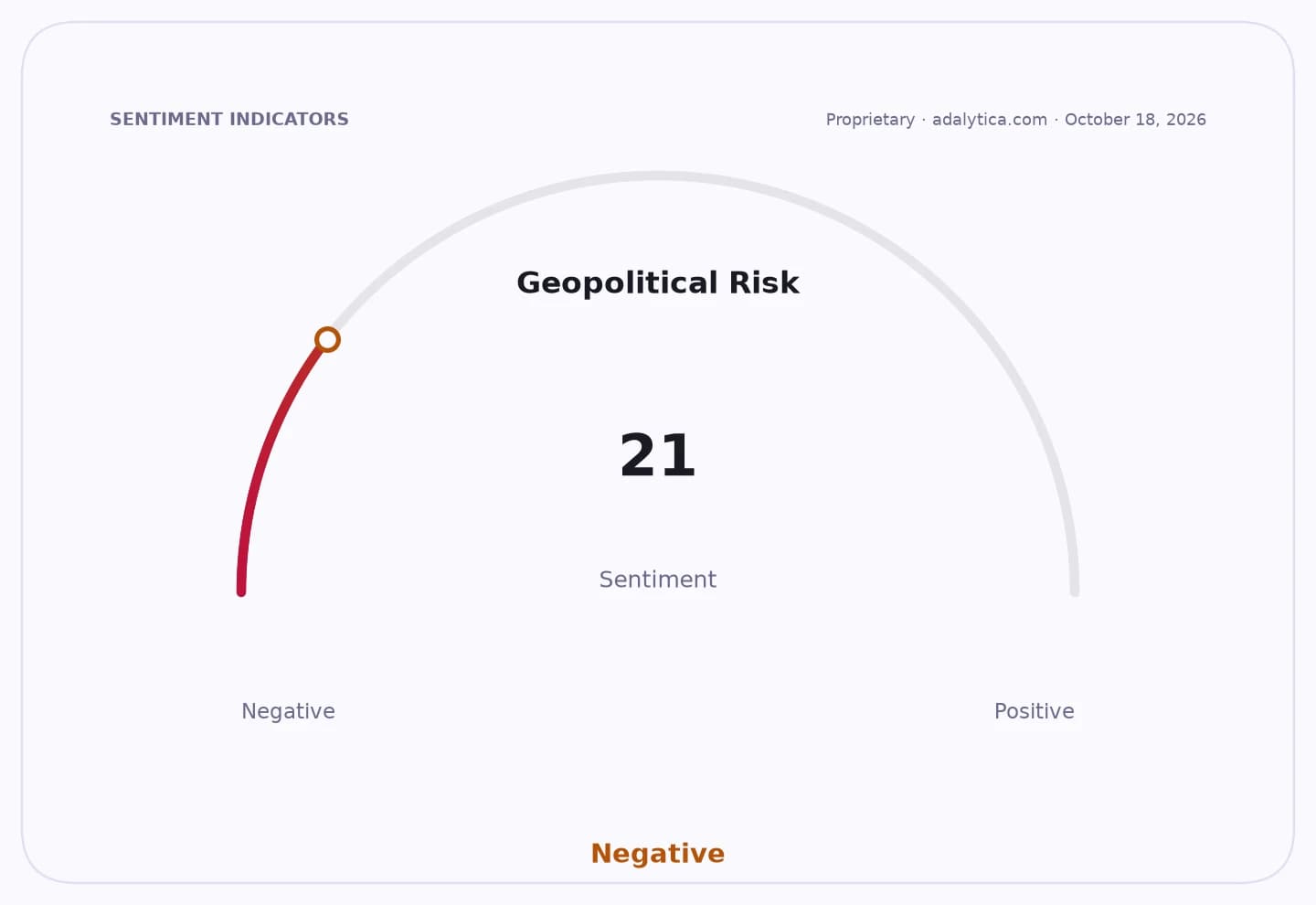
Sentiment IndicatorsⓘProprietary · adalytica.com · October 19, 2026
This is a snapshot — live sentiment, awareness and momentum for 130+ markets update continuously in the dashboard.Open AlphaPulse

The catalyst is still the same hard reality on the ground. Ukraine’s drone and missile campaign, Russia’s retaliatory strikes, and the continued targeting of ports, refineries and logistics hubs all point to an escalation in asymmetric warfare that consumes more interceptors, sensors, engines and battlefield systems. That is exactly the kind of conflict environment that keeps procurement budgets sticky and aftermarket demand elevated for years, not quarters.
The market already has evidence that this demand is flowing through the industry. Northrop Grumman said in its latest filing that it made further progress on joint activities with the U.S. Air Force, including design maturation and risk reduction work to accelerate initial capability. Boeing said its defense backlog rose to $85.3 billion at midyear, while supply-chain pressure and export restrictions continue to shape execution. Collins and Pratt & Whitney parent RTX has also highlighted long-term aftermarket service agreements that cushion revenue through cycles. In other words, this is not a one-off surge; it is a broad replenishment and modernization cycle.
That helps explain why the aerospace and defense complex has outperformed even as broader risk appetite has weakened. The iShares U.S. Aerospace & Defense ETF, ITA, closed at $207.76 on Oct. 19, below its 50-day moving average of $222.19 and its 200-day average of $229.64, but the pullback looks more like consolidation than a demand reversal. XAR, another defense-heavy ETF, closed at $223.30 versus a 50-day average of $250.33 and a 200-day average of $266.46, showing how much sentiment has already reset. Boeing ended at $191.42, still far below its 200-day average of $219.37, while the RSI readings across the group point to a sector that has come off overbought levels and is now digesting gains rather than breaking down.
That is where the opportunity sits. The market underestimates how long this cycle can last when geopolitics, rearmament and industrial capacity constraints all point in the same direction. Defense is no longer just a budget story; it is a manufacturing, supply-chain and technology story tied to drones, counter-drone systems, space, guided munitions and electronics. The winners are the companies that can turn higher demand into higher throughput and margin recovery.
If you want exposure, the better trade is to favor the toll roads of the cycle: missile and sensor suppliers, defense electronics, avionics and maintenance names with visible backlog and service revenue. The broader lesson is that a softer sentiment backdrop does not matter much when procurement stays firm and the world keeps burning through inventory. For long-term investors, this remains one of the cleaner secular themes in the market.
| Entity | Gains | Losses |
|---|---|---|
| Defense contractors | ▲backlog and production demand | ▼margin pressure from execution issues |
| Missile and drone suppliers | ▲replenishment orders | ▼buyers facing higher costs |
| Aerospace ETF holders | ▲secular rearmament exposure | ▼near-term sentiment volatility |
| Governments and militaries | ▲expanded capability | ▼budget strain |