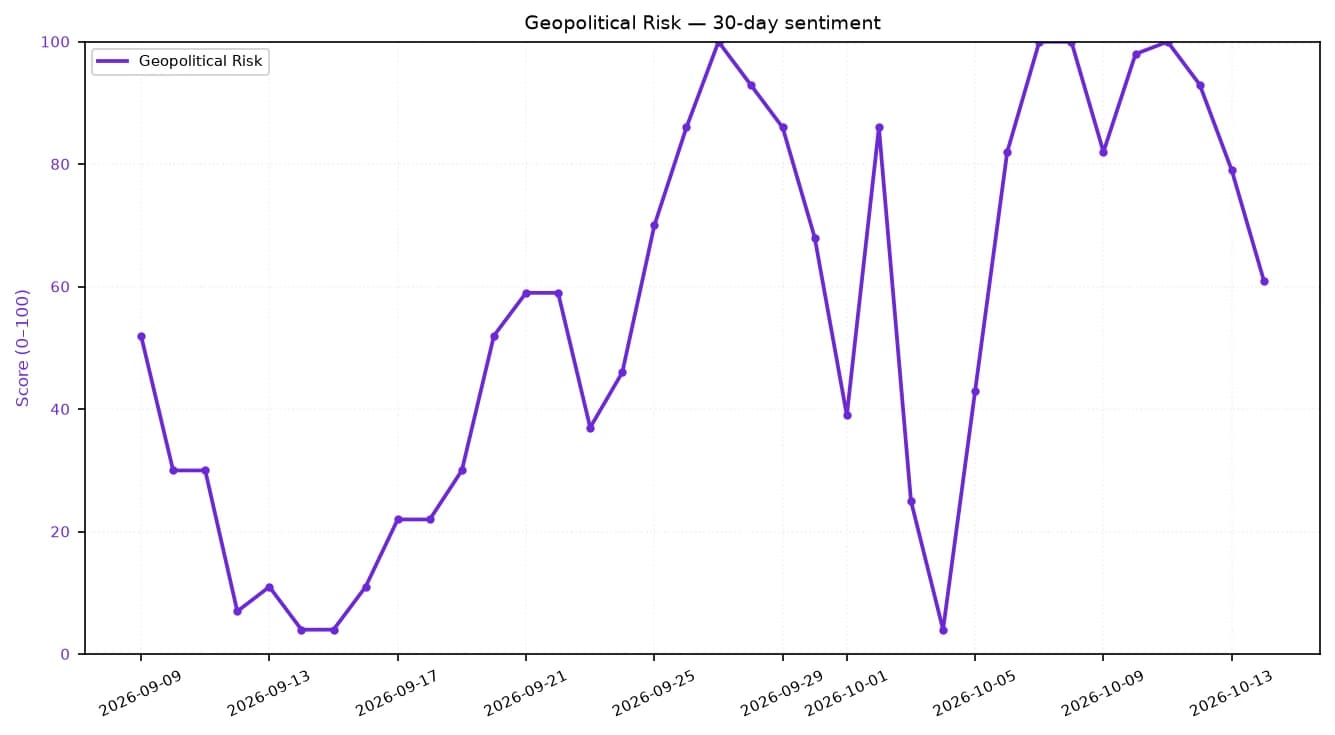
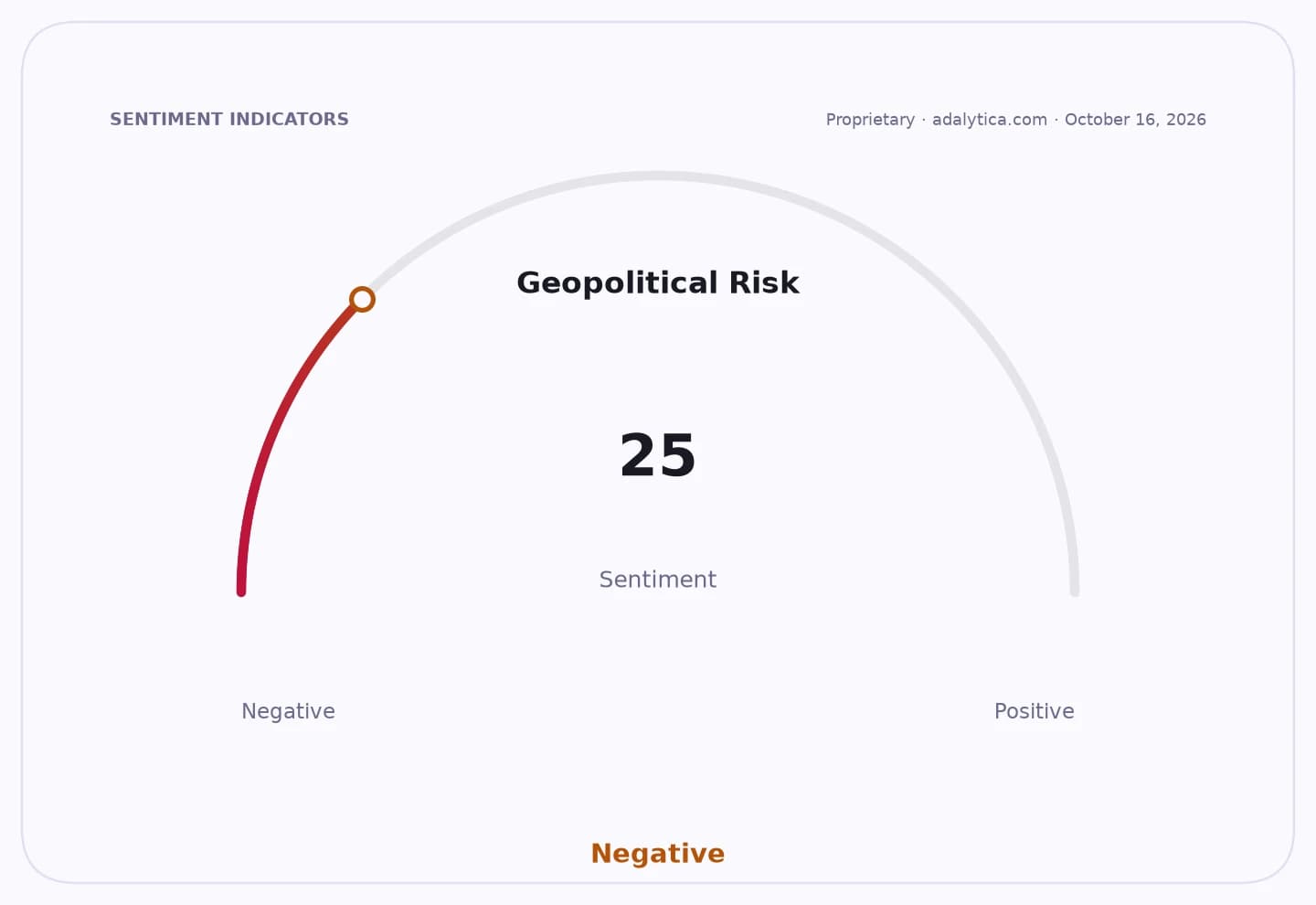
Europe’s defence shares are sending a warning to markets: investors are repricing the region’s security outlook even as geopolitical stress indicators point to a jump in global instability.
Europe defense stocks fall as security risks rise
The clearest expression of that shift is in the sector’s flagship names. Germany’s Rheinmetall has dropped to 1,012.6 euros from 1,811.9 euros on Oct. 23, while Britain’s BAE Systems is down to 1,937.5 pence from 2,268.8 pence in early March. Sweden’s Saab has also fallen to 629.9 kronor from 716.1 kronor in January. Those moves have come alongside heavy trading and weaker technical momentum, with Rheinmetall’s 50-day moving average now above the share price and its RSI at 56.6 after plunging as low as 23.6 in February.
Sentiment IndicatorsⓘProprietary · adalytica.com · October 15, 2026
This is a snapshot — live sentiment, awareness and momentum for 130+ markets update continuously in the dashboard.Open AlphaPulse
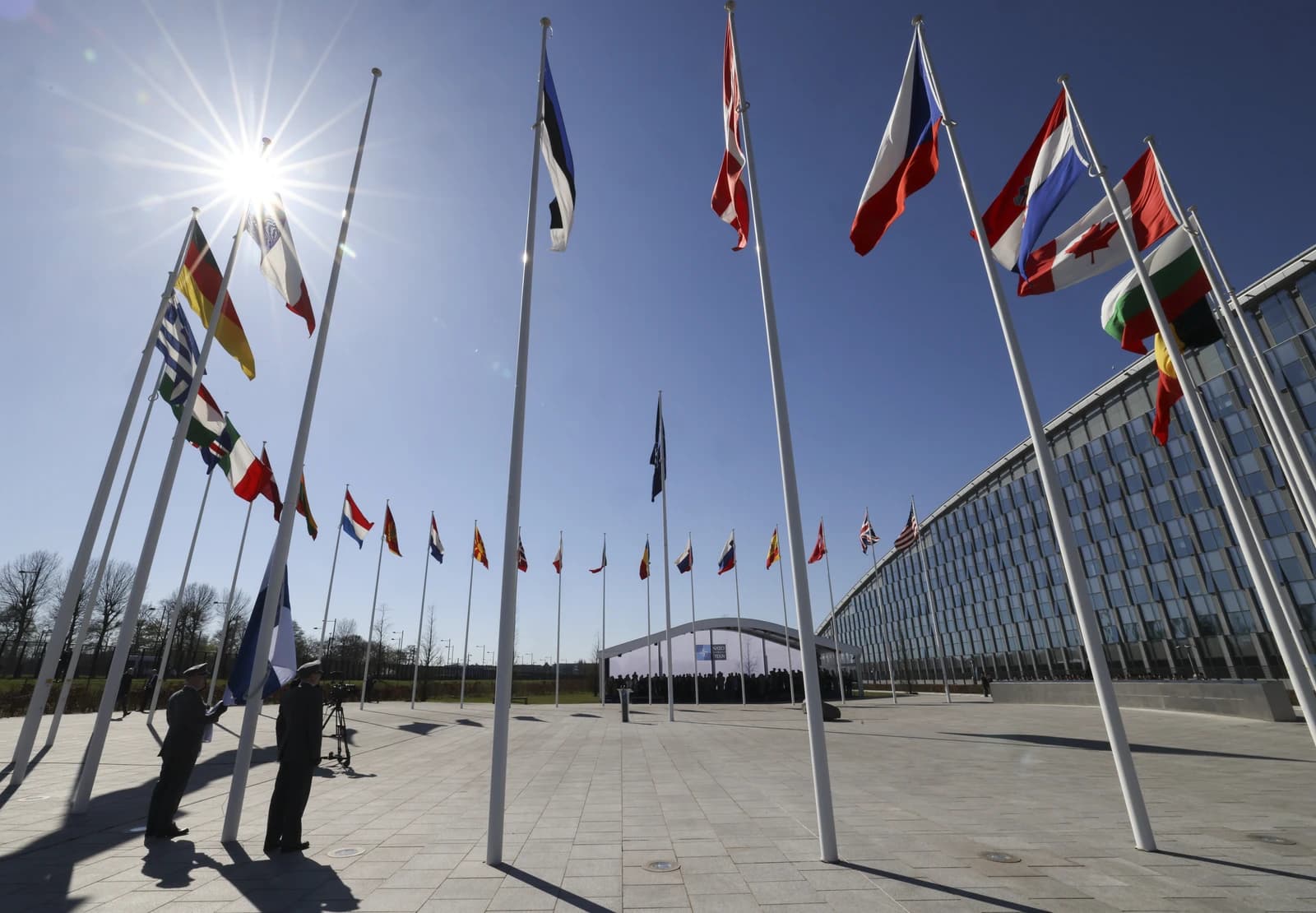
That pullback matters because defence stocks have been among the market’s most direct beneficiaries of Europe’s rearmament cycle, higher NATO spending and the region’s push to rebuild munitions inventories after Russia’s war in Ukraine. When those shares weaken at the same time, it often reflects more than normal profit-taking: it can mean investors are questioning the durability of the spending upcycle, the timing of contract awards or the political willingness to keep budgets rising.
The move also lands against a more fragile geopolitical backdrop. Adalytica’s Global Stability Sentiment sits at 79, or “Greed,” while awareness is at 11, labeled “Extreme Fear,” a combination that suggests markets are still underestimating the pace at which risk is building. In practice, that kind of split tends to support defence demand over time, but it can also trigger abrupt rotations as traders hedge against a worsening security picture.
Geopolitical Risk — 30-day sentimentadalytica.com
Explore this data interactively — full history, time series and cross-market comparisons.Open AlphaPulse
For investors, the setup is now less about chasing the next leg of the defence trade and more about whether current valuations already discount a long spending cycle. Rheinmetall’s share price remains well above its 200-day moving average of 1,307.6 euros, showing the longer-term trend is still intact, but the recent slide suggests the market is no longer willing to pay peak multiples without fresh evidence of order growth.
The next catalyst is likely to be budget news, NATO spending commitments and any escalation in Eastern Europe or the Middle East. Until then, Europe’s defence stocks are looking less like a one-way trade and more like a live read on how worried investors really are about the world.
| Entity | Gains | Losses |
|---|---|---|
| Defence contractors | ▲higher long-term demand | ▼valuation compression |
| Europe’s governments | ▲stronger deterrence | ▼higher budget pressure |
| NATO security agenda | ▲more funding support | ▼fiscal strain |
| Equity holders in defence stocks | ▲possible contract upside | ▼near-term share-price weakness |