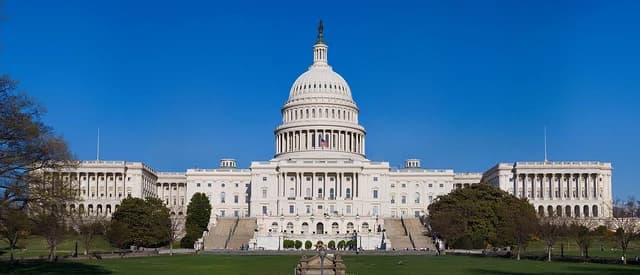
A Republican loss in next month’s U.S. midterm elections could sharply slow — and in the worst case derail — Donald Trump’s marquee defense ambitions, including a $1.5 trillion budget push for a Golden Dome missile shield and a new “Golden Fleet” naval buildup.
Defense contractors face risk from midterm funding fight
The significance is less political theater than fiscal reality. Trump’s plan depends on Congress delivering a difficult mix of bipartisan appropriations and a separate budget-reconciliation package that can pass with a simple majority. If Democrats take the House, or both chambers, the reconciliation track is likely to face far tougher odds, putting the most ambitious parts of the administration’s defense agenda at risk.
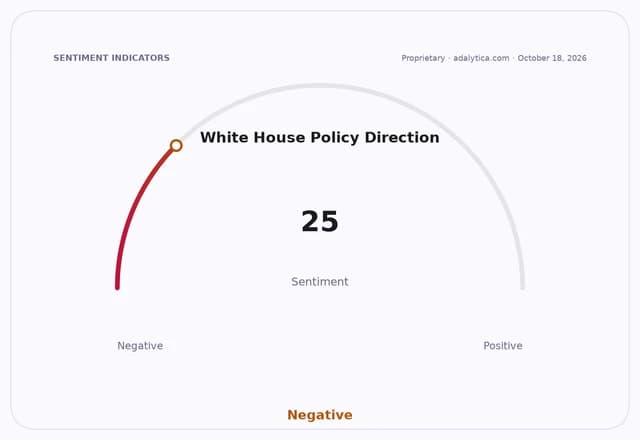
Sentiment IndicatorsⓘProprietary · adalytica.com · October 18, 2026
This is a snapshot — live sentiment, awareness and momentum for 130+ markets update continuously in the dashboard.Open AlphaPulse
That matters because the administration has tied core national-security projects to a funding structure already under strain. Of the proposed $1.5 trillion package, $1.15 trillion would come through regular budget channels, where some bipartisan support exists, and $350 billion would run through reconciliation, which Democrats oppose and even some Republicans view skeptically. The Golden Dome itself is already exposed: its fiscal 2027 request is about $17.5 billion, but the base budget includes less than $400 million, according to the report.
Michael Guetlein, the Space Force general leading the Golden Dome effort, has already warned that without sustained funding, “there is no Golden Dome.” That warning captures the economic and industrial stakes. Weapons procurement is a multiyear supply-chain business; once funding becomes uncertain, contractors delay hiring, suppliers hold back capital spending, and production schedules slip. For a sector that depends on long-dated contracts and visibility into appropriations, even a temporary political shift can affect backlog, margins and valuation.
The policy fight also extends beyond missile defense. Defense Secretary Pete Hegseth has asked for an additional $50 billion for mass drone production and autonomous weapons systems, conceding that a lack of resources could slow investment in space defense and autonomy. At the same time, the Pentagon still faces the task of replenishing weapons stockpiles drawn down by the Iran conflict, making any delay in appropriations more costly for readiness.
Markets are already signalling that defense investors are not treating this as a purely academic debate. Lockheed Martin, Northrop Grumman and Huntington Ingalls have all seen sharp share-price swings this year, reflecting the sector’s sensitivity to appropriations, program timing and execution risk. Lockheed shares were last around $552.09, above their 50-day moving average of $541.94 but below the 200-day average of $559.11, while Northrop has recovered to $519.86 from an October low but remains well under its 200-day average near $590. Huntington Ingalls, after a far steeper drawdown, was last at $272, far below its 200-day average of $337.81. Those moves underscore how quickly political risk can be translated into contractor sentiment and relative valuation.
The broader backdrop is one of elevated defense demand, but not limitless fiscal capacity. Congress is already weighing a 44% increase in the overall defense budget request versus enacted FY2026 levels, yet competing priorities and deficit sensitivity are making large, technology-heavy programs vulnerable. Golden Dome and Golden Fleet are especially exposed because they are not just procurement items; they are signature Trump initiatives that would require sustained political control to move from concept to funded program.
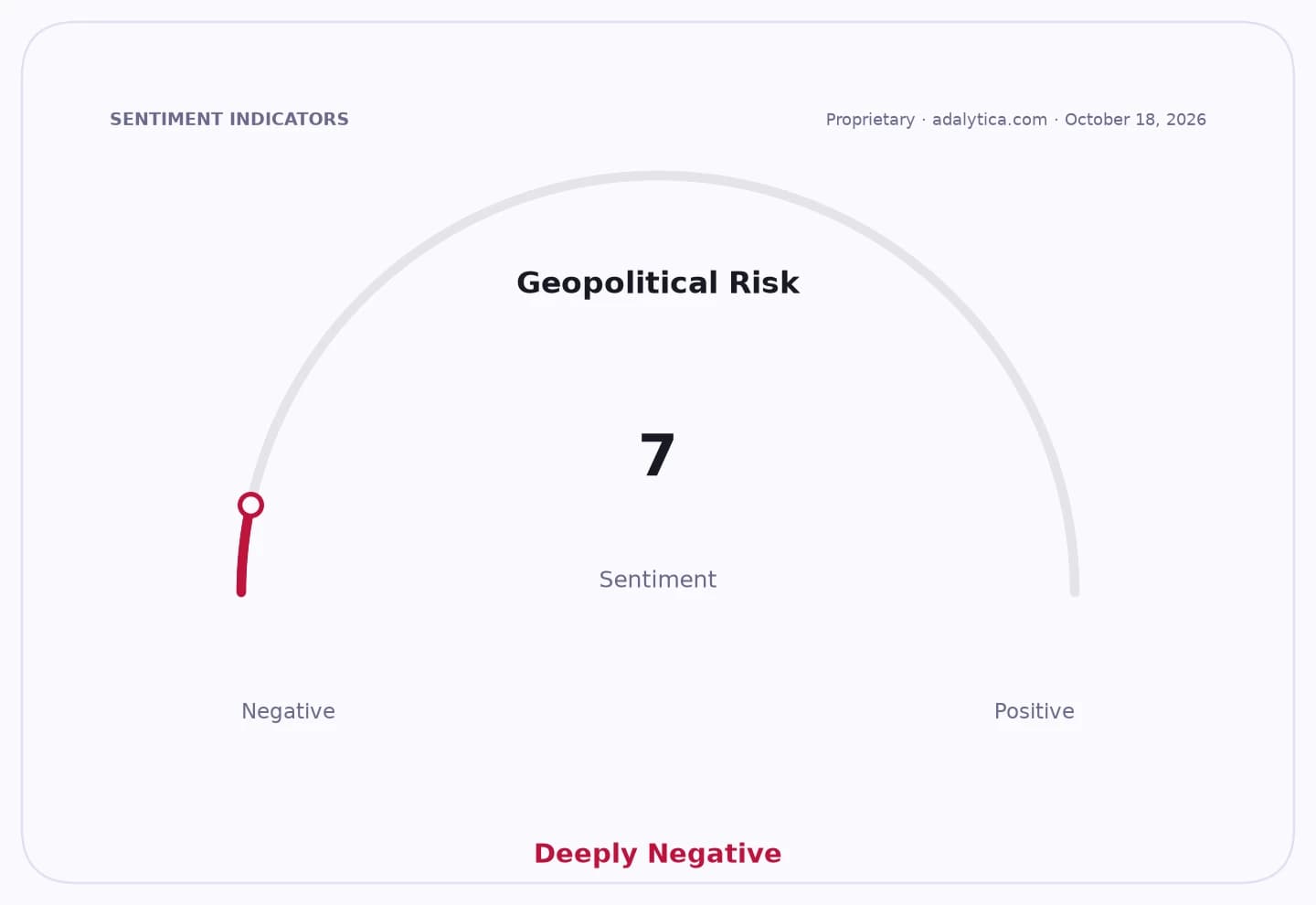
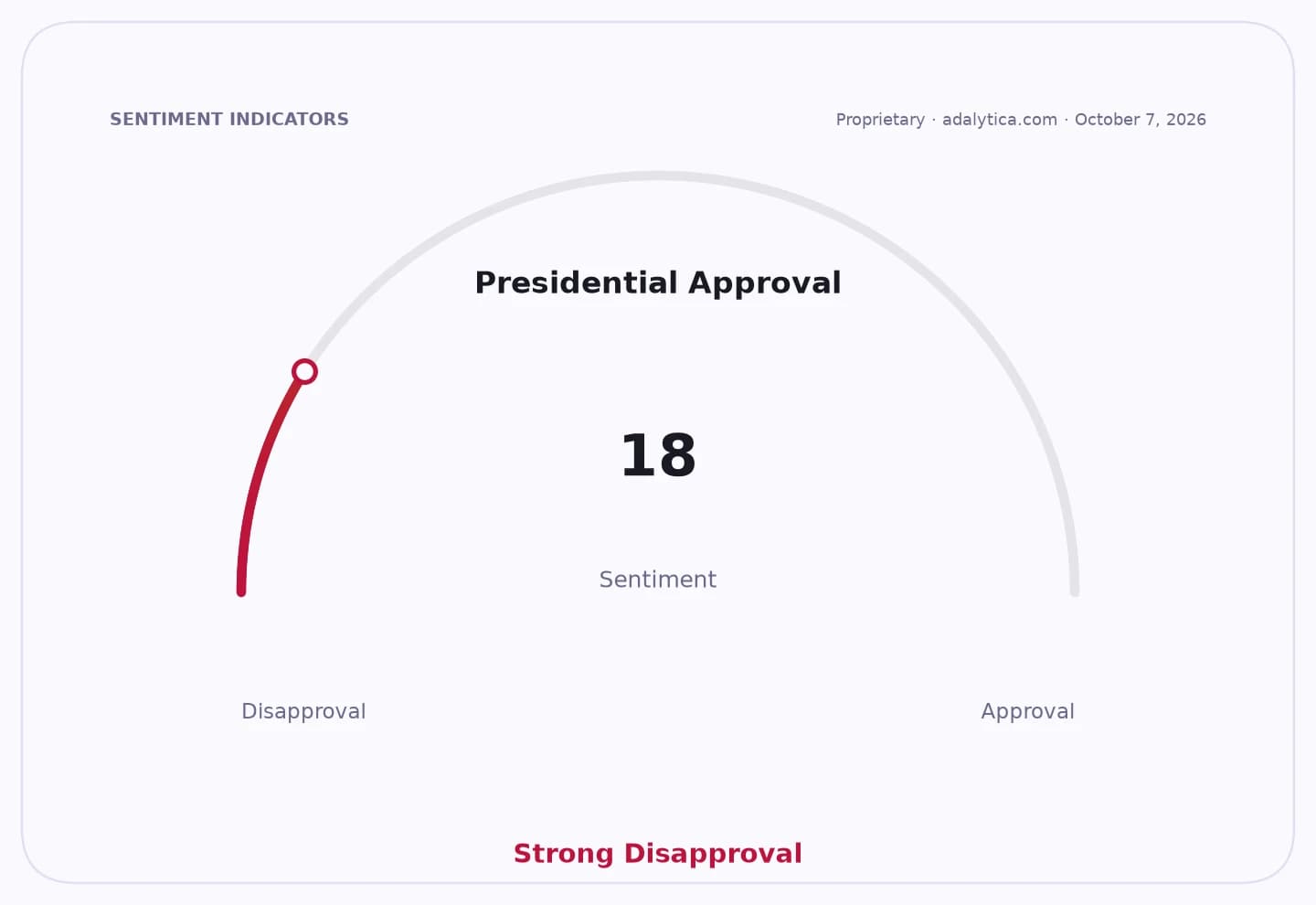
Adalytica’s U.S. White House policy direction gauge has fallen into “Fear,” while its global stability measure sits at “Extreme Fear,” a reminder that policy uncertainty is feeding a wider risk-off mood. For investors, the question is less whether the Pentagon wants more missile defense and autonomous systems than whether the White House can still convert that ambition into appropriations after the midterms.
If Republicans hold control, the administration can keep pressing its case and may preserve momentum for the biggest programs. If they lose either chamber, the immediate risk is not necessarily cancellation, but delay, dilution and a smaller contract pipeline — outcomes that would hit defense suppliers, weaken the case for industrial expansion and leave Trump’s most ambitious military buildout looking far less certain.
| Entity | Gains | Losses |
|---|---|---|
| Trump administration | ▲Policy momentum | ▼Legislative control |
| Defense contractors | ▲Bigger multiyear programs | ▼Funding delays |
| Democrats | ▲Budget leverage | ▼Blame for gridlock |
| Taxpayers/readiness planners | ▲— | ▼Higher uncertainty |