Australia’s housing downturn is costing far more than a modest drop in home values: the sharp fall in transactions is hitting an ecosystem of agents, conveyancers, movers and retailers that grew up around decades of brisk turnover.
Australia housing turnover slump hits service businesses

That is the core message of Reuters’ calculation of the market’s ripple effects, which shows how a slowdown in sales can drain spending even when prices only edge lower. Home values have slipped since interest rates began rising in February, but the bigger economic shock has been the collapse in the number of homes changing hands, cutting into revenue for businesses that earn when people buy, sell and relocate.
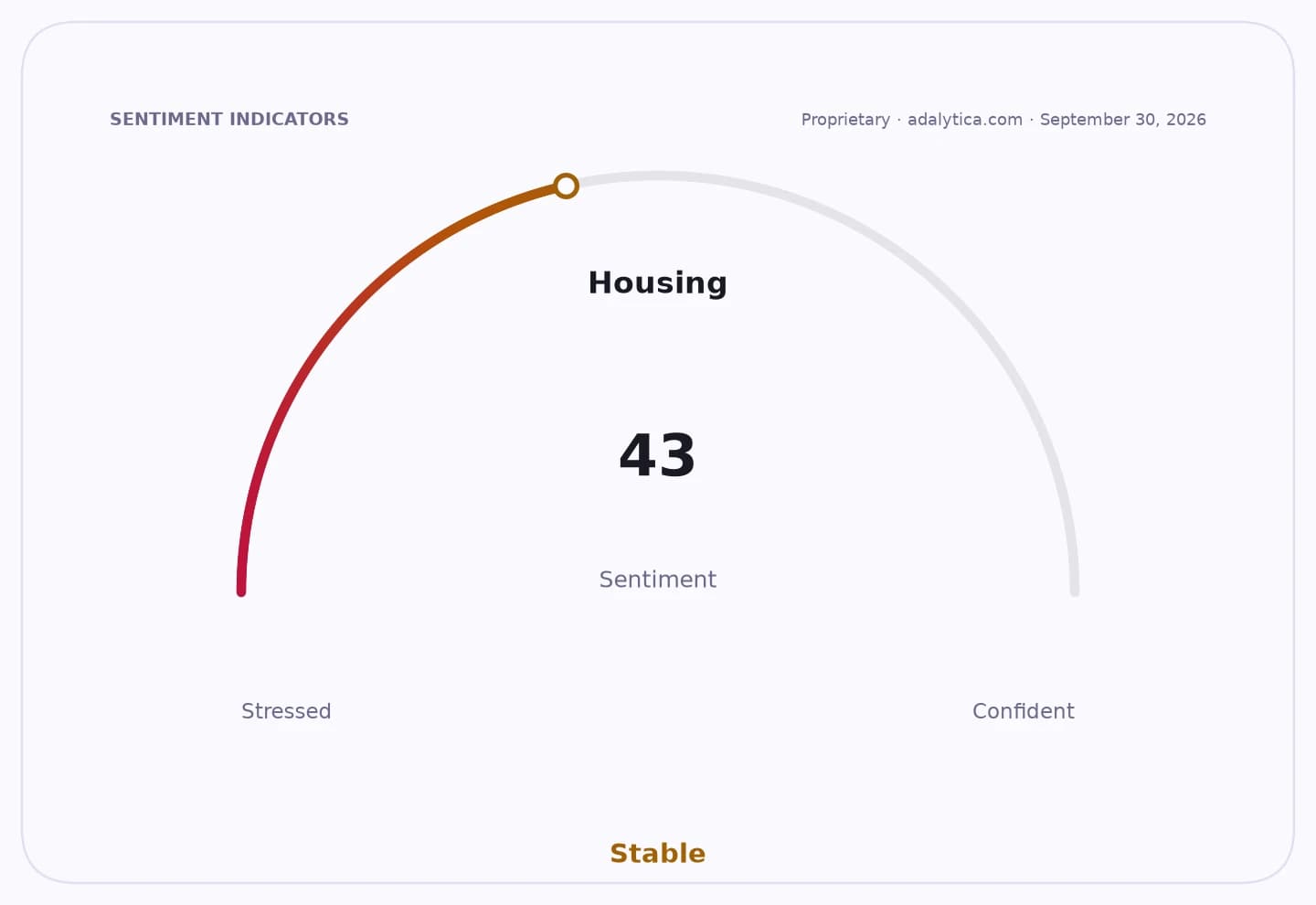
Sentiment IndicatorsⓘProprietary · adalytica.com · September 30, 2026
This is a snapshot — live sentiment, awareness and momentum for 130+ markets update continuously in the dashboard.Open AlphaPulse
Reuters estimated the commercial spending generated when an Australian sells a home, buys another and moves, using the country’s median home price of A$1.11 million and a typical three-bedroom detached house as the base case. The exercise covered a wide range of transaction-linked costs, from real estate commissions and listing preparation to settlement, moving, furniture and appliances, while weighting items by how often sellers actually incur them.
The result is important because it shows housing weakness is not just a wealth story, but a flow story. A slower market reduces agency commissions, conveyancing work, staging and inspection fees, removalist demand and sales for furniture and appliance retailers. That is a direct hit to small and mid-sized service businesses across Australia’s property chain, which expanded during the country’s quarter-century housing boom.
It also helps explain why the economic fallout from higher rates can be broader than the headline price data suggests. Even if home values are only down modestly, a fall in turnover strips activity from a large part of the domestic economy that depends on mobility. Reuters excluded state governments and banks from the calculation, but the wider revenue loss still underscores how a housing freeze can cool consumption and business income at the same time.
For investors, the implications are clearest in the listed names exposed to transaction volumes. In the US, residential landlords such as American Homes 4 Rent and Invitation Homes are not direct analogues to Australia’s transaction businesses, but their shares have also been buffeted by the same broad housing and rate backdrop. Australian property-service providers, online listing platforms and home-furnishing retailers are the more obvious beneficiaries or casualties of the sales slump.
The message for policymakers and markets is that housing pain is now spreading through the second-order channels of the economy. If rates stay restrictive and turnover remains weak, the drag on commissions, moving services and household purchases could persist even if prices stabilize. A recovery in values alone will not repair that damage; only a rebound in transactions will.
| Entity | Gains | Losses |
|---|---|---|
| Australian homebuyers | ▲More negotiating power | ▼Less liquidity |
| Real estate agents and conveyancers | ▲— | ▼Lower transaction income |
| Removalists and renovators | ▲— | ▼Fewer moves and projects |
| Furniture and appliance retailers | ▲— | ▼Softer moving-related sales |