Australia’s inflation data on Wednesday has become the key trigger for whether the Reserve Bank of Australia keeps rates on hold or is pushed back toward another hike, with economists saying anything above roughly 0.8% quarter-on-quarter would revive pressure on households already facing some of the world’s highest borrowing costs.
Australia Inflation Could Reignite RBA Hike Bets
The stakes are economic as much as financial. A hotter print would suggest domestic price pressures are still sticky enough to keep the RBA cautious, even as global inflation eases in the US and Europe. That would matter for mortgage holders, retailers and any business reliant on consumer spending, because another tightening bias would keep debt-servicing costs elevated and delay relief for cash-strapped borrowers.
Sentiment IndicatorsⓘProprietary · adalytica.com · July 27, 2026
This is a snapshot — live sentiment, awareness and momentum for 130+ markets update continuously in the dashboard.Open AlphaPulse
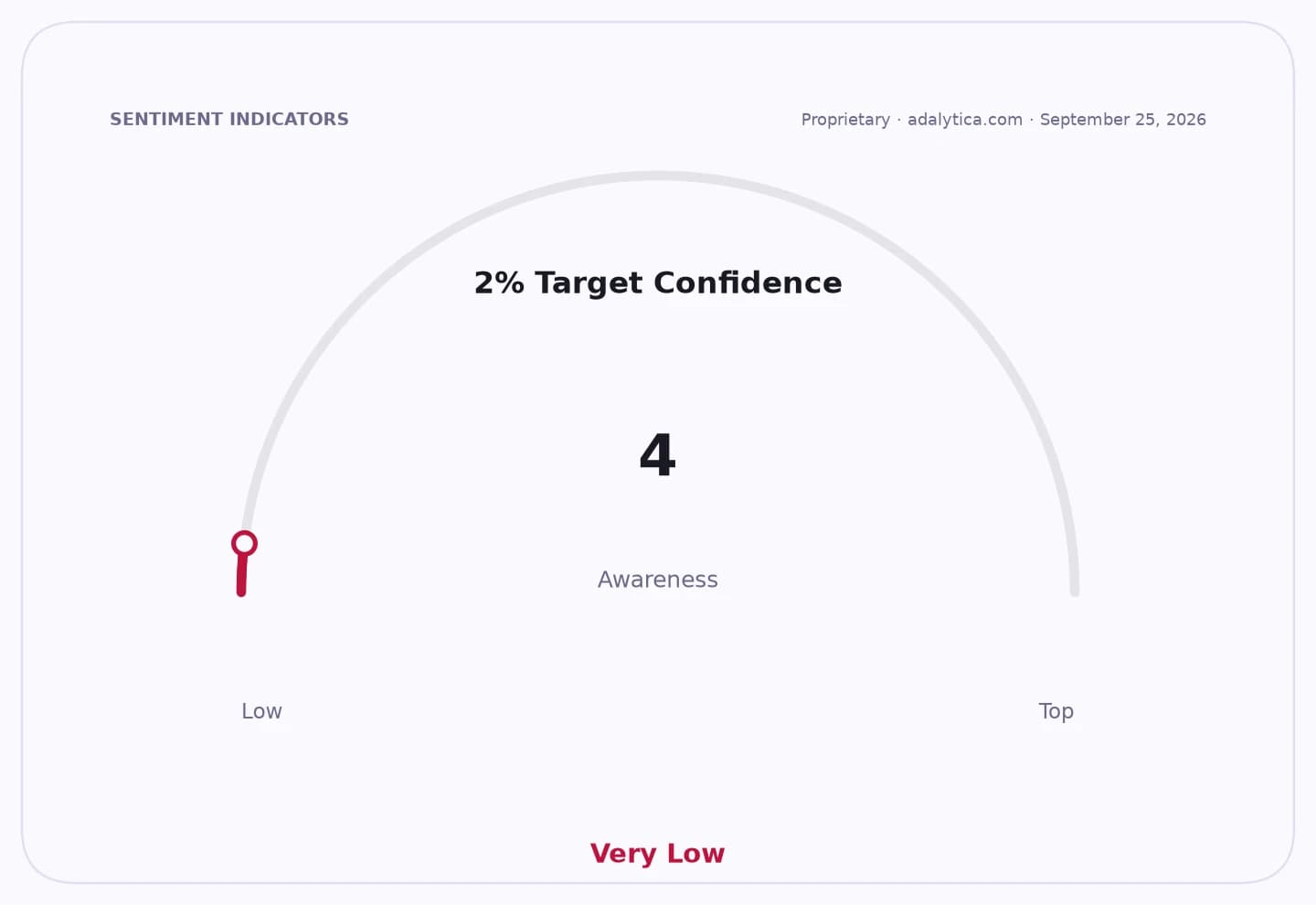
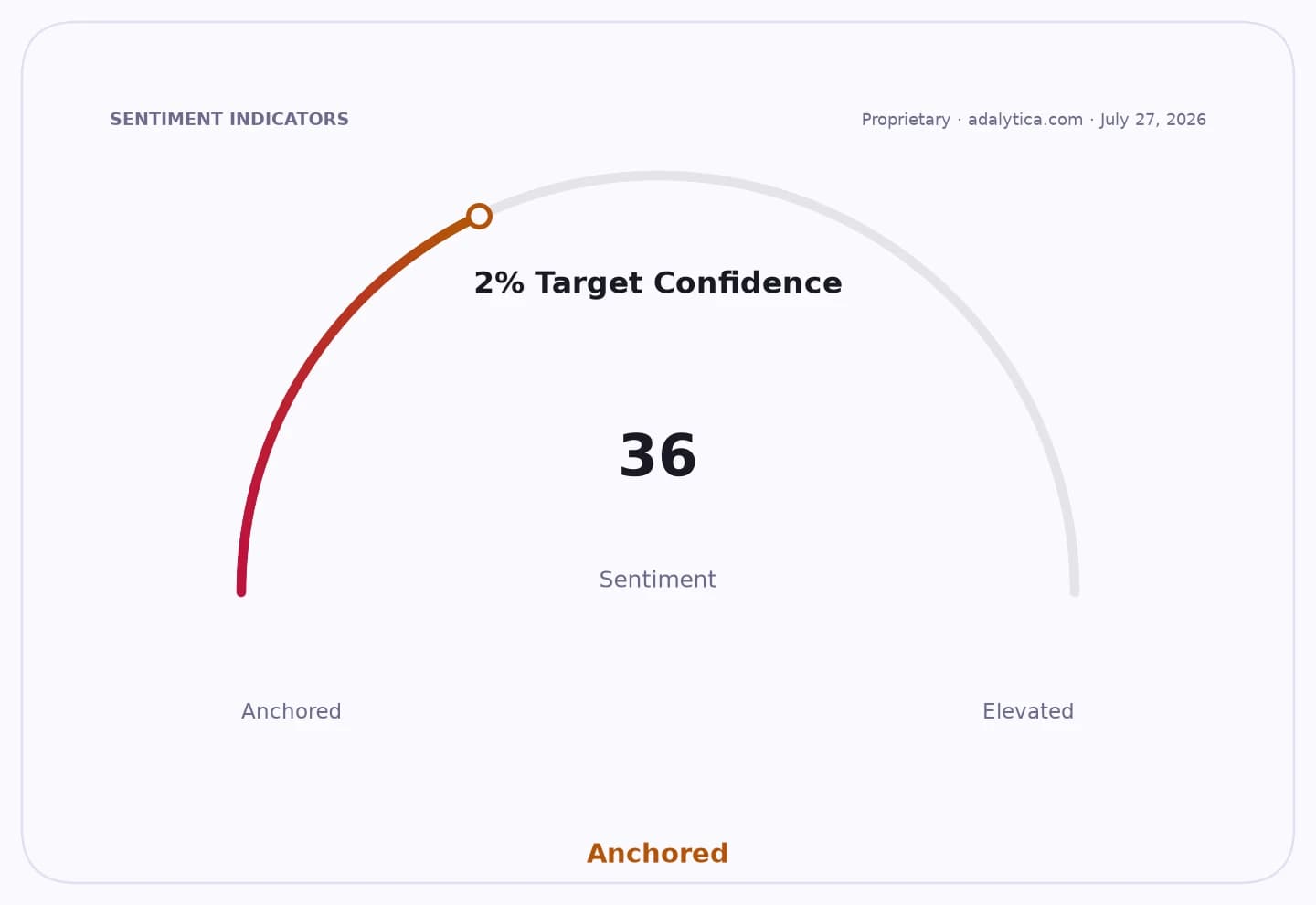
The warning comes as market gauges of inflation risk remain subdued but fragile. Adalytica’s long-term inflation expectations snapshot is in “Fear” at 29, while confidence in the Fed’s 2% target sits in neutral territory at 36, underscoring how quickly inflation psychology can shift when fresh data surprises on the upside. Five-year breakeven sentiment is also just 32, suggesting investors are still pricing moderation, but not with much conviction.
For investors, the immediate question is not only whether the RBA hikes, but how far the repricing runs across bonds, banks and consumer-linked stocks if inflation overshoots. Australian households are carrying the transmission risk directly through mortgages, and the equity market tends to react fast when rate expectations move, especially in rate-sensitive sectors such as property, discretionary retail and financials.
Long-term Inflation Expectations — 30-day sentimentadalytica.com
Explore this data interactively — full history, time series and cross-market comparisons.Open AlphaPulse
Currency markets are also in play. The Aussie dollar, tracked by the FXA proxy, has been steady around 69.25 after recovering from a low near 63.68 earlier in the year, with its 50-day moving average at 69.54 and RSI at 63.5, a sign the move has improved but is not yet stretched. A downside surprise in inflation could reinforce expectations that the RBA is done tightening, while an upside shock would likely lift yield support for the currency and pressure rate-sensitive assets.
The broader narrative is that Australia may be entering the part of the cycle where inflation stops falling smoothly and central banks are forced to decide whether to protect growth or reassert credibility. Wednesday’s number will shape that debate, and likely determine whether borrowers get breathing room or another reminder that the easing cycle is not yet secure.
| Entity | Gains | Losses |
|---|---|---|
| RBA hawks | ▲Higher odds of tighter policy | ▼Risk of slower growth backlash |
| Mortgage lenders | ▲Wider rate margins | ▼Delinquency risk if borrowers strain |
| Households with mortgages | ▲None if inflation cools | ▼Higher repayments if rates rise |
| Rate-sensitive equities | ▲Relief if inflation undershoots | ▼Selloff if inflation exceeds 0.8% |