Australia’s $370 billion superannuation giant Australian Retirement Trust is digging deeper into its $10 billion private credit book even as the asset class faces growing scrutiny, underscoring how large institutional investors still see the strategy as a key source of return in a higher-rate world.
Australian Retirement Trust expands private credit review
The shift matters because private credit has become one of the fastest-growing corners of institutional portfolios, offering higher yields than public debt and diversification away from listed markets. But the same growth has intensified concerns about underwriting standards, valuation opacity and whether looser lending structures are masking credit risk just as borrowers face tighter funding conditions.
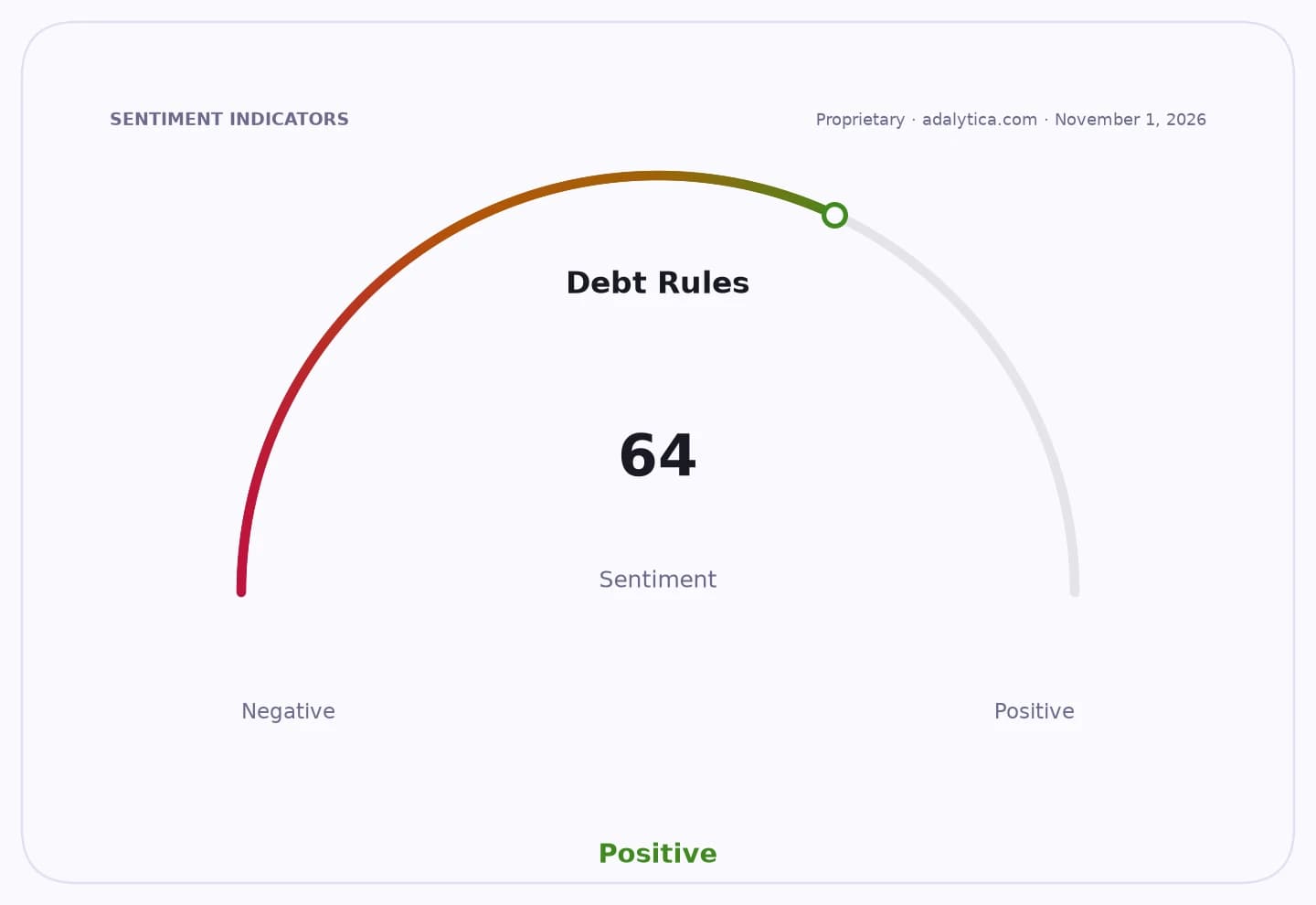
Sentiment Indicators
ART’s chief investment officer Ian Patrick said the fund’s investment committee has asked the team to examine the health of its private credit holdings more closely in both Australia and the US, to the point that he joked he had become “a pest inspector.” The remark is a reminder that private credit is no longer just a pricing decision; it now requires hands-on asset surveillance, covenant monitoring and a clearer read on borrower resilience.
For investors, ART’s stance is important because superannuation funds and other large pensions have been among the biggest allocators to private credit globally. If a $370 billion retirement giant is maintaining conviction while intensifying due diligence, that supports the bull case that the asset class can still deliver attractive risk-adjusted income. It also signals that the next phase of the market may favor managers with scale, origination access and the ability to monitor loans closely rather than those simply chasing yield.
The caution is that heightened scrutiny often follows periods of stress. Recent price action in listed alternative asset managers has reflected that unease: Blackstone, KKR and Ares have all seen sharp swings this year as investors reassessed the durability of fee-related earnings, fund flows and credit performance. The broader backdrop remains mixed, with conventional technical indicators showing volatility across those stocks even as some have recovered from earlier selloffs.
Macro conditions still help explain why institutions have been drawn to private credit. Higher benchmark rates have lifted coupons and made floating-rate loans more compelling than they were in the low-rate era, while banks remain constrained by regulation and balance-sheet discipline. But tighter credit conditions also raise the odds of refinancing strain, especially for borrowers reliant on repeated access to private lenders.
That tension is central to the debate around the sector. Bulls argue private credit fills a financing gap left by banks and can be more stable than syndicated loans because lenders hold to maturity. Bears counter that the market’s rapid expansion, especially into smaller and more leveraged borrowers, could expose funds to weaker recovery values if defaults rise.
ART’s message suggests it is not retreating from private credit, but entering a more selective phase. For investors, the key question is not whether the asset class still offers income, but whether the spread premium is large enough to compensate for lower transparency and the possibility that credit quality has peaked. The answer will likely determine which managers keep winning capital as the market matures.
| Entity | Gains | Losses |
|---|---|---|
| Australian Retirement Trust | ▲Higher income potential | ▼Greater due diligence burden |
| Private credit managers | ▲Sticky institutional capital | ▼More scrutiny on underwriting |
| Borrowers | ▲Continued nonbank funding | ▼Tighter lender monitoring |
| Listed alt-asset peers | ▲Sector validation | ▼Pressure from risk concerns |