Austria is running out of fiscal runway: the budget deficit is set to stay far above the eurozone’s 3% limit through 2027, while public debt keeps climbing and higher borrowing costs begin to bite harder.
Austria deficit stays above EU limit through 2027
That is the key takeaway from the Fiscal Council’s latest quick assessment, which shows no meaningful reversal in the budget path. The deficit is projected at 4% of gross domestic product in 2026 and 3.6% in 2027, keeping Austria in breach of the Maastricht ceiling even as it remains broadly within the EU’s net spending growth rules. More importantly for markets, the debt ratio is expected to rise from 80.7% of GDP in 2025 to 82.6% in 2026 and 83.6% in 2027, a trajectory that leaves little room for a cyclical slowdown or any fresh policy giveaways.
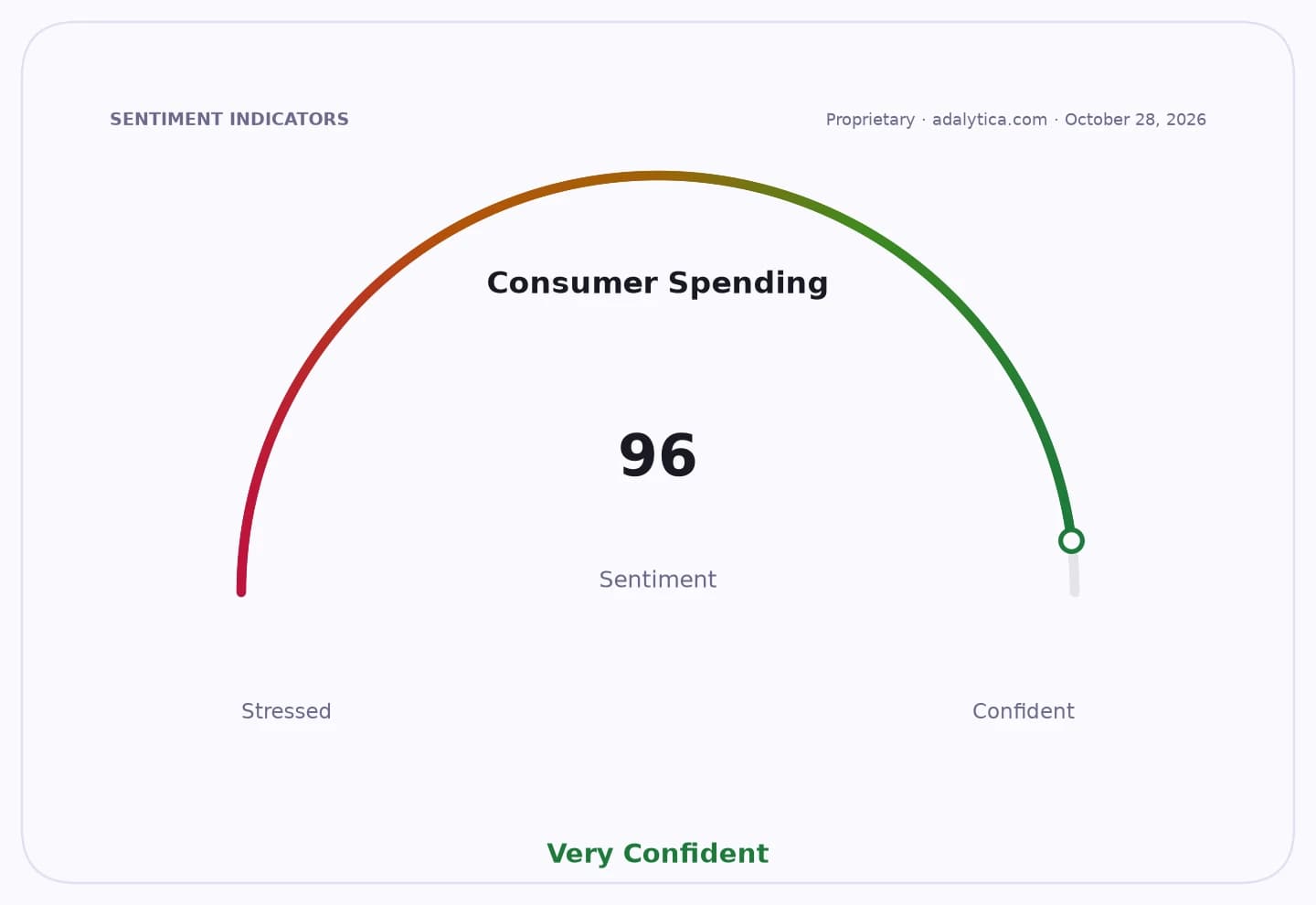
Sentiment Indicators
For investors, the message is straightforward: Austria is becoming a slower-moving but more expensive sovereign borrower. The country still benefits from nominal growth running above average debt costs, but that cushion is narrowing as weak growth and persistently higher market rates erode the arithmetic. A long average maturity of 11.2 years delays the pain, but it does not eliminate it. The council estimates that a permanent 1 percentage point increase in rates adds about 600 million euros a year to interest spending, with annual debt-service costs rising to about 11 billion euros and the interest bill reaching 2% of GDP by 2027.
The bigger problem is that this is not just a temporary cyclical gap. A large share of the deficit is structural, estimated at 3.3% of GDP in 2026 and 3.1% in 2027, driven by rising health and pension spending tied to demographics and medical progress. Deficits are also embedded across the public sector, not just the federal budget, with provinces and municipalities also in the red. That makes consolidation politically harder and economically more painful, because the burden falls on areas that support long-term growth if spending is cut indiscriminately.
The timing is awkward. Recent policy decisions since the summer — including a VAT cut on selected food items, drought aid, media support and the “Zukunftsdepot” — add another 240 million euros to the budget without durable funding offsets. In other words, Austria is layering new spending on top of a deficit path that already leaves no safety margin.
For bondholders, this argues for caution rather than panic. Austria is not in crisis, but it is drifting away from the kind of fiscal flexibility that typically supports tighter spreads over time. For equity investors, the risk is a gradual squeeze on domestic demand if higher interest costs and weaker fiscal room crowd out public investment. The market underestimates how quickly a high-debt country’s options narrow once growth cools and rates stay elevated.
The next catalyst will be whether Vienna can present a credible consolidation plan that goes beyond one-off measures. Without that, Austria’s debt ratio keeps grinding higher, and the story becomes less about recovery and more about managing an entrenched fiscal burden in a tougher rate environment.
| Entity | Gains | Losses |
|---|---|---|
| Austrian bondholders | ▲Higher yields, clearer risk premium | ▼Fiscal slippage risk |
| Austrian government | ▲Time from long debt maturities | ▼Budget flexibility |
| EU fiscal authorities | ▲Evidence of rule enforcement | ▼Another deficit breach |
| Domestic taxpayers | ▲— | ▼Higher future tax burden |