AWC is trying to do what the market has long struggled to price: turn a capital-heavy hotel-and-office empire into a recurring-income machine that can unlock value, recycle capital and, if management delivers, re-rate the stock.
AWC plans AWR REIT to unlock property value
The centerpiece is AWR REIT, a new multi-sector trust seeded with five premium assets worth at least 48.449 billion baht and targeted to swell to 300 billion baht within five years. That is an aggressive ambition in a Thai REIT market still wrestling with higher rates, tighter liquidity and a more selective investor base. But it also attacks AWC’s biggest valuation problem head-on — the gap between a rapidly expanding asset base and a share price that has lagged since the company’s listing.
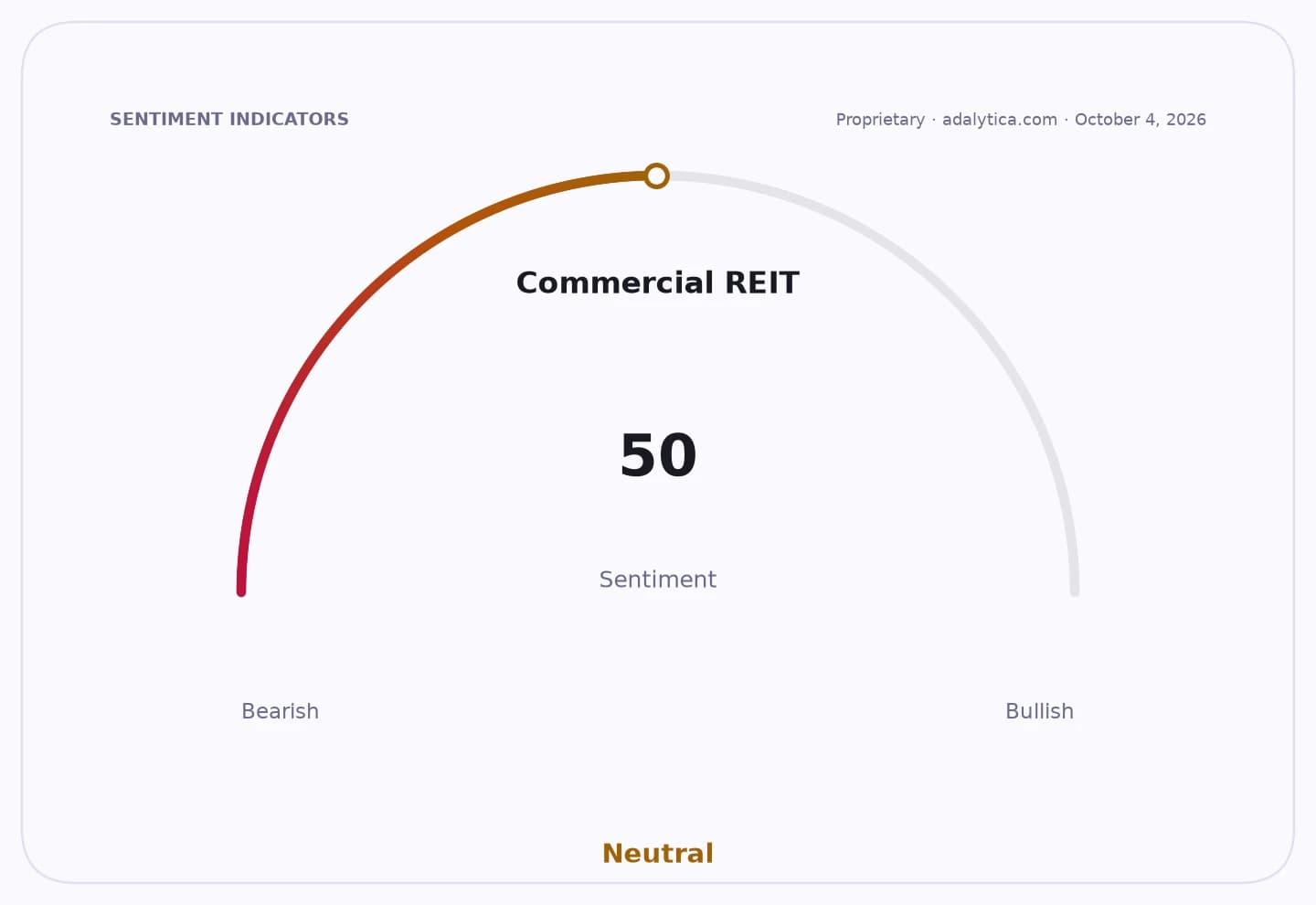
Sentiment IndicatorsⓘProprietary · adalytica.com · October 1, 2026
This is a snapshot — live sentiment, awareness and momentum for 130+ markets update continuously in the dashboard.Open AlphaPulse
Valallapa Traisoras, AWC’s chief executive and heir to the Charoen family fortune, is effectively rewriting the company’s investment case. Instead of keeping everything on its own balance sheet, AWC wants to shift matured assets into AWR REIT, crystalize gains and redeploy capital into new developments. The first transaction alone is expected to surface about 5 billion baht of fair-value gains from a much larger 45 billion baht pool sitting in commercial property, while the company says the trust could eventually become a “must own” vehicle for both Thai and foreign investors.
That matters because AWC has spent years building assets faster than public-market investors could recognize them. The company’s property base has climbed to about 224 billion baht from 96 billion baht at IPO, yet the stock has traded around half the offering price at times because the market could not easily see the cash flow transition from development phase to stabilized phase. A REIT structure gives that transition a price tag. It also creates a cleaner capital-cycle model: AWC develops, stabilizes, sells into the trust, and starts again.
For investors, the thesis is simple and unusually powerful. If AWR REIT lists around the planned $1 billion size and later scales toward 300 billion baht, AWC could convert hidden asset value into visible distributable income while keeping exposure to growth through its development engine. Management says the new model would shift future revenue toward roughly 70% recurring income and 30% capital gains and asset management profit, a mix that should command a better multiple than a pure asset holder.
The initial portfolio is also well chosen for quality and liquidity. It includes The Empire office tower in Bangkok, Banyan Tree Samui, Pattaya Marriott Resort & Spa, Meliá Koh Samui and Banyan Tree Krabi — assets with strong operating histories and, in some cases, robust revenue growth trends. Those are the kinds of stabilized properties that institutions can underwrite and retail investors can understand.
The market is likely to focus first on execution risk, pricing and demand for the IPO. But the bigger story is strategic. In a world where investors are paying up for infrastructure-like cash flows and scarce hard assets, AWC is trying to position premium Thai hospitality and commercial property as a compounding platform rather than a static balance sheet. If management can move assets into AWR REIT without eroding returns, the upside is not just a higher stock price — it is a more scalable capital machine.
For long-term investors, the opportunity is to own the enabler before the rerating becomes obvious. The next catalyst is the filing and IPO process, which will show whether AWC can translate this ambitious structure into a marketable, yield-backed vehicle. If it can, the market may finally start valuing AWC for what it has built, not for what it has failed to unlock.
| Entity | Gains | Losses |
|---|---|---|
| AWC | ▲Unlocks hidden value | ▼Asset-heavy balance sheet |
| AWR REIT | ▲Premium seed assets | ▼N/A |
| Thai investors | ▲New income vehicle | ▼Limited allocation if IPO tight |
| Competing REITs | ▲Sector validation | ▼Capital share pressure |