Axo Metals has done more than post another strong drill hole: it has broadened the case that its San Antonio project in Mexico could become a much larger gold system than investors first thought.
Axo Metals San Antonio drill results expand gold case
That matters because the market still rewards miners that can turn exploration success into scale, infrastructure and a faster path to cash flow. In a gold sector where sentiment has swung sharply and the broad gold ETF GLD has pulled back below its 50-day average, a project that can add ounces near surface and along existing workings stands out for long-term investors.
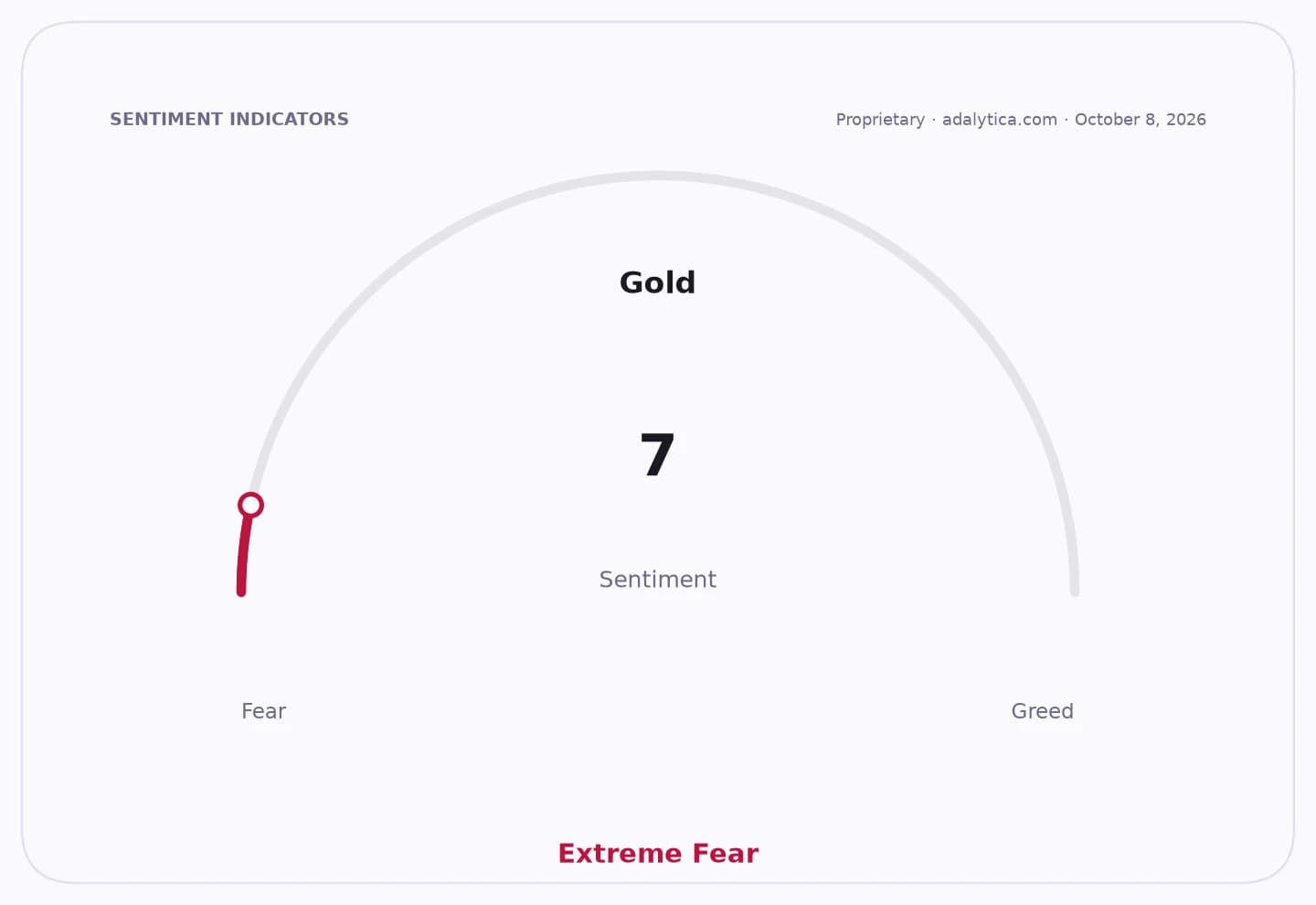
Sentiment IndicatorsⓘProprietary · adalytica.com · September 29, 2026
This is a snapshot — live sentiment, awareness and momentum for 130+ markets update continuously in the dashboard.Open AlphaPulse
The headline result came from Sapuchi, where Axo reported 8.15 grams per tonne gold over 18.0 meters starting just 18 meters below surface. That is the kind of interval that catches the eye in any drilling campaign. But the bigger investment implication may sit east of the current resource boundary, where the company’s first meaningful step-out at Luz del Cobre returned 46.5 meters grading 1.43 g/t gold from surface, roughly 750 meters beyond Sapuchi’s existing limit.
That is important because San Antonio already has a defined resource of about 1.12 million ounces of gold across indicated and inferred categories, plus silver, and it comes with brownfield advantages that greenfield projects simply do not have. The site has existing infrastructure, water rights, road access, power and processing facilities, and Axo says it has received the MIA environmental approval from SEMARNAT. For investors, that combination reduces the amount of “maybe someday” embedded in the story and increases the value of each successful drill program.

Sapuchi appears to be shaping up as a possible starter pit. Axo’s latest holes also included 47.1 meters at 1.16 g/t gold from 13.1 meters, 75.0 meters at 0.87 g/t from surface and 49.7 meters at 1.20 g/t from 79 meters. In plain English, this is not just a narrow high-grade spike. It is also broad, shallow mineralization that could matter a lot in an open-pit scenario, where strip ratio and material movement often make or break economics.
Luz del Cobre may be the real long-term prize. Historically, it was a copper mine, but Axo is testing the idea that a separate gold-mineralizing event may have occurred there too. The company’s 46.5-meter hit from surface is an encouraging first answer, and the untested ground between Luz del Cobre and Sapuchi could ultimately prove to be the bridge that turns two prospects into one much larger deposit area. The company has already reported trench results such as 20.7 meters at 1.08 g/t gold, though those surface samples still need to be backed by systematic drilling.
For investors, the message is straightforward: Axo Metals is no longer just a junior with interesting holes. It now has a permitted, infrastructure-rich gold project, a resource base that can potentially grow, and a development timeline that management says could include a preliminary economic assessment in early 2027, a possible build start in the first half of 2027 and first production in 2028. That is still a long way from certainty, but it is the kind of roadmap that can drive valuation if the ounces keep coming.
La Huerta, Axo’s high-grade copper project in Jalisco, remains a valuable second act. But for now, San Antonio is the engine, and these results suggest that engine may still be getting bigger. Long-term investors should keep it on the watchlist, especially if upcoming drilling continues to connect the dots between Sapuchi and Luz del Cobre.
| Entity | Gains | Losses |
|---|---|---|
| Axo Metals | ▲Larger gold story | ▼Exploration risk if continuity fails |
| Long-term shareholders | ▲Potential resource growth | ▼Dilution and development delays |
| Gold bulls | ▲Another near-surface project | ▼Weakening spot-price sentiment |
| Competing juniors | ▲Sector validation | ▼Attention diverted from peers |