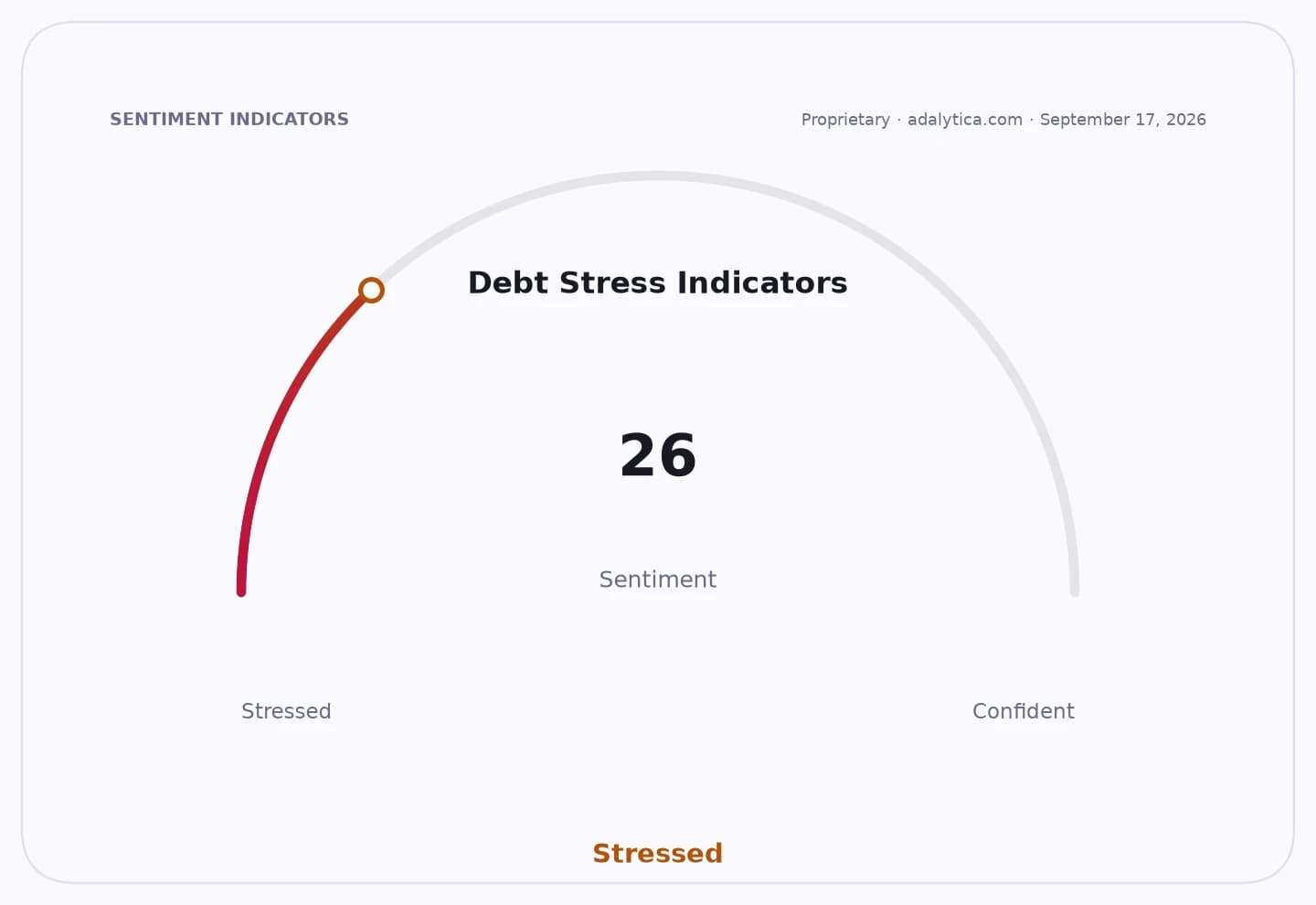
Azerbaijan’s rising household debt load is becoming a bigger economic issue, even if the level still looks manageable for now. The country’s household debt-to-disposable-income ratio climbed to 18.7% in the first half of 2026, up 0.3 percentage point from the end of last year, according to the Central Bank of Azerbaijan’s Financial Stability Report.
Azerbaijan Household Debt Rises to 18.7% of Income
What matters is not just the increase itself, but the direction. Household income did rise over the period, yet debt grew faster, leaving consumers with a larger repayment burden. For an economy that still leans heavily on domestic consumption and bank lending, that mix can gradually squeeze spending power, especially if interest rates stay elevated or labor income weakens.
Sentiment IndicatorsⓘProprietary · adalytica.com · October 14, 2026
This is a snapshot — live sentiment, awareness and momentum for 130+ markets update continuously in the dashboard.Open AlphaPulse
The central bank is right to watch the trend closely. A debt ratio below 20% is not alarming by global standards, but the trajectory matters more than the level when households are increasingly relying on borrowing to bridge day-to-day needs or finance big-ticket purchases. Higher debt service eventually shows up in slower retail sales, more cautious lending, and a banking sector that has to work harder to preserve asset quality.
The report also showed that restructured loans fell to 3.1% of the total loan book, down 0.1 percentage point from the end of 2025, even as the volume of such loans rose 3.3% to 990 million manat. That suggests banks are still cleaning up legacy problem loans even while new consumer borrowing expands. The biggest increase came from restructured consumer loans, while mortgage restructurings fell and business loans were little changed.
For investors, the takeaway is straightforward: Azerbaijan’s consumer-credit story is still intact, but it is becoming more sensitive to income growth and credit discipline. Banks with heavy exposure to households may enjoy loan growth today, but they also face higher risk if repayment capacity starts to erode. Over the longer term, steady income growth and prudent underwriting will matter more than headline lending volumes.
| Entity | Gains | Losses |
|---|---|---|
| Azerbaijani households with rising incomes | ▲More access to credit | ▼Bigger repayment burden |
| Banks and consumer lenders | ▲Loan growth | ▼Higher credit risk |
| Central Bank of Azerbaijan | ▲Better visibility on risks | ▼Pressure to tighten oversight |
| Savers and long-term investors | ▲Clearer risk monitoring | ▼Slower consumer demand if debt rises further |