The spread between borrowing and deposit rates in Azerbaijan’s manat banking market has widened to its highest level since late 2021, underscoring weaker credit demand and giving lenders more room to protect margins at depositors’ expense.
Azerbaijan manat bank spread widens to 2021 high

For households, the average rate on manat time deposits stood at 9.95% in early September, while the average rate on manat loans was 17.36%, leaving a gap of 7.41 percentage points, according to Central Bank data. That was wider than 6.6 points a year earlier and marks the steepest difference since November 2021. For corporate clients, the manat spread also widened to 4.81 points from 4.24 points a year earlier.
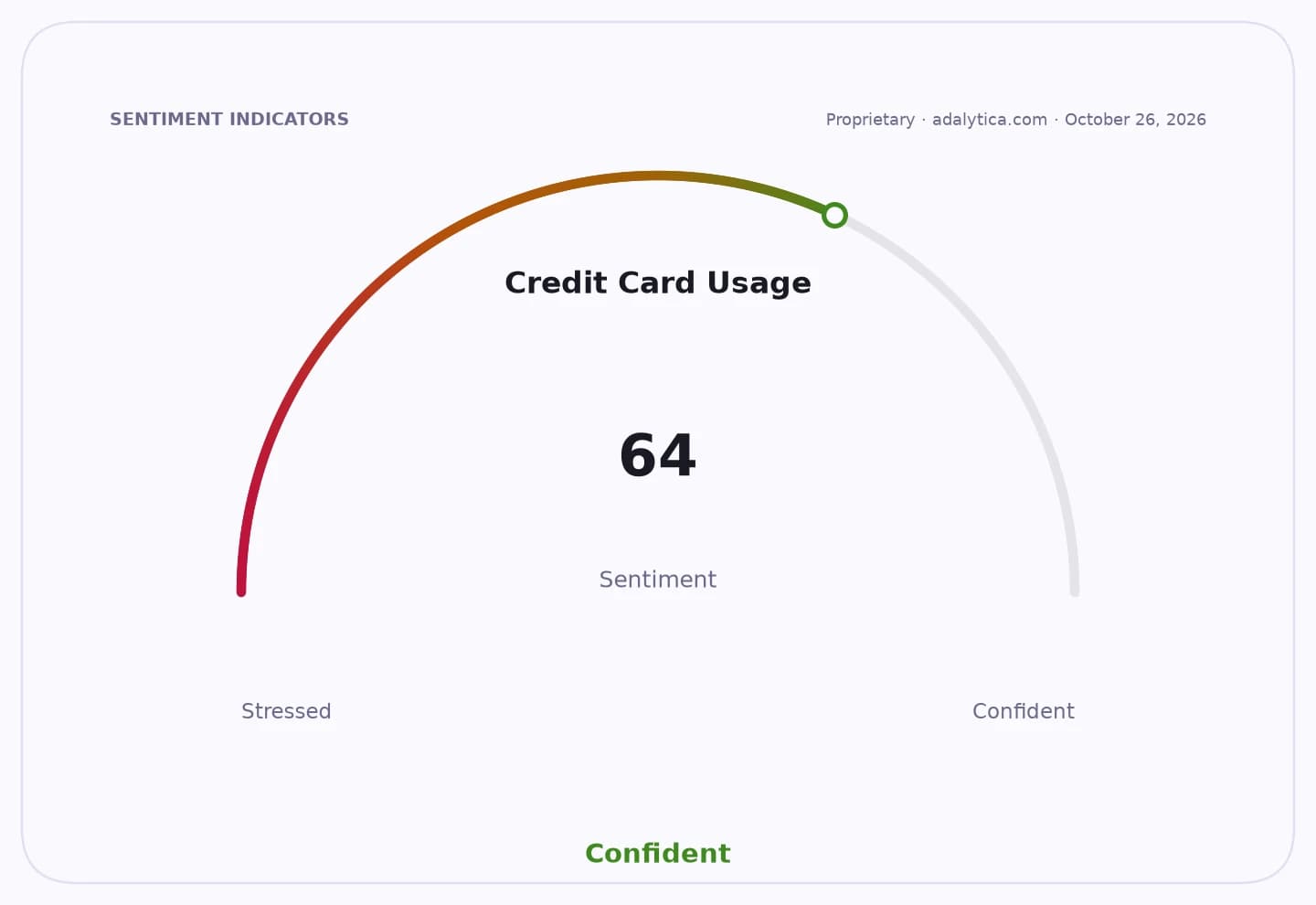
Sentiment IndicatorsⓘProprietary · adalytica.com · October 26, 2026
This is a snapshot — live sentiment, awareness and momentum for 130+ markets update continuously in the dashboard.Open AlphaPulse
The move matters because bank spreads are a direct measure of how much banks are paying for funding versus what they can charge for credit. A wider gap usually means depositors are receiving less for their savings while borrowers are still paying elevated rates, a combination that can support bank profitability but also dampen lending and broader economic activity.
The trend is concentrated in the local-currency market. Foreign-currency spreads have barely moved, suggesting the shift is being driven by manat funding and manat lending conditions rather than a wholesale repricing across the system.
Economist Əkrəm Həsənov said the decline in deposit rates reflects softer economic activity and reduced demand for loans. If banks cannot place deposits into profitable lending, they have less incentive to compete aggressively for savings. He also pointed to growing concentration in the sector, with larger banks gaining pricing power as smaller lenders lose ground.
That helps explain why the average manat deposit rate has fallen this year even as lending rates have edged higher. The average rate on manat time deposits slipped to 9.16% from 9.44% at the start of the year, while the average rate on manat loans rose to 15.79% from 15.44%, pushing the overall manat credit-deposit spread to 6.63 points from 6 points.
For investors, the immediate beneficiaries are banks, which can earn fatter net interest margins if funding costs keep easing faster than lending yields. The losers are savers, who face lower returns on deposits, and would-be borrowers, who are still being asked to pay high rates. The setup also suggests policy pressure may build for banks to pass on easier funding conditions through cheaper credit if the economy is to regain momentum.
That concern is not limited to Azerbaijan. Across banking markets, when deposit competition fades and loan demand weakens, profitability can look healthy on paper even as credit growth slows. In that sense, the widening manat spread is a sign of balance-sheet strength for lenders and a warning that the cost of capital remains a constraint for the real economy.
| Entity | Gains | Losses |
|---|---|---|
| Banks | ▲Wider net interest margins | ▼Pressure to attract deposits |
| Depositors | ▲None | ▼Lower savings returns |
| Borrowers | ▲None | ▼Higher manat loan costs |
| Economy | ▲Bank profitability | ▼Slower credit demand |