Babbel is betting that even in the age of fast-improving AI, language learning still works best when experts, not algorithms, are doing the teaching.
Babbel discounts lifetime language access to $159
That matters because education is one of the clearest battlegrounds for artificial intelligence. Companies from Microsoft to Alphabet are racing to build AI tools that can answer questions, generate lessons and simulate conversations. But Babbel’s pitch is a reminder that trust, accuracy and cultural nuance still have value — especially in a product where being wrong can be more than embarrassing.
Sentiment IndicatorsⓘProprietary · adalytica.com · September 9, 2026
This is a snapshot — live sentiment, awareness and momentum for 130+ markets update continuously in the dashboard.Open AlphaPulse
Babbel’s latest promotion underscores that strategy. New U.S. users can buy lifetime access to all 14 languages for $159, down from a regular $299. The package includes more than 10,000 hours of lessons developed by more than 100 expert linguists, with modules for practical situations such as travel, shopping and business conversations. Lessons are short, at about 10 to 15 minutes, and Babbel says its AI Conversation Partner is meant to supplement practice rather than replace the people who designed the course.
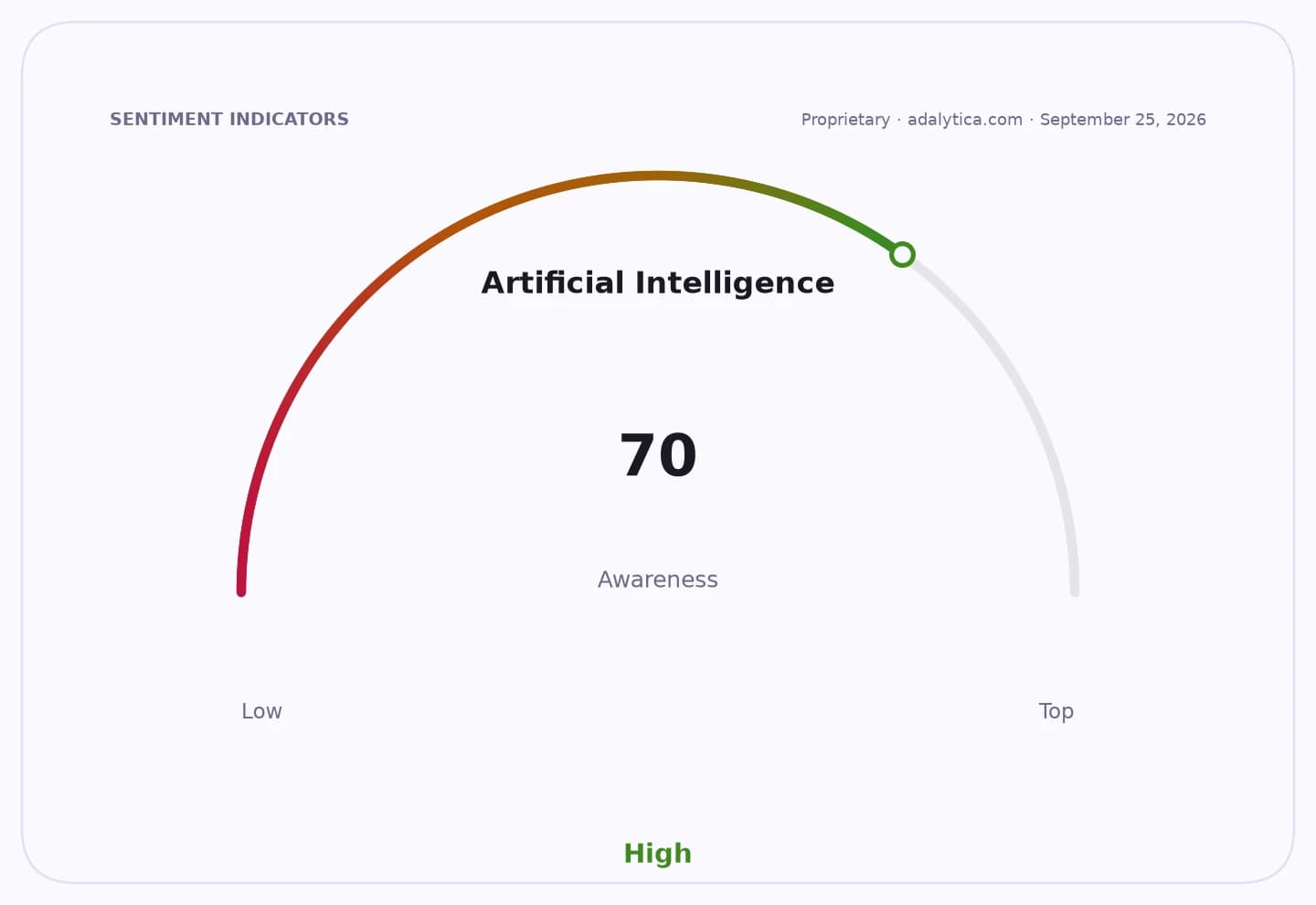
For investors, the bigger story is the market’s split between AI-powered scale and human-made credibility. Adalytica’s AI sentiment gauge is sitting at 78, in “Greed” territory, showing how strong enthusiasm remains around the sector. But the same enthusiasm is starting to expose a useful distinction: not every product benefits from being fully automated. In categories where correctness matters and users pay for outcomes, human expertise can still be a moat.
That has implications well beyond Babbel. Duolingo, Chegg and other education names are all trying to balance AI efficiency with consumer trust. Duolingo’s shares have been volatile, while Chegg’s stock sits near pennies as the company struggles to find durable growth. Babbel, which is not publicly listed, is using the same AI conversation features many rivals talk about — but framing them as a tool, not the teacher. That may sound old-fashioned, but it is often how durable consumer brands are built.
The investment lesson is straightforward: AI is powerful, but it is not a blanket replacement for judgment, domain expertise or brand trust. In language learning, that may be enough to keep humans in the loop for a long time. Investors should watch which education companies use AI to improve margins without eroding the one thing customers actually buy: confidence they are learning the right thing. For long-term portfolios, that kind of differentiation is worth keeping on the watchlist.
| Entity | Gains | Losses |
|---|---|---|
| Babbel | ▲Trust-based differentiation | ▼Fully automated rivals |
| Human linguists | ▲Continued demand | ▼Commodity AI content |
| Duolingo and Chegg | ▲AI adoption buzz | ▼Pressure to prove quality |
| Long-term users | ▲Better learning confidence | ▼Cheap but error-prone automation |