AI is no longer a theoretical disruption in Harvard’s classrooms: a strong majority of faculty now say it is actively making their courses worse, a sign that the technology’s adoption in higher education is colliding with grading, assessment and academic integrity.
Harvard faculty report more negative AI course impact

Sixty-four percent of Harvard Faculty of Arts and Sciences respondents said AI had a “somewhat negative” or “very negative” effect on their courses, up from 42% a year earlier, according to The Harvard Crimson’s annual faculty survey. That 22-point swing is the sharpest one-year deterioration the survey has recorded and underscores how quickly campus sentiment has turned from curiosity to operational frustration.
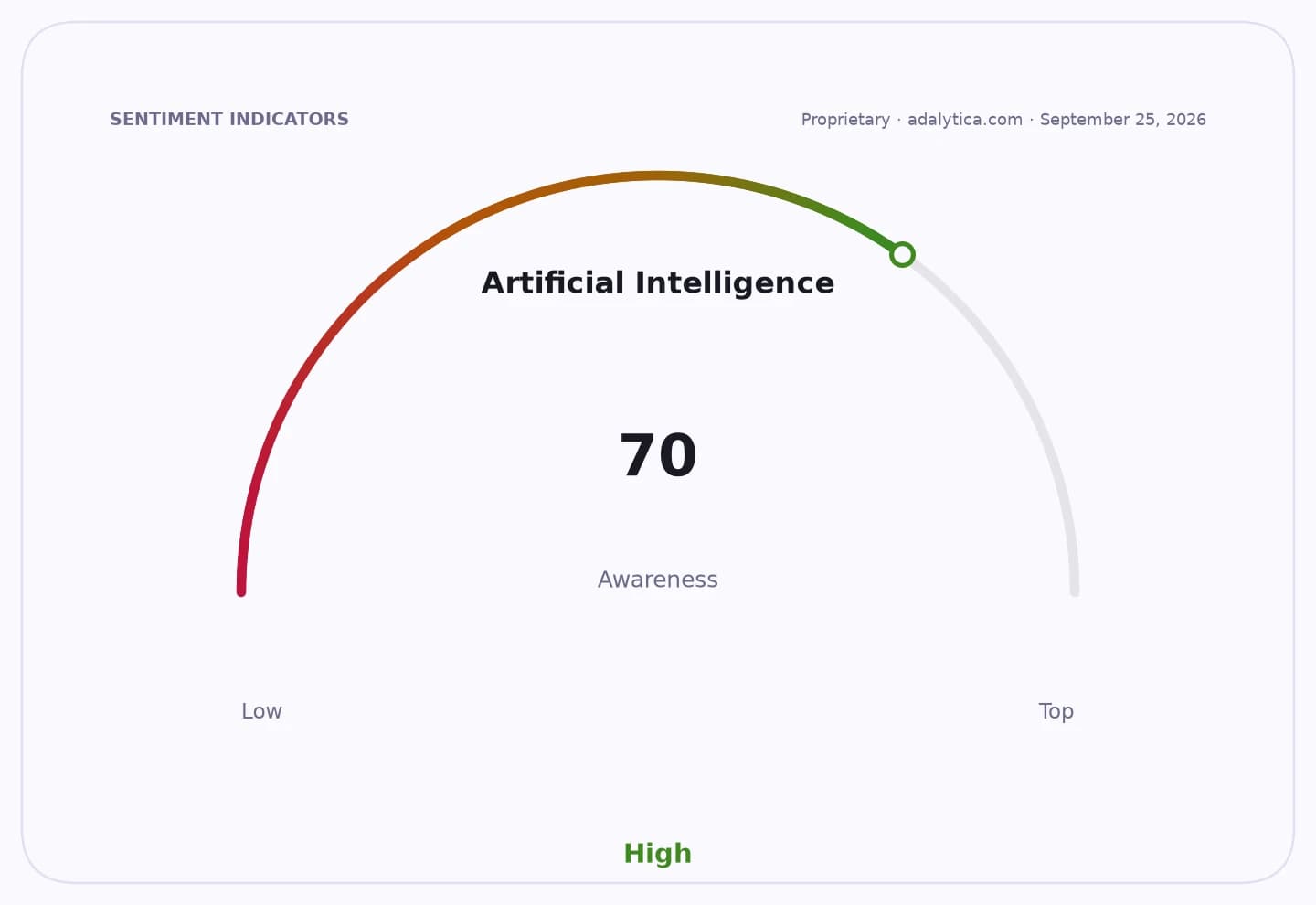
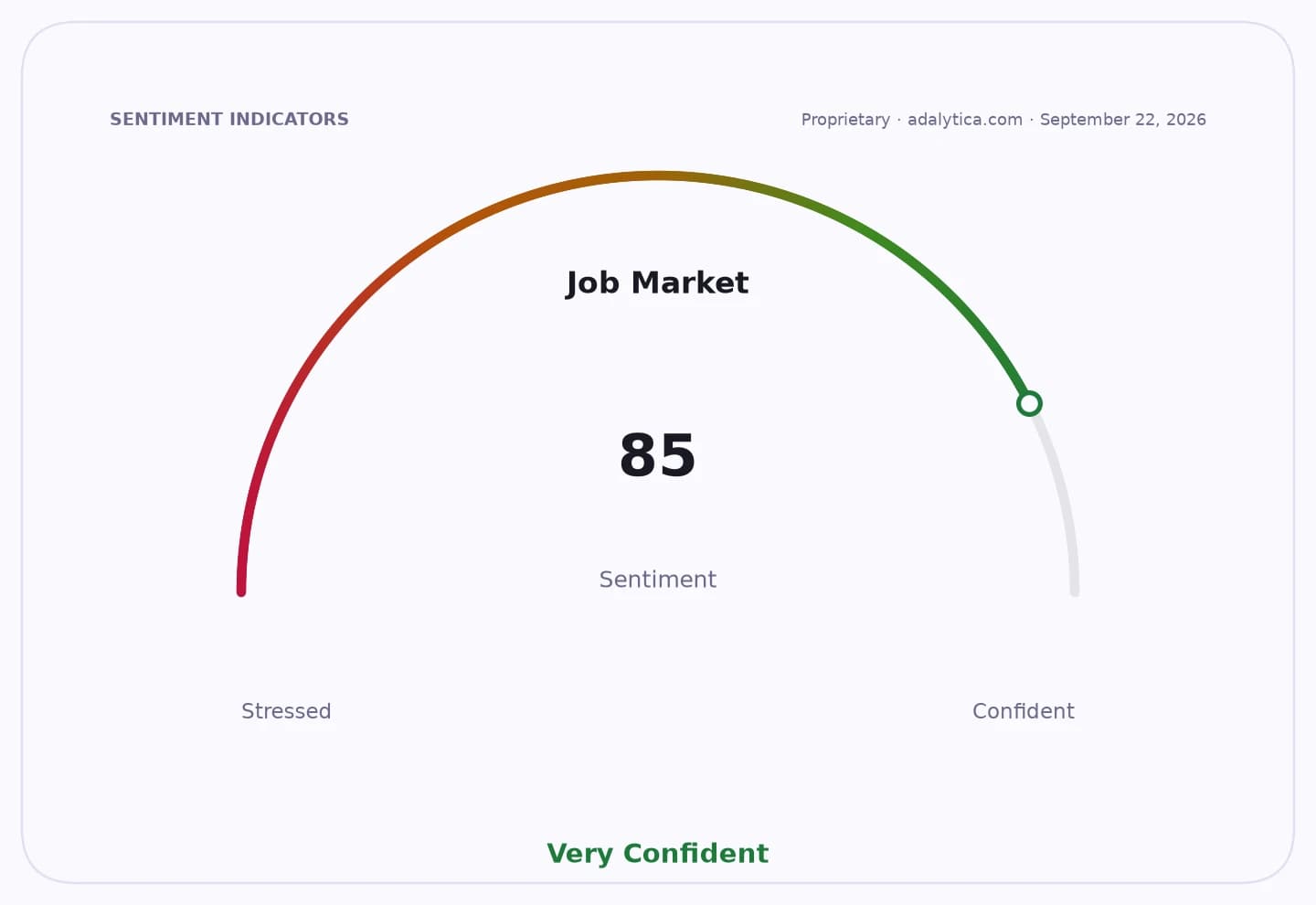
Sentiment IndicatorsⓘProprietary · adalytica.com · September 21, 2026
This is a snapshot — live sentiment, awareness and momentum for 130+ markets update continuously in the dashboard.Open AlphaPulse
The problem is not just perception. Nearly nine in 10 faculty said they had received student work they knew or believed was produced using AI, while only 64% said they felt confident distinguishing AI-generated work from original student writing. Just 12% referred unauthorized AI use to the honor council over the past year, suggesting that detection remains difficult and enforcement is still uneven.
That combination matters economically because universities are being forced to redesign instruction around a technology they cannot reliably police. Harvard faculty are responding by demanding drafts and version histories, shifting more assessments into oral exams and in-person tests, and replacing take-home writing with process-heavy assignments that are harder to outsource to chatbots. In other words, AI is not only changing what students submit; it is changing the cost and structure of teaching itself.
The divide across disciplines shows where the pressure is most acute. Humanities professors remain the most resistant, with only 63% allowing at least some AI use in their courses, compared with 84% of social science faculty and 79% in science and engineering. A separate Crimson review of roughly 600 fall 2026 courses found that more than half of STEM classes allowed some AI use, versus 35% in social science courses and 27% in humanities, highlighting how course rules are tightening even where faculty attitudes are more permissive.
For investors, the story is bigger than one university. Harvard is a leading indicator for how elite institutions absorb new technology, and its faculty are now moving toward “AI-proof” assessments rather than relying on detection tools. That is a warning for edtech companies, learning platforms and enterprise AI vendors that adoption does not automatically translate into frictionless use. In sectors where trust, attribution and evaluation matter, AI can raise operating costs before it improves productivity.
The institutional split also matters. Harvard College Dean David Deming has pushed faculty to accept or encourage AI in writing-heavy courses, while President Alan Garber has praised AI as a research tool. That puts university leadership on one side of the transition and many instructors on the other, a dynamic likely to shape curriculum design, compliance and student experience through the next academic year.
The broader narrative is not that AI is disappearing from classrooms, but that its first-order effect in higher education is defensive adaptation. The more students use it, the more professors will require oral defenses, timed exams and draft histories. For universities, that means a renewed focus on assessment integrity. For AI companies, it means the market for education may grow, but the user experience is becoming more constrained than the hype suggests.
| Entity | Gains | Losses |
|---|---|---|
| Harvard administrators | ▲push AI literacy | ▼face faculty pushback |
| Students using AI | ▲faster drafting help | ▼tougher assessments |
| Faculty in humanities | ▲stricter controls | ▼more workload |
| EdTech and AI vendors | ▲demand for tools | ▼trust and adoption friction |