Artificial intelligence is moving from lesson planning into the most sensitive part of schooling — how students are judged — as schools and colleges begin using AI to help rate work beyond traditional A-F grades.
Legend.org AI grading tools expand in schools
That matters because the next front in education is not just efficiency, but assessment. If AI can shorten grading cycles, standardize rubric-based feedback and help schools measure skills that are hard to capture on a transcript, it could reshape how students are evaluated, how colleges recruit and how employers screen talent. The market is underestimating how quickly this could scale once schools see a real time-saving and data advantage.
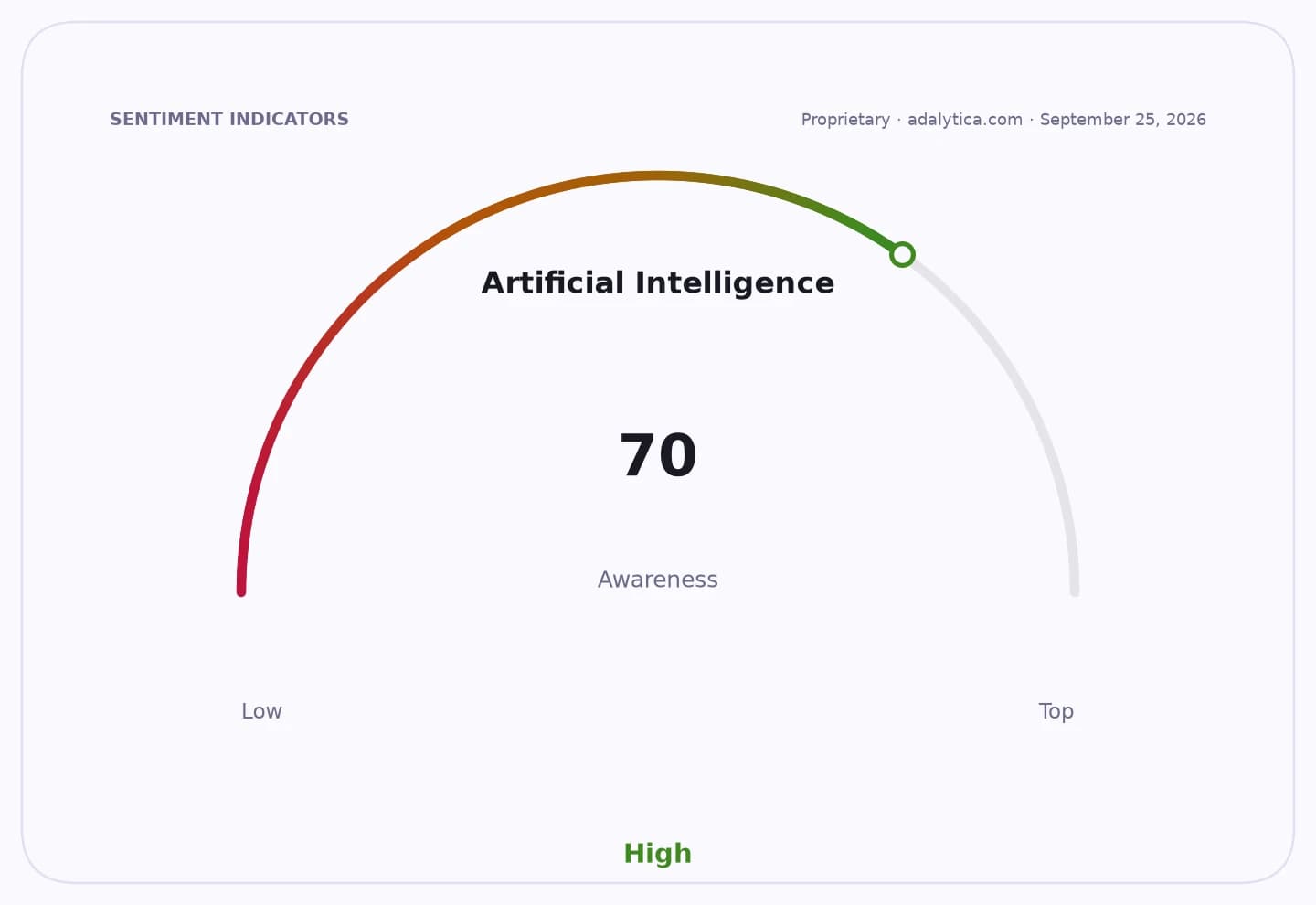
Sentiment IndicatorsⓘProprietary · adalytica.com · September 25, 2026
This is a snapshot — live sentiment, awareness and momentum for 130+ markets update continuously in the dashboard.Open AlphaPulse
The clearest catalyst is the sale of the Mastery Transcript Consortium to Legend.org in July, giving a for-profit operator control of a network of about 400 public and private schools experimenting with nontraditional report cards. Legend is building AI tools that let teachers upload papers, exams, presentations and even photos of handwritten work, then apply school or state standards to generate a first-pass assessment.
This is the kind of infrastructure play investors should watch. The biggest value may not sit in the classroom software itself, but in the workflow it creates around grading, portfolio management and competency tracking. Schools that use mastery-based models need a way to document growth in communication, collaboration and critical thinking across multiple assignments. That is a data problem as much as an education problem, and AI is built to solve repetitive, high-volume assessment at scale.
Legend co-founder Matt Sornson says the tools are designed to assist teachers, not replace them, with humans still making final decisions. That is exactly why adoption may accelerate. In education, trust is the bottleneck. Systems that preserve teacher oversight while shaving hours off grading are far easier to sell than fully automated scoring engines, especially as researchers warn AI feedback can be too lenient or diverge from teachers’ own grades.
For schools, the economics are straightforward. Teachers spend less time on first-pass grading and more time on instruction. Students get faster feedback and clearer guidance on what to improve. Administrators get a more portable record of performance, especially for mastery-based programs that rely on portfolios rather than test scores. And if colleges or employers eventually submit their own skill standards, as the consortium’s founders envision, the result could be a much larger market for AI-backed assessment across high school and higher education.
There is also a second-order winner here: the institutions that can prove outcomes in a labor market increasingly obsessed with skills rather than credentials. ETS and Carnegie’s move to broaden skills assessment underlines where the system is heading, even after ETS sold the transcript model itself. The split suggests the old transcript format is too rigid for the next era of talent evaluation, while AI creates a cheaper way to operationalize the shift.
Investors should read this as another sign that AI adoption is spreading beyond flashy consumer use cases into recurring, workflow-heavy enterprise applications. Education is not the biggest revenue pool, but it is a high-friction, trust-sensitive sector where once tools are embedded, switching costs can be sticky. That makes the winners likely to be platforms that own the grading workflow, the portfolio data, and the standards engine.
The opportunity is not in replacing teachers. It is in owning the software layer that helps teachers grade faster, judge more consistently and document skills that traditional transcripts miss. If Legend and similar platforms prove they can do that at scale, AI grading could become one of the most durable applied-AI markets of the next decade.
| Entity | Gains | Losses |
|---|---|---|
| Legend.org | ▲Higher adoption of AI grading tools | ▼Legacy grading workflows |
| Teachers | ▲Less grading time | ▼Manual first-pass assessment |
| Students in mastery schools | ▲Faster feedback, richer transcripts | ▼Simple A-F-only reporting |
| Traditional transcript models | ▲— | ▼Relevance as skills-based assessment grows |