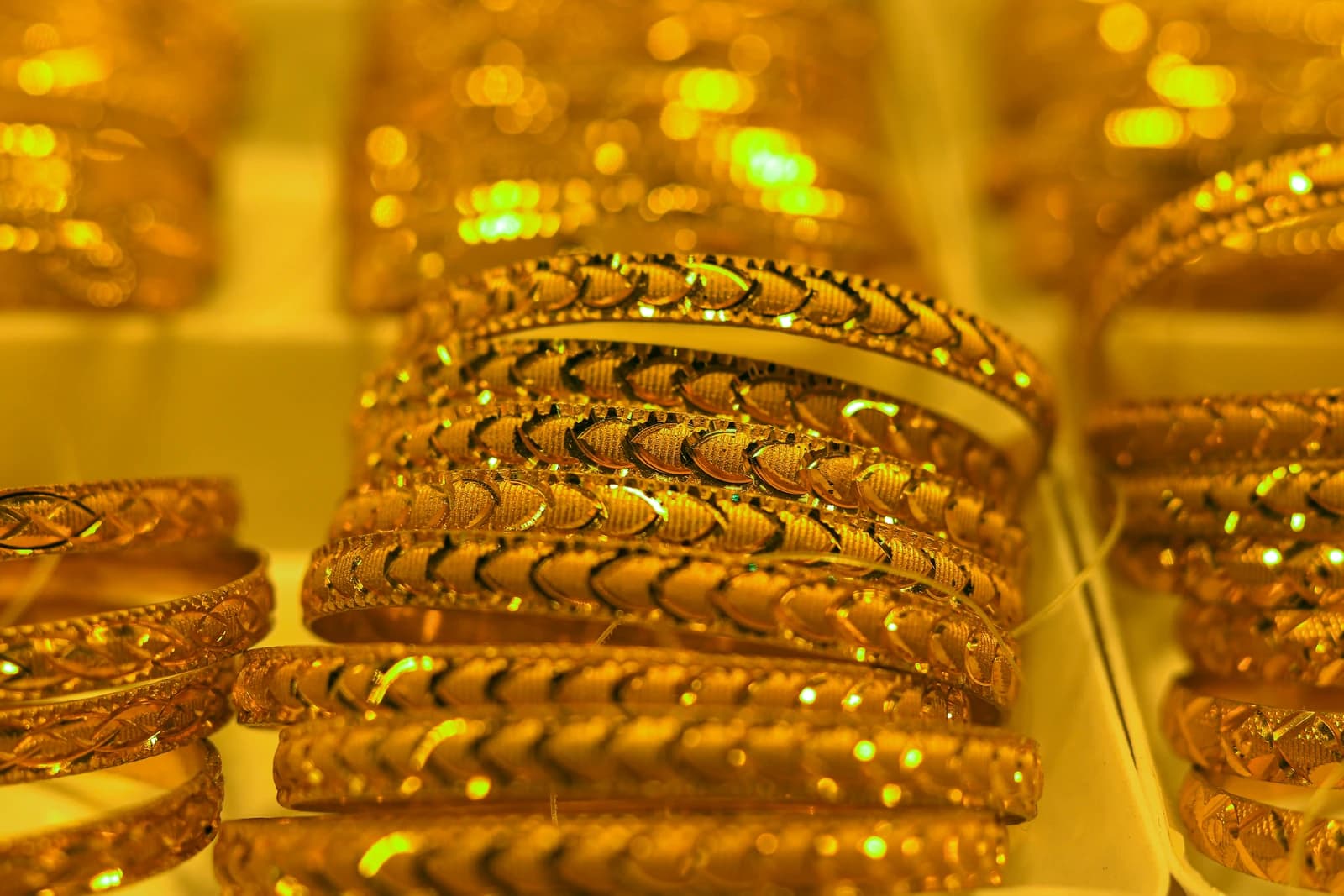
Bangladesh’s jewelry market got another price cut on Sunday as the Bangladesh Jewellers Association lowered gold prices for the fourth time in a row, trimming the 22-carat rate to Tk 220,858 a ভরি, or 11.664 grams, and easing the cost of ornaments by as much as Tk 3,324 per ভরি including VAT.
Bangladesh gold prices cut again by BAJUS
The move matters because gold is both a consumer purchase and a store of value in Bangladesh, so a sustained drop can quickly affect household buying decisions, jeweler margins and inventory valuations. BAJUS said the latest cut followed a decline in pure gold prices in the international market, showing how local pricing remains tightly linked to the global bullion cycle rather than domestic demand alone.
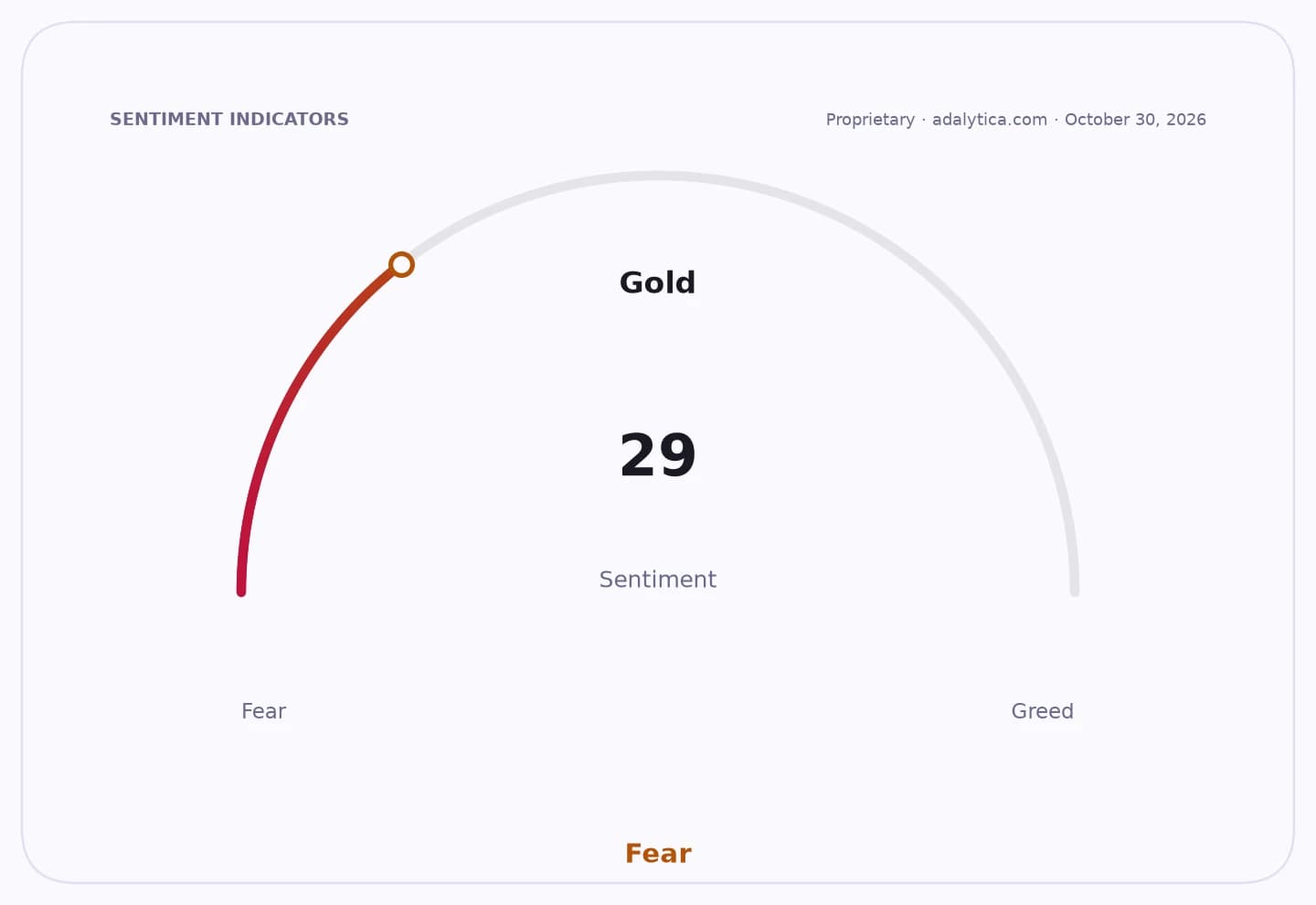
Sentiment Indicators
Under the new rates, 21-carat gold is priced at Tk 210,943 per ভরি, 18-carat at Tk 181,200 and traditional-method gold at Tk 148,016. The new prices took effect at 10 a.m. on Sunday, according to the association.
The latest reduction follows a Tk 2,158 cut announced on Friday, when the 22-carat price was set at Tk 224,158 per ভরি. Two cuts in as many days underline how quickly domestic prices are adjusting to weaker global bullion, and how vulnerable Bangladeshi retailers are to swings in international markets when pricing their stock and orders.
Silver prices were left unchanged, with 22-carat silver still selling at Tk 3,849 per ভরি including VAT. That divergence is notable for investors and traders because it suggests the current adjustment is gold-specific rather than a broad precious-metals reset in the local market.
For consumers, lower prices improve affordability at the margin, especially ahead of wedding and festive buying seasons. For jewelers, the immediate benefit is easier sales conversion, but the downside is lower markups on old inventory bought at higher rates. The association also reiterated that making charges depend on design and that VAT must be applied on the declared sales price, which should help standardize retail pricing and limit disputes.
The broader narrative is one of imported price transmission: a softer global gold market is feeding straight through to Bangladesh’s retail shelves. Unless international bullion stabilizes, BAJUS may face continued pressure to revise local prices again, leaving buyers with a short-term benefit and retailers with more inventory risk.
| Entity | Gains | Losses |
|---|---|---|
| Gold buyers | ▲Lower purchase cost | ▼Less urgency to hedge purchases |
| Jewelers/retailers | ▲Better sales volume | ▼Lower margins on old stock |
| BAJUS members | ▲Clearer pricing guidance | ▼Need to reprice inventory repeatedly |
| Global gold sellers | ▲Near-term demand support | ▼Softer pricing power |