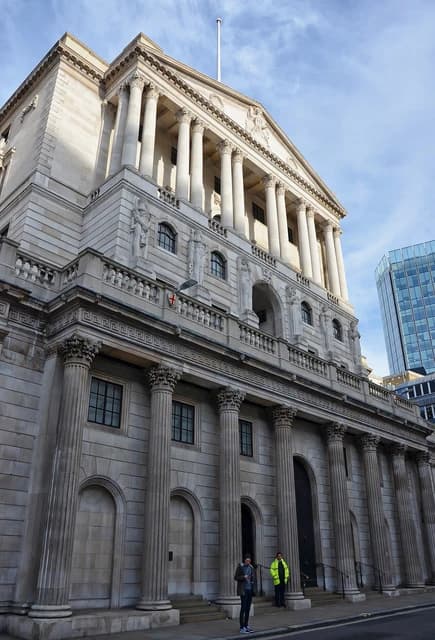
The Bank of England is coming under pressure to slow its bond sales when policymakers meet on Sept. 17, as the global bond shock pushes UK borrowing costs higher and complicates the fight against inflation.
Bank of England faces pressure to slow gilt sales

The immediate issue is that quantitative tightening is no longer just a domestic policy choice. With global yields rising despite the US Treasury ramping up buybacks to steady the market, the Bank faces a tightening financial backdrop that adds to the UK’s financing burden and risks amplifying volatility in gilts.
Sentiment IndicatorsⓘProprietary · adalytica.com · September 9, 2026
This is a snapshot — live sentiment, awareness and momentum for 130+ markets update continuously in the dashboard.Open AlphaPulse
Prof Costas Milas of the University of Liverpool said recent Bank of England work found QT can add about 0.4 percentage points to UK yields while trimming inflation by as much as 1.4 percentage points. That trade-off leaves policymakers with little room for error: cutting the pace of gilt sales could ease pressure on borrowing costs, but keeping QT at the current £70 billion annual pace would deepen stress in a market already on edge.
Investors are watching because higher gilt yields feed directly into government debt-service costs and can spill into mortgage pricing, corporate borrowing and sterling assets. The move also matters for rate expectations, since a slower QT pace would be read as a more cautious BoE response to tighter market conditions and could temper bets on how fast policy normalizes.
The bond shock has already rippled through global risk assets, with equities in Tokyo and Europe under pressure and US Treasury yields still elevated around 4.79% on the 10-year. The gap between the 10-year and 2-year Treasury yield near 0.42 percentage point shows markets still expect slower growth ahead, even as term yields stay high.
UK stocks are not immune. The S&P 500 and broader risk assets have been volatile, while longer-dated bond proxies such as the iShares 20+ Year Treasury Bond ETF remain under strain despite a recent rebound in conventional technical indicators. Adalytica’s trade signals put US Treasury bonds in “Extreme Greed,” reflecting the intense bid for duration even as prices remain choppy.
The BoE’s challenge is therefore not just whether to fight inflation harder, but how much market damage it can tolerate while doing so. A decision to taper QT on Sept. 17 would likely be welcomed by gilt traders and borrowers, but it would also slow disinflation at a time when price stability is still fragile.
| Entity | Gains | Losses |
|---|---|---|
| UK gilt investors | ▲Slower QT support | ▼Higher volatility risk |
| UK government | ▲Lower funding pressure | ▼Less anti-inflation support |
| Bank of England | ▲Market stability room | ▼Less room on inflation |
| Borrowers | ▲Softer yield pressure | ▼Persistent policy uncertainty |