The European Central Bank should stay vigilant on inflation and avoid moving too quickly on interest rates, a message from Governing Council member Yannis Stournaras that reinforces the case for patience even as markets look for the next turn in policy.
ECB Stournaras Urges Caution on Rate Cuts

His warning matters because the ECB has spent the past two years trying to extinguish the inflation shock without choking off growth, and premature easing could reverse some of that progress. With euro-area price pressures still the defining constraint on policy, the central bank is under pressure to balance a softer economy against the risk that inflation proves stickier than expected.
Sentiment IndicatorsⓘProprietary · adalytica.com · September 25, 2026
This is a snapshot — live sentiment, awareness and momentum for 130+ markets update continuously in the dashboard.Open AlphaPulse

That caution lands at a sensitive moment for investors. Money markets are still pricing the path of ECB policy against a backdrop of uncertainty over how fast inflation will return to target, and Stournaras’ remarks suggest the bar for rapid cuts remains high. For bond investors, that supports the view that policy rates may stay restrictive longer than hoped. For equity investors, it argues against betting on an aggressive re-rating from easier money.
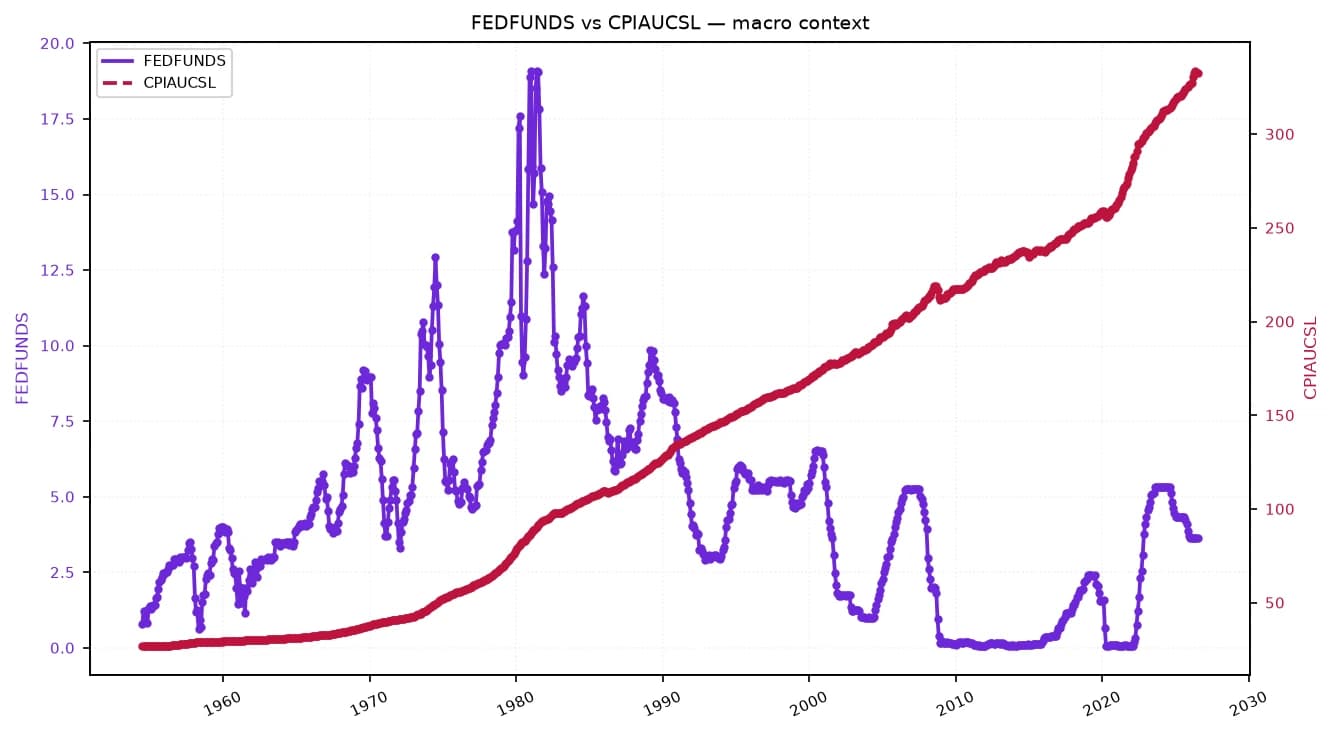
The broader macro picture helps explain the tone. Central banks across developed markets remain wary of declaring victory too early, and the ECB’s challenge is sharpened by uneven growth, energy-price risks and the fact that inflation can reaccelerate when financial conditions loosen too quickly. The ECB has already moved deep into restrictive territory; the question now is not whether inflation has fallen, but whether it has fallen enough to justify a swift policy shift.
CPIAUCSL vs FEDFUNDS — macro contextadalytica.com
Explore this data interactively — full history, time series and cross-market comparisons.Open AlphaPulse

Stournaras’ stance also matters because it reflects the internal debate that will shape the ECB’s next move. A more cautious line from policymakers tends to steepen the hurdle for cuts, while a faster-dovish shift would lift duration assets and riskier European assets. The immediate implication is that traders should treat any easing cycle as data-dependent rather than pre-committed.
For now, the message from Frankfurt is that inflation vigilance still outweighs urgency. That keeps the ECB anchored to a wait-and-see posture and leaves euro-area borrowers, rate-sensitive stocks and long-duration bond positions exposed to any disappointment in the disinflation path.
| Entity | Gains | Losses |
|---|---|---|
| ECB hawks | ▲Policy flexibility | ▼Pressure for fast cuts |
| Bond bears | ▲Higher-for-longer rates | ▼Rally in duration assets |
| Euro-area lenders | ▲Wider margin support | ▼Rapid compression in yields |
| Rate-sensitive stocks | ▲— | ▼Easier-money valuation boost |