The Bank of Russia is set to keep a high key rate in place as officials weigh fresh pressure from inflation risks, a softer ruble and still-strong demand for foreign currency that could keep prices elevated and limit room for policy easing.
Bank of Russia Keeps High Rates as Ruble Softens

For investors, the message is that Russian monetary policy is likely to stay restrictive longer than previously hoped. That supports the ruble in the near term, but it also keeps borrowing costs elevated for banks, companies and consumers at a time when the economy is already absorbing wartime shocks and slower policy transmission.
Sentiment IndicatorsⓘProprietary · adalytica.com · September 5, 2026
This is a snapshot — live sentiment, awareness and momentum for 130+ markets update continuously in the dashboard.Open AlphaPulse
The ruble has eased at the start of September as corporate demand for foreign currency remains firm and the Finance Ministry prepares to cut daily budget-rule foreign-exchange operations to 2.5 billion rubles from 6.5 billion rubles between Sept. 7 and Oct. 6. The reduced intervention should soften volatility, but it does not remove the broader pressure from import demand and capital outflows.
Commodity receipts are still offering some support. Urals crude has held in the $75 to $80 a barrel range, helping sustain foreign-exchange inflows, while Brent futures around $84 to $100 suggest oil markets are still providing a backstop for Russia’s export revenues despite geopolitical risk in the Gulf and logistics discounts.
Long-term Inflation Expectations — 30-day sentimentadalytica.com
Explore this data interactively — full history, time series and cross-market comparisons.Open AlphaPulse
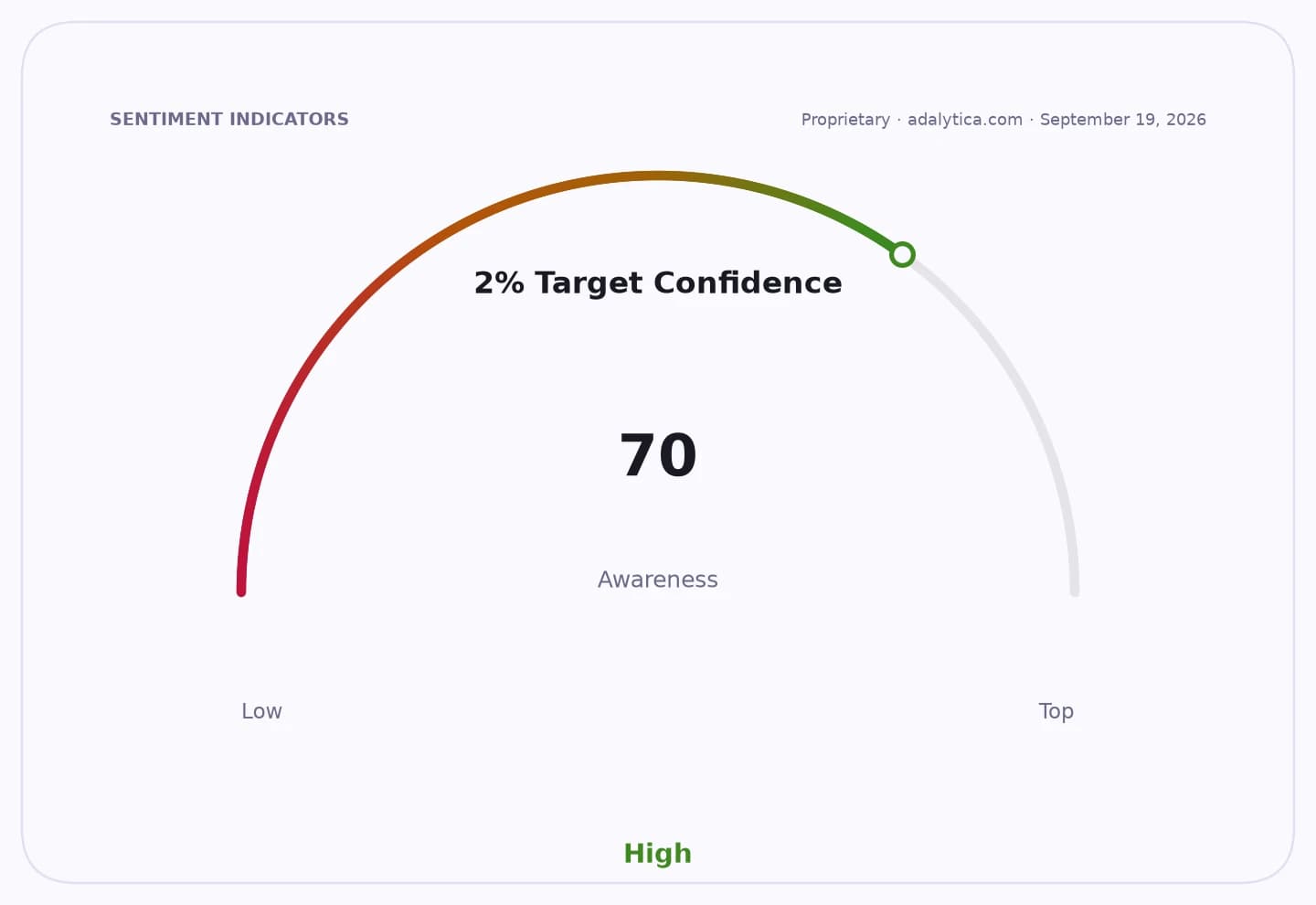
That still leaves the central bank facing a delicate balance. Traders are increasingly pricing in a pause in the easing cycle so policymakers can contain inflation expectations, and Adalytica’s long-term inflation expectations gauge has climbed back to neutral at 48 after a 27-point rise over the past week. Confidence in the Fed’s 2% inflation target, meanwhile, is pinned at 100 on Adalytica’s measure, underscoring how global rate expectations remain a key backdrop for emerging-market currencies.
The ruble’s own technical setup points to a market that is still under strain but not in freefall. On the latest data, the currency trades at 85.86 per dollar, above its 50-day moving average of 80.73 and close to the upper end of its recent Bollinger Band range, while RSI readings near 54.5 suggest momentum has cooled after a sharp run-up in late summer.
The next catalyst is the Bank of Russia’s meeting next week. If officials keep a hawkish tone, banks may lift deposit rates pre-emptively and the ruble could find near-term support; if U.S. labor data or Fed rhetoric strengthen the dollar further, pressure on Russia’s currency and imported inflation could intensify.
| Entity | Gains | Losses |
|---|---|---|
| Bank of Russia | ▲stronger inflation control | ▼less room to cut rates |
| Ruble | ▲support from tighter policy | ▼pressure from dollar strength |
| Banks | ▲higher deposit yields | ▼weaker loan demand |
| Borrowers and consumers | ▲lower import volatility | ▼high financing costs |