The rupiah started the week weaker at 17,758 per U.S. dollar as traders weighed a jump in global oil prices and renewed geopolitical strain that could widen Indonesia’s import bill and keep inflation pressure alive.
Rupiah Weakens as Oil Prices and Risk Rise
The currency slipped 5 points, or 0.03%, even as the dollar index eased 0.01% to 100.21, underscoring that the move was driven less by broad dollar strength than by Indonesia-specific vulnerability to energy prices and capital flows. The pressure matters because a weaker rupiah raises the local cost of fuel, food and other imports, complicating Bank Indonesia’s task just as global markets remain sensitive to any further escalation in Middle East tensions.
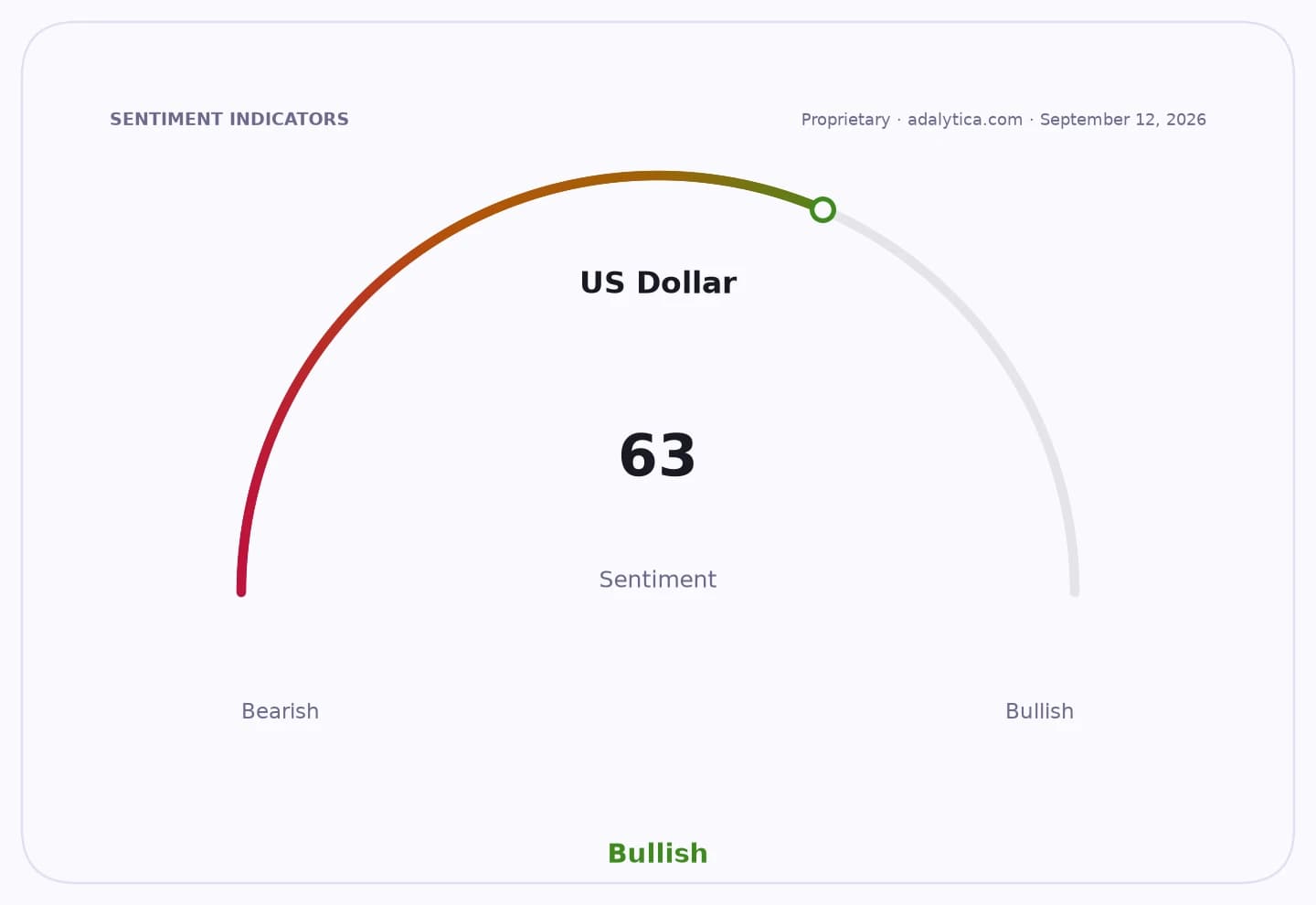
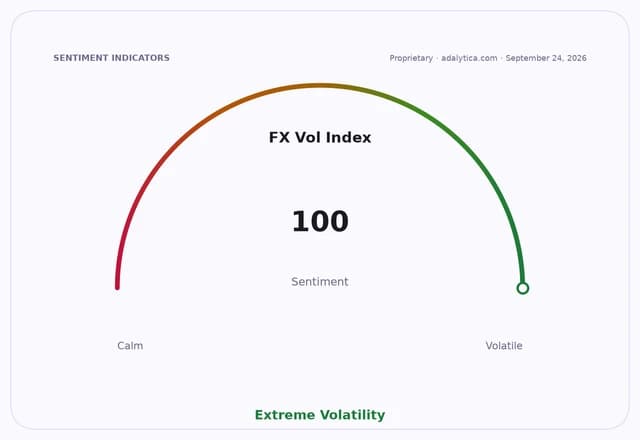
Sentiment IndicatorsⓘProprietary · adalytica.com · September 24, 2026
This is a snapshot — live sentiment, awareness and momentum for 130+ markets update continuously in the dashboard.Open AlphaPulse
Oil has become the clearest transmission channel. Brent-linked crude benchmarks have recently stayed elevated around the mid-$90s to low-$100s range, and the market backdrop suggests a renewed risk premium tied to disruptions around the Strait of Hormuz and Bab el-Mandeb, along with attacks on Saudi territory and Russian refineries. For an import-dependent economy such as Indonesia, that combination increases the risk of a wider current-account strain and deeper domestic inflation if energy subsidies or state intervention are unable to fully offset higher costs.
The domestic currency’s weakness also fits a broader macro picture of tighter U.S. financial conditions. The 10-year Treasury yield has remained near 4.96%, while traders still view the Federal Reserve as hawkish enough to support the dollar whenever global risk appetite fades. That leaves emerging-market currencies like the rupiah exposed even when the greenback is not rallying sharply on the day.

Market participants are also watching U.S. politics. Heightened uncertainty ahead of the November midterm cycle, along with tensions between the White House and the Fed over rates, has encouraged some investors to move cash toward safer assets. In that environment, currencies with weaker external buffers and higher commodity dependence tend to underperform.
Technical positioning in oil adds to the concern. U.S. crude futures have pulled back from earlier peaks but remain elevated, and the latest move leaves prices well above both the 50-day and 200-day moving averages, suggesting the market is still pricing a meaningful geopolitical risk premium. Adalytica’s U.S. dollar trade signals also point to extreme greed in the dollar, while FX volatility readings indicate rising fear, a combination that often leaves vulnerable currencies with little room to absorb shocks.
For investors, the key question is whether Bank Indonesia steps in more aggressively in the spot market or through DNDF instruments to slow volatility. If oil stays near current levels and geopolitical risk escalates further, the market will increasingly test the 18,000 level as a psychological threshold. A break above it would not just be a currency story; it would feed directly into inflation expectations, corporate margins and the policy outlook for Southeast Asia’s largest economy.
| Entity | Gains | Losses |
|---|---|---|
| Oil exporters | ▲Higher revenue | ▼None |
| Indonesian importers | ▲None | ▼Higher input costs |
| Bank Indonesia | ▲Intervention relevance | ▼Greater FX volatility |
| Dollar bulls | ▲Safe-haven demand | ▼None |