Bank Indonesia said the rupiah’s slide toward IDR18,000 per US dollar is being driven by higher crude prices and geopolitical तनाव in the Middle East, even as the central bank steps up intervention to defend the currency.
Indonesia rupiah nears 18,000 as oil prices rise

The rupiah fell as much as 0.50% to IDR17,847 per dollar on Monday, putting it near a psychologically important level that would raise import costs for energy, food and other dollar-priced goods. BI said the pressure is coming from oil holding above $100 a barrel, which lifts inflation risks, worsens the fiscal outlook and increases demand for foreign exchange.
Sentiment IndicatorsⓘProprietary · adalytica.com · September 24, 2026
This is a snapshot — live sentiment, awareness and momentum for 130+ markets update continuously in the dashboard.Open AlphaPulse
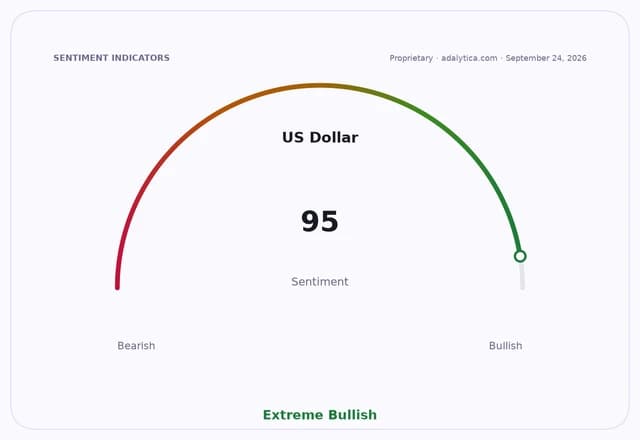
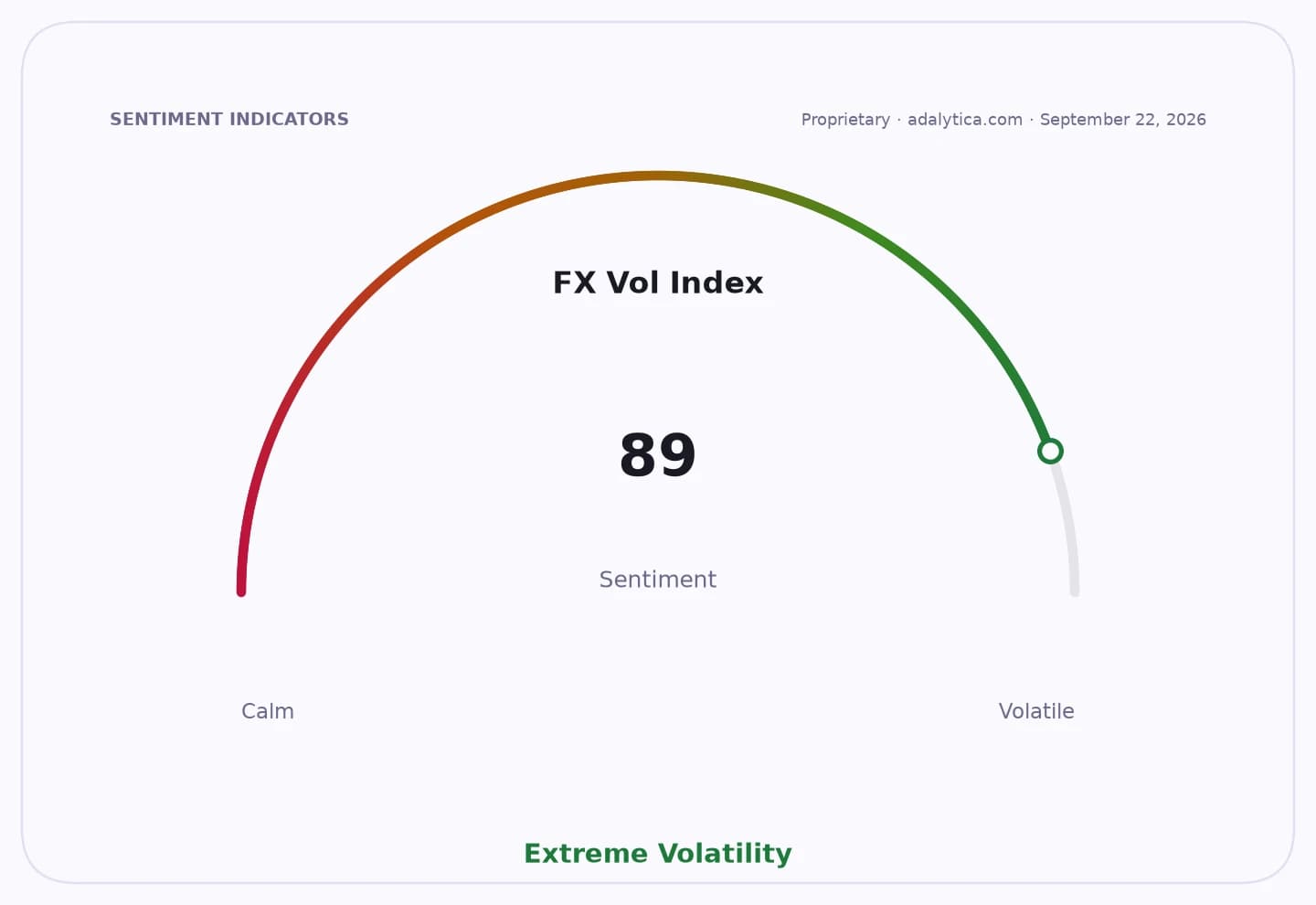
The central bank also pointed to dollar needs from importers and portfolio outflows from domestic assets. Those flows matter because they can amplify moves in a market where traders are already pricing higher FX volatility and a stronger dollar backdrop; Adalytica’s US dollar trade signal shows extreme greed, while its FX volatility gauge is also flashing extreme greed.
BI said it will keep intervening in offshore non-deliverable forward markets, onshore spot and domestic NDF markets, while also buying government bonds in the secondary market. It added that it is working with corporates to encourage foreign inflows and diversify FX demand through local-currency settlement schemes.
The rupiah’s weakness comes even though BI said the currency remains up 0.37% quarter to date and foreign reserves rose to $146.5 billion at the end of August. That gives the central bank some room to smooth volatility, but investors will be watching whether continued oil strength and capital outflows push the rupiah closer to IDR18,000 and force BI to lean harder on intervention or tighten policy guidance.
| Entity | Gains | Losses |
|---|---|---|
| Bank Indonesia | ▲Ability to show market support | ▼FX intervention burden |
| Importers | ▲None | ▼Higher dollar funding costs |
| Oil producers | ▲Higher crude prices | ▼None |
| Indonesian consumers | ▲None | ▼Higher inflation risk |