Bank ZENIT has launched a new credit-card promotion that pays customers 3,000 bonus rubles for meeting a modest spending threshold, a sign the bank is leaning on rewards to capture consumer transactions in a competitive and still-cautious Russian credit market.
Bank ZENIT launches 3,000-ruble credit card bonus
The offer is straightforward: customers who apply for a free credit card by Oct. 31, 2026, spend at least 1,000 rubles within the first three months and receive 3,000 bonus rubles, with one bonus equal to one ruble. The card also advertises up to four months of interest-free use and cash back of up to 7% in selected categories.
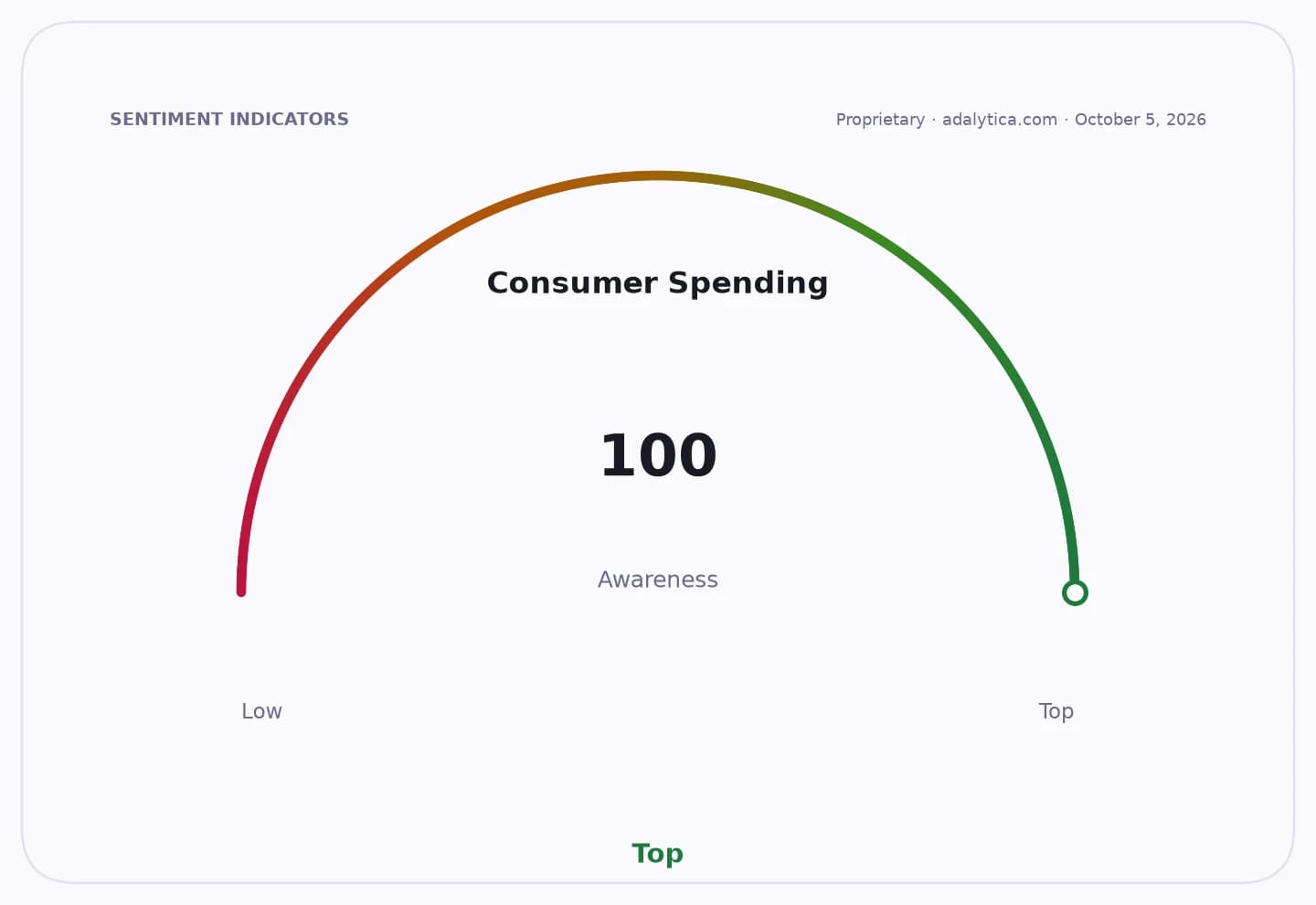
Sentiment IndicatorsⓘProprietary · adalytica.com · October 6, 2026
This is a snapshot — live sentiment, awareness and momentum for 130+ markets update continuously in the dashboard.Open AlphaPulse
The economics of the promotion are clear. For Bank ZENIT, the bonus is an acquisition cost designed to stimulate activation and spending rather than to generate immediate margin. That can make sense if the bank expects the customer to revolve balances later, cross-sell other products or retain the account as a transaction hub. In a market where lenders are competing for quality borrowers and fee-generating card volume, upfront incentives can be cheaper than broader rate discounts.
For consumers, the pitch is less about borrowing leverage than about lowering the effective cost of everyday purchases. A four-month grace period and category cash back make the card useful for households managing cash flow, especially if inflation or uneven wage timing is squeezing budgets. But the economics of these offers can flip quickly for customers who miss payment deadlines or treat the card as cheap financing rather than a rewards product.
Investors should view the promotion as a window into Bank ZENIT’s retail strategy and, more broadly, into how Russian lenders are courting card users amid intense competition for spend share. Reward-heavy offers can support growth in card balances and merchant turnover, but they also pressure economics if customer churn remains high or if incentive costs outpace interchange and interest income. The key question is whether the bank is buying durable relationships or simply subsidizing short-term volume.
The move also fits a wider pattern in consumer finance: when balance-sheet growth gets harder, banks turn to rewards, grace periods and targeted cash back to keep the payment rail active. That tends to favor customers and card networks in the near term, while forcing lenders to prove that acquisition spend translates into recurring profitability. For Bank ZENIT, the success of the campaign will depend less on the 3,000-ruble headline figure than on how much spending, revolving credit and retention the card can ultimately generate.
| Entity | Gains | Losses |
|---|---|---|
| Bank ZENIT | ▲New card acquisition | ▼Upfront incentive costs |
| Cardholders | ▲3,000-ruble bonus | ▼Missed-payment risk |
| Competing Russian banks | ▲Pressure to match offers | ▼Margin on rewards |
| Card networks/merchants | ▲Higher card spending | ▼None material upfront |