More than 50 Russian companies are on the verge of bond default this year, the highest level in more than a decade and close to a 17-year record, as prolonged high borrowing costs squeeze already leveraged borrowers and cut off cheap refinancing.
Russia Corporate Bond Defaults Rise in 2026
The wave of missed payments matters because it points to rising stress in Russia’s corporate credit market rather than an isolated failure. National rating agency data show at least 30 issuers have already missed bond payments since the start of the year, with 20 doing so for the first time, while Sinara investment bank estimates overdue payments have climbed to 41 billion rubles in 2026 from 34 billion rubles a year earlier.
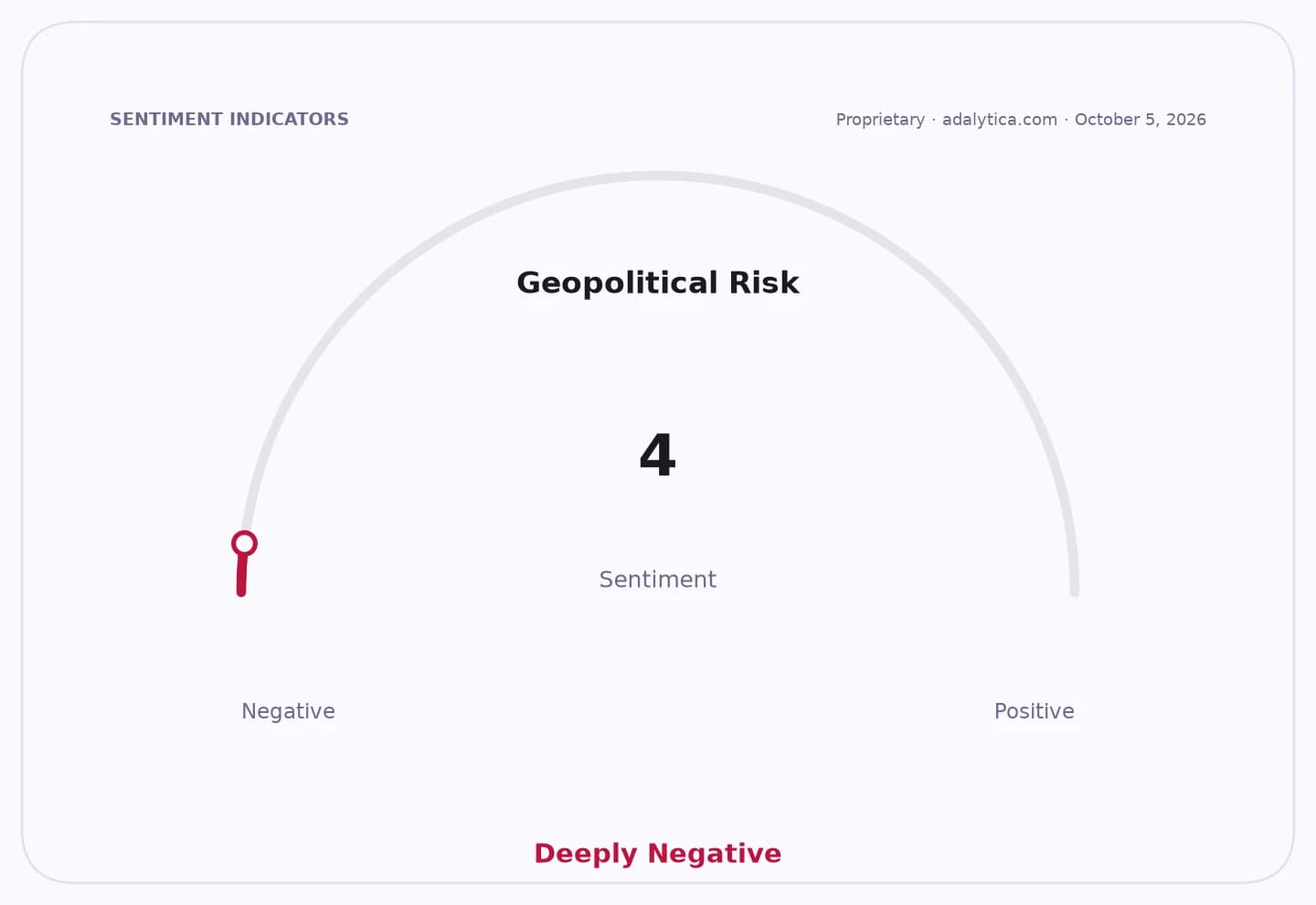
Sentiment IndicatorsⓘProprietary · adalytica.com · October 7, 2026
This is a snapshot — live sentiment, awareness and momentum for 130+ markets update continuously in the dashboard.Open AlphaPulse
The figures put the market near the 2015 peak, when 52 companies broke bond obligations after sanctions over Crimea, oil’s collapse, a weaker ruble and tight central bank policy. The all-time high came in 2009, when more than 100 issuers defaulted and troubled debt neared 200 billion rubles, underscoring how the current strain is still smaller than a systemic crisis but severe enough to hit a broad swath of weaker borrowers.
Analysts say the core problem is that Russia has been stuck with elevated interest rates since 2023, leaving companies unable to refinance debt on affordable terms. SberCIB Investment Research says the defaults remain concentrated among low-rated issuers with heavy debt loads, but that does not make the trend benign for the broader economy, where tighter credit can slow investment, working capital and hiring.
Investors are watching because default risk is now spreading across the lower-quality end of the market just as growth slows. SberCIB expects the key rate to ease gradually to 13.75% by end-2026 and 10% by end-2027, but real GDP growth is forecast at only about 0.5%, suggesting repayment problems could linger and the backlog of overdue bond payments may unwind slowly.
The next test is whether refinancings and restructurings can contain the damage, or whether more issuers slip into formal default as high rates persist and economic growth stays weak.
| Entity | Gains | Losses |
|---|---|---|
| Russian high-yield investors | ▲Higher coupon offers | ▼Default and restructuring risk |
| Stronger Russian issuers | ▲Less immediate contagion | ▼Tighter funding conditions |
| Russian banks | ▲Potentially higher lending spreads | ▼Rising SME and corporate credit losses |
| Weak leveraged borrowers | ▲Chance to renegotiate debt | ▼Missed payments and technical default |