A limited-time sign-up offer on the PAYBACK Visa credit card highlights how Germany’s payments and rewards market is leaning harder on perks to win household spending, even as cardholders face persistent pressure from fees, travel usage and tighter budgets.
PAYBACK Visa offer targets Germany card spend
The promotion, marketed through FOCUS online, gives new customers up to 5,000 PAYBACK points, worth as much as 50 euros, for opening the card and completing online verification quickly. The card also waives foreign-currency fees on purchases and charges a 29-euro annual fee, a package that can make economic sense for frequent travelers or shoppers who spend enough abroad to offset the fee. In the example provided, 1,000 euros of non-euro spending would save 20 euros versus a card charging a 2% foreign-exchange fee.
Sentiment IndicatorsⓘProprietary · adalytica.com · October 5, 2026
This is a snapshot — live sentiment, awareness and momentum for 130+ markets update continuously in the dashboard.Open AlphaPulse
For consumers, the deal is straightforward: the value comes not just from the upfront bonus but from the ongoing economics of payment usage. The card awards one PAYBACK point for every 5 euros of eligible spending, with double points at participating partners, and can be used with Apple Pay and Google Pay. That positions it as a loyalty product aimed at turning everyday card spend into a recurring rebate stream, particularly in a market where consumers are increasingly sensitive to visible value and hidden charges.
For issuers, the broader message is that rewards, fee waivers and partner ecosystems remain powerful customer-acquisition tools. A 29-euro annual fee suggests the card is designed to be profitable through interchange, revolve balances and spending frequency rather than through a large one-time signup offer alone. The economics also illustrate why card issuers keep leaning on foreign-spend waivers: cross-border purchases and travel are among the most lucrative categories for payments networks and issuing banks, while consumers are highly responsive to the simplest comparison — cash back, points or fee savings.
The context matters for AmEx, Capital One and other card lenders exposed to a market where consumers are still spending, but are choosy about which plastic they use. American Express shares have recently traded below both the 50-day and 200-day moving averages, with momentum indicators such as RSI showing the stock in oversold territory, underscoring investor caution around card economics and spending durability. Capital One has also pulled back sharply from earlier highs, reflecting a market that is less willing to reward growth stories without clear evidence of resilient credit quality and customer retention.
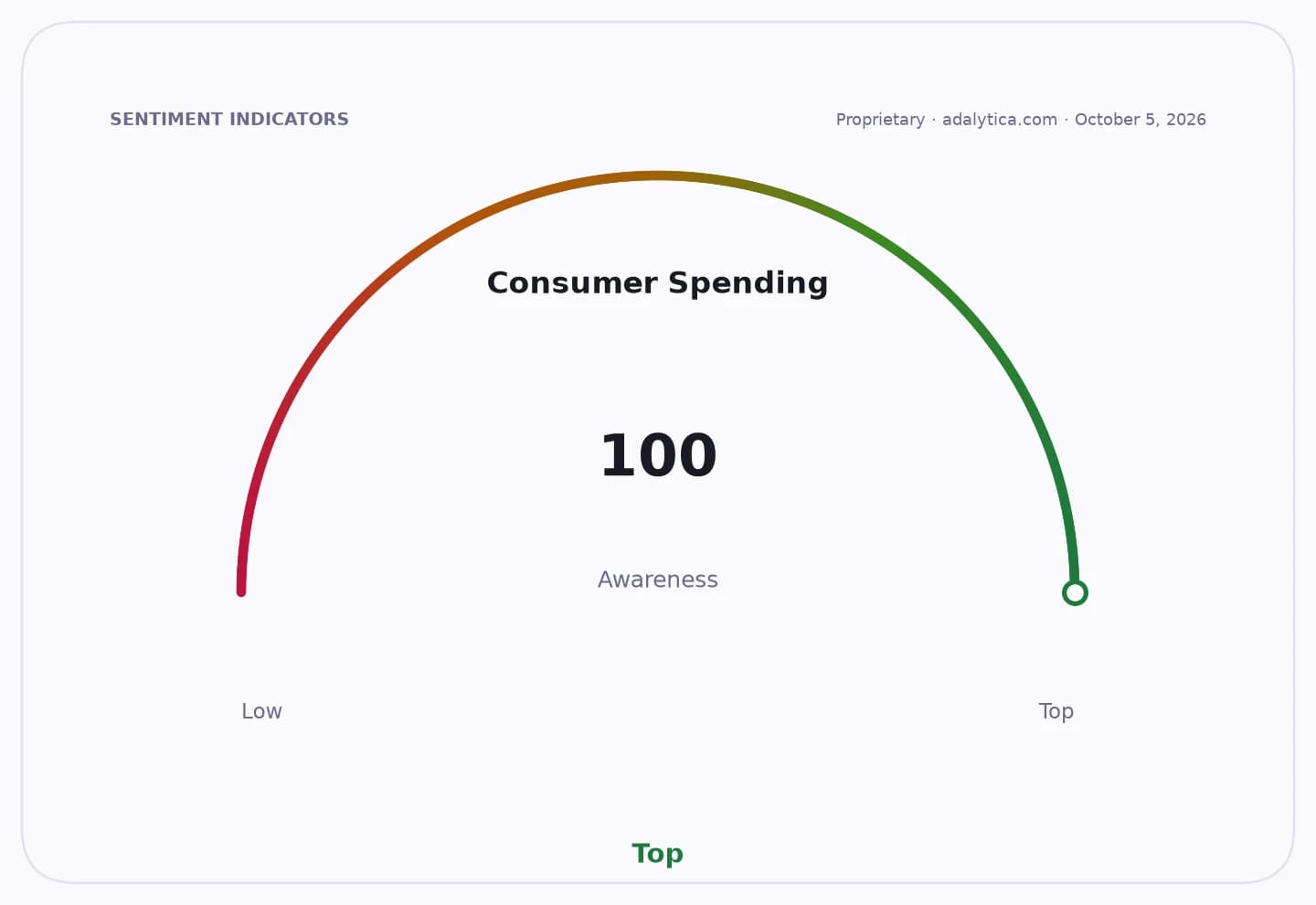
Adalytica’s consumer-spending sentiment gauge shows fear at 25, even as awareness remains extreme, a sign that shoppers are paying close attention to deals and reward economics. That is exactly the backdrop in which points-heavy card promotions tend to gain traction: when households are defensive, issuers must make the value proposition immediate and quantifiable.
For investors, the key question is whether these incentive-driven products can keep supporting spending volumes without eroding margins. If consumer activity holds up, issuers and networks can absorb richer rewards and still grow fee income. If budgets tighten further, the battle for transaction share may force issuers into a more expensive acquisition game, squeezing profitability even as headline spending continues.
| Entity | Gains | Losses |
|---|---|---|
| PAYBACK Visa / BW-Bank | ▲New card sign-ups | ▼Higher acquisition costs |
| Consumers / travelers | ▲50-euro bonus, FX fee savings | ▼Annual fee if underused |
| Payment networks and issuers | ▲More card spend | ▼Margin pressure from rewards |
| Competing credit cards | ▲— | ▼Weaker appeal on fees and perks |